
A Comprehensive Review of Sensor Technologies and IoT Platforms for Precision Agriculture: Indian Context
Ghanshyam Tikaram Patle
*
 , Anita Devi Ningthoujam
, Ghanashyam Singh Yurembam
and Deepak Jhajharia
, Anita Devi Ningthoujam
, Ghanashyam Singh Yurembam
and Deepak Jhajharia
1
Department of Soil and Water Conservation Engineering,
College of Agricultural Engineering and Post Harvest Technology,
(Central Agricultural University, Imphal),
Ranipool, Gangtok,
Sikkim,
India
http://dx.doi.org/10.12944/CWE.21.1.3
Copy the following to cite this article:
Patle G. T, Ningthoujam A. D, Yurembam G. S, Jhajharia D. A Comprehensive Review of Sensor Technologies and IoT Platforms for Precision Agriculture: Indian Context. Curr World Environ 2026;21(1). DOI:http://dx.doi.org/10.12944/CWE.21.1.3
Copy the following to cite this URL:
Patle G. T, Ningthoujam A. D, Yurembam G. S, Jhajharia D. A Comprehensive Review of Sensor Technologies and IoT Platforms for Precision Agriculture: Indian Context. Curr World Environ 2026;21(1).
Download article (pdf)
Citation Manager
Publish History

Introduction
Precision Agriculture (PA) refers to a technology-driven farm management approach that leverages spatial and temporal field variability to improve productivity, sustainability, and efficient use of land resources.1 This approach marks a radical departure from uniform field management by technologies like Global Positioning Systems (GPS), sensors, and data analytics to administer inputs such as water, fertilizers, and pesticides in a site-specific manner.2
The genesis of PA can be traced through four distinct generations. The initial phase (1980-1995) introduced yield monitoring and basic GPS technology. The second generation (1995-2010) saw the integration of remote sensing and farm management systems. The third phase (2010-2020) was defined by real-time sensor networks and IoT, while the current fourth generation is characterized by Artificial Intelligence (AI), machine learning, and autonomous cyber-physical systems.3,4
In India, PA is not merely a luxury but a necessity to address pressing challenges such as depleting groundwater, soil degradation, and the need to ensure food security for a growing population.5 With over 86% of farmers operating on landholdings smaller than two hectares, the Indian context presents unique challenges of scalability, affordability, and accessibility.6 The specific objectives of this review are:
To classify and evaluate sensor technologies used in precision agriculture.
To analyseIoT architectures and communication systems relevant to Indian agriculture
To assess implementation challenges and propose context specific solutions
To identify research gaps and future directions.
Table 1: Comparative Analysis of Global Precision Agriculture Adoption
Region/Country | Adoption Rate (%) | Primary Technologies | Major Drivers | Key Challenges |
United States | 85-95 | GPS guidance, yield monitoring, VRT* | Labor costs, operational efficiency | Data management complexity, high initial costs |
European Union | 70-80 | Automated steering, sensor technologies | Environmental regulations, subsidies | Small farm sizes, system complexity |
Brazil | 50-65 | Soil sampling, yield monitoring, VRT | Export competitiveness, large scale | Infrastructure limitations, technical support |
China | 25-40 | Remote sensing, IoT, automation | Government support, food security | Land fragmentation, farmer knowledge gap |
India | 2.5-4.3 | Soil sensors, IoT based irrigation, mobile advisory platforms | Water scarcity, policy initiatives, need for productivity improvement | Small landholdings, affordability constraints, limited digital literacy |
*VRT: Variable Rate Technology
Although the focus of this review is on India, its inclusion in the comparative framework highlights the relatively lower adoption level compared to developed regions, primarily due to structural and socio-economic constraints.
Materials and Methods
This study adopts a structured narrative review approach to examine developments in precision agriculture, with particular emphasis on sensor technologies and IoT platforms relevant to the Indian context. A comprehensive survey of peer-reviewed journal articles, technical reports, and institutional publications was conducted to ensure both scientific depth and contextual relevance.
Literature was collected from major academic databases, including Scopus, Web of Science, and Google Scholar, along with selected government and other organizational sources. The search was performed using keywords such as “precision agriculture India”, “IoT in agriculture”, “soil moisture sensors”, and “smart irrigation systems”.
Studies were screened based on their relevance to the research objectives, publication recency (with priority given to studies published after 2015), and applicability to Indian agro-economic conditions. In addition to research articles, selected institutional and policy documents were reviewed to better capture ground-level challenges and implementation perspectives.
The collected literature was then critically examined to identify key technological trends, commonly used methodologies, and emerging research directions. Particular attention was given to sensor performance, IoT system architecture, and real-world adoption constraints. The synthesis also helped highlight existing gaps in standardization, scalability, and comparative evaluation across different studies.
Precision Agriculture in Indian Context: Imperatives and Challenges
The adoption of PA in India is driven by a confluence of resource constraints and socio-economic factors. Agriculture consumes approximately 80% of India's freshwater resources, yet irrigation efficiency remains low, making water conservation a primary driver for PA adoption.7 Furthermore, widespread soil nutrient deficiencies and land degradation necessitate precise nutrient management.8
Table 2: Classification and Applications of Agricultural Sensors
Classification Basis | Sensor Types | Examples | Key Characteristics & Applications |
Output Signal | Analog Sensors | Potentiometric sensors | Provide continuous output; require Analog-to-Digital conversion (ADC). |
Digital Sensors | Digital thermometers | Provide discrete binary output; offer better noise immunity. | |
Measurement Principle | Resistive | Gypsum blocks | Measure electrical resistance between electrodes; low-cost but affected by soil salinity. |
Capacitive | FDR soil moisture sensors | Measure soil dielectric constant; more accurate and corrosion-resistant. | |
Optical | NDVI sensors | Assess crop health by measuring light reflectance at specific wavelengths. | |
Acoustic | Ultrasonic sensors | Use sound waves for applications like water tank level monitoring. | |
Application Area | Soil Sensors | Moisture, NPK, pH sensors | Directly monitor soil health parameters for informed decision-making. |
Crop Sensors | Chlorophyll meters | Measure plant-level metrics like chlorophyll content to indicate nutrient status. | |
Environmental | Weather stations | Monitor atmospheric parameters (temp, humidity, rainfall) for microclimate analysis. |
However, significant barriers impede widespread adoption. The average monthly income of agricultural households limits investment capacity.9 Digital and technical literacy remains a hurdle, with only a small fraction of farmers having formal technical education. Infrastructure challenges, including unreliable rural power and connectivity, further complicate the deployment of technology-dependent solutions. Despite these challenges, government initiatives like the Digital India Mission and the Agriculture Infrastructure Fund are creating a supportive policy environment for technological infusion.10
Table 1 highlights that India's PA adoption lags significantly behind other major agricultural regions, with unique challenges like small landholdings and cost sensitivity being primary constraints.
Sensor Technologies: The Foundation of Data-Driven Farming
A sensor is fundamentally defined as "a device that detects and responds to physical, chemical, or biological inputs from the environment and converts them into measurable signals".11 In agricultural contexts, sensors serve as the primary data acquisition tools that enable the quantification of spatial and temporal variability essential for precision farming.
The operational principle of agricultural sensors involves three key stages: detection of physical/chemical/biological parameters, transduction into an electrical signal, and signal conditioning to produce standardized output. Modern agricultural sensors perform these functions with high precision, reliability, and minimal power requirements, making them suitable for remote agricultural deployment.12
Classification of Sensors
Table 2 provides a systematic framework for understanding sensor diversity in precision agriculture, categorizing devices by their operational characteristics and agricultural applications.
Soil Moisture and Temperature Sensors
Soil moisture and temperature sensors represent fundamental components of modern precision agriculture, enabling data-driven resource management and environmental monitoring.13These sensors provide continuous, real-time measurements of critical soil parameters, facilitating informed decision-making for irrigation scheduling and crop management.14Recent technological advancements have led to more accurate, affordable, and robust sensing systems, including wireless sensor networks and IoT-enabled platforms.
Resistive Sensors
Resistive soil moisture sensor’s function based on the relationship between soil water content and electrical resistance between two electrodes. Gypsum block sensors, which contain electrodes embedded within a porous gypsum matrix, are among the earliest and most economical devices used for soil moisture measurement.13Although they are inexpensive and simple to operate, their measurements can be affected by soil salinity, and the gypsum matrix gradually dissolves over time, necessitating periodic replacement.
Capacitive Sensors
These sensors measure the dielectric constant of the soil, which changes dramatically with water content. They are more durable and accurate than resistive sensors as they are not prone to corrosion, making them highly suitable for precision irrigation.13This methodology represents a significant advancement over traditional resistive sensors, which utilize direct current and suffer from electrolysis and corrosion issues.
Table 3 compares different capacitive sensor designs and their suitability for various agricultural applications.
Advanced Soil Moisture Sensing Technologies
Advanced Soil Moisture Sensing Technologies involve the use of sensor-based and electromagnetic techniques for estimating soil water content accurately with higher reliability than conventional gravimetric or resistance-based methods.
Table 3: Configurations of Capacitive Soil Moisture Sensors
Type | Configuration | Key Features | Primary Applications |
Surface-Mount Sensors15 | Flat electrode design | Non-invasive measurement; easy installation | Potted plants; shallow root systems; gardening |
Probe-Type Sensors 16 | Extended penetrating electrodes | Depth-specific profiling; robust construction | Field-scale agriculture; root zone monitoring |
Multiring Electrode Sensors17 | Concentric ring electrodes | Defined measurement volume; minimal soil structure effects | Research applications; precision soil mapping |
Frequency-Based Variants 18 | Variable frequency operation (50-150 MHz) | Reduced salinity interference; enhanced stability | Saline soils; long-term monitoring |
Integrated Environmental Units 19 | Combined capacitive and temperature sensing | Temperature-compensated readings | Climate-resilient agriculture; environmental studies |
Wireless Sensor Nodes20 | Built-in communication modules (LoRaWAN, Zigbee, NB-IoT) | Remote data transmission; scalable networks | Large-scale farms; IoT-based smart irrigation |
Multi-Depth Array Systems21 | Multiple sensing elements along probe shaft | Comprehensive soil moisture profiling | Hydrological studies; precision irrigation scheduling |
Time Domain Reflectometry (TDR)
Time Domain Reflectometry (TDR) sensors achieve high measurement precision by estimating soil moisture based on the propagation time of electromagnetic signals through the soil matrix. However, their high cost and complexity limit their use to research applications Viscarra.12
Frequency Domain Reflectometry (FDR) sensors
These sensors offer a more practical alternative for commercial agriculture. These sensors measure frequency response of an oscillating circuit including soil as part of its capacitance, providing good accuracy (±2-3%) at more affordable prices.22
Thermal and Temperature Sensors
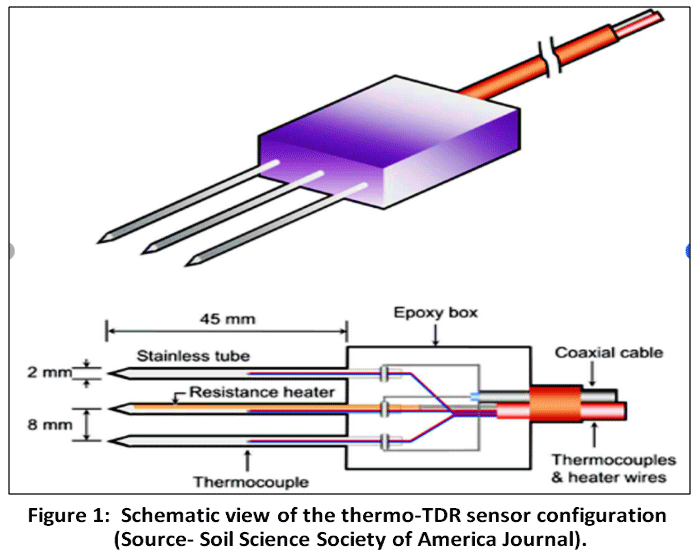
Thermal sensors for soil moisture measurement operate on heat dissipation principles, which vary with soil water content. These sensors typically consist of heating elements and temperature sensors, though their complexity and cost limit widespread adoption.
For temperature measurement, thermistors are widely used due to excellent accuracy (±0.5°C), low cost, and reliability. Infrared thermometers provide non-contact temperature measurement capabilities suitable for surface temperature monitoring.23
Figure 1 shows the schematic view of the thermo-TDR sensor configuration.
 | Figure 1: Schematic view of the thermo-TDR sensor configuration (Source- Soil Science Society of America Journal)
|
Table 4 compares commonly used soil moisture sensors, highlighting the trade-off between cost and accuracy, which is a key consideration for resource-constrained farming systems in India. The cost estimates are based on recent literature and market observations.27,28,33
Table 4: Comparative Analysis of Soil Moisture and Temperature Sensors
Sensor Type | Working Principle | Accuracy | Cost Range (INR) | Suitability for India |
Resistive (Gypsum) | Electrical Resistance | ±4% | 300 - 800 | High - Very low cost, simple to use. |
Capacitive (FDR) | Dielectric Constant | ±2-3% | 2,000 - 8,000 | High - Good balance of accuracy and durability. |
TDR | Time Domain Reflectometry | ±1-2% | 8,000 - 25,000 | Low - Prohibitively expensive for most farmers. |
Thermistor (Temp.) | Resistance Change | ±0.5°C | 200 - 1,000 | Excellent - Highly accurate, affordable, and reliable. |
Note: Cost values are approximate and based on recent market data, manufacturer listings, and literature sources (2023–2024). Actual prices may vary depending on specifications, procurement scale, and regional availability.
Multispectral Sensors
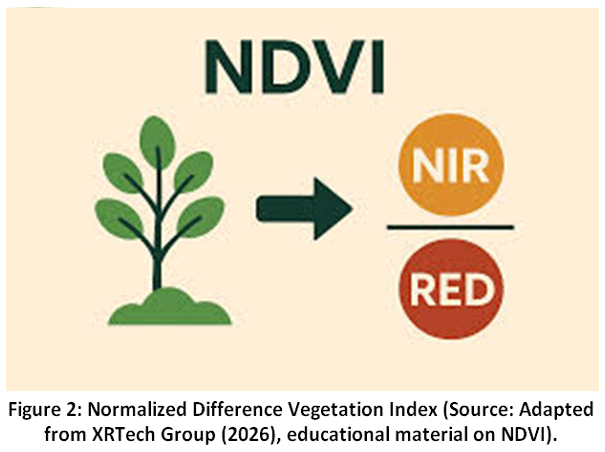
These sensors, such as those calculating the Normalized Difference Vegetation Index (NDVI), capture data at specific wavelengths (e.g., red and near-infrared) to assess crop vigor, biomass, and stress levels.
Sishodia et al.,24 reported that NDVI sensors are widely used to assess vegetation health. Normalized Difference Vegetation Index (NDVI) sensors are among the most widely used multispectral sensors in agriculture. NDVI derives crop condition indicators by exploiting the contrast between vegetation reflectance in the near-infrared spectrum and absorption in the red wavelength region.
Figure 2 shows spatial variability in crop health, enabling targeted interventions in specific field zones of NDVI Image of Agricultural Field.
 | Figure 2: Normalized Difference Vegetation Index (Source: Adapted from XRTech Group (2026), educational material on NDVI).
|
Enhanced Vegetation Index (EVI) sensors
These sensors represent improvements over NDVI, incorporating corrections for atmospheric conditions and soil background effects. EVI is particularly valuable in regions with high aerosol content or during early Granular Matrix Sensor growth stages when soil background significantly influences measurements.24
Hyperspectral sensors
They capture reflectance across hundreds of narrow, contiguous spectral bands, providing detailed spectral signatures for precise identification of specific stress factors or nutrient deficiencies. While offering superior diagnostic capabilities, hyperspectral imaging generates massive datasets requiring sophisticated processing algorithms.25
Electrochemical Sensors
These are vital for soil health management. pH sensors measure soil acidity/alkalinity, while NPK sensors detect the concentration of essential nutrients (Nitrogen, Phosphorus, Potassium) to guide precise fertilization Viscarra.12
Table 5 summarizes cutting-edge sensing technologies and their emerging applications in precision agriculture.
Sensor Networks and Deployment Strategies
Effective deployment of sensors in agricultural environments requires careful consideration of network architecture, power management, and data communication strategies.26
Network Architectures
The choice of network architecture significantly influences system scalability, energy efficiency, reliability, and overall performance of agricultural sensor networks. These descriptions of wireless sensor network (WSN) topologies summarize the key trade-offs and characteristics of each.
Star Topology: All sensor nodes communicate directly with a central gateway, offering simplicity and low latency but requiring higher transmission power for distant nodes.
Mesh Topology: Enables multi-hop communication where nodes relay data from other nodes, providing better coverage for large fields but introducing management complexity.
Cluster-based Topology: Groups sensors into clusters with heads aggregating data before transmission, optimizing energy consumption for large-scale deployments.
Table 5: Advanced Sensor Technologies and their Applications
Sensor Technology | Measurement Principle | Key Parameters | Agricultural Applications | Advantages | Limitations |
Multispectral Imaging | Reflectance at specific wavelengths | NDVI, EVI, various vegetation indices | Crop health monitoring, yield prediction | Wide area coverage, proven technology | Limited to surface observations |
Hyperspectral Imaging | Full spectral signature analysis | Detailed biochemical composition | Nutrient deficiency detection, disease identification | High diagnostic precision | Data-intensive, expensive |
Electrochemical Sensors | Ion-selective measurement | pH, NPK levels, soil salinity | Precision nutrient management | Real-time soil chemistry data | Requires calibration, sensor drift |
Acoustic Sensors | Sound wave propagation | Soil compaction, pest activity | Tillage optimization, pest detection | Non-destructive monitoring | Background noise interference |
Gas Sensors | Chemical detection | CO2, CH4, N2O emissions | Environmental impact assessment | Greenhouse gas monitoring | Environmental interference |
Biosensors | Biological element detection | Pathogens, toxins, biomarkers | Food safety, disease prevention | High specificity to targets | Limited lifespan, stability issues |
Power management represents a critical consideration, particularly in remote areas with limited grid connectivity. Solar power has emerged as the most practical energy source, with modern panels providing adequate power even in partially shaded conditions.27
Data communication strategies must balance bandwidth requirements, power consumption, and coverage area. Short-range technologies like Bluetooth and Zigbee suit localized deployments, while long-range technologies like LoRaWAN and NB-IoT are preferable for widespread sensor networks.28
Iot Platforms: Integrating Data Into Action
The Internet of Things (IoT) represents a transformative technological paradigm that has revolutionized agricultural practices worldwide. According to the International Telecommunication Union,29IoT is formally defined as "a global infrastructure for the information society, enabling advanced services by interconnecting (physical and virtual) things based on existing and evolving interoperable information and communication technologies." Within agriculture, IoT manifests as integrated sensor–device ecosystems that enable continuous data acquisition, communication, and analytics to support optimized farm management decisions.
Importance of IOT in Indian Precision Farming
Real-time Monitoring and Decision Support
IoT systems enable continuous monitoring of field conditions, providing farmers with real-time insights for timely interventions. Precision agriculture technologies have demonstrated significant environmental and economic benefits.30IoT-based monitoring systems can reduce crop losses by 15-25% through early detection of stress conditions and prompt management responses.
Resource Optimization
Multiple studies have demonstrated significant resource savings through IoT implementation. National Academy of Agricultural Sciences31reported that IoT-enabled precision irrigation systems achieved 20-30% water savings in Indian agricultural conditions, while smart nutrient management systems reduced fertilizer application by 15-25% without compromising yield. The reported performance improvements vary widely across studies due to differences in agro-climatic conditions, crop types, and experimental setups, making direct statistical comparison challenging.
Labor Efficiency
IoT automation addresses the critical challenge of labor shortages in Indian agriculture. Gautam and Kumar10found that automated irrigation and monitoring systems reduced labor requirements by 30-40% in studied implementations across Punjab and Haryana.
Risk Mitigation
IoT systems enhance resilience to climate variability through improved forecasting and adaptive management. Javaid et al.,4highlighted that IoT-based early warning systems can reduce climate-related crop losses by 20-35% through timely alerts and preventive actions.
Knowledge Democratization
IoT platforms facilitate knowledge transfer by making expert recommendations accessible to farmers through mobile interfaces. Patil et al.,32demonstrated that IoT-based advisory services improved adoption of recommended practices by 40-60% among smallholder farmers in Maharashtra.
IoT Architecture for Agricultural Applications
The architecture of IoT systems for precision agriculture has evolved to address the unique challenges of agricultural environments, including limited connectivity, power constraints, and diverse operational requirements.
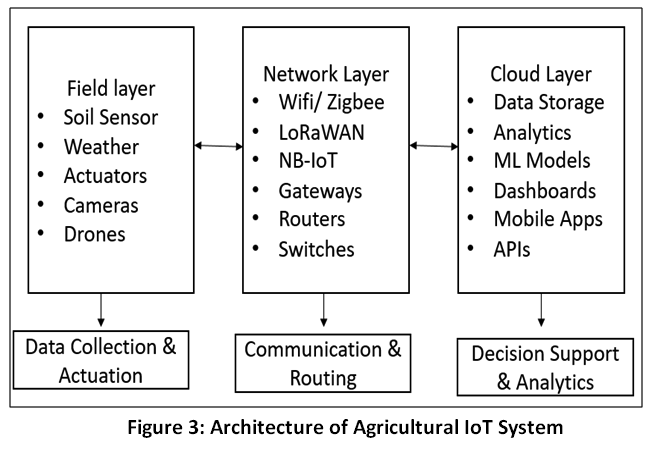
The fundamental architecture of agricultural IoT systems typically comprises four distinct layers, as elaborated by Ray27:
Perception Layer: It consists of physical sensors and actuators that interact directly with the agricultural environment. It includes soil moisture sensors, weather stations, nutrient sensors, and automated irrigation valves that collect real-time data and execute control actions.
Network Layer: Responsible for data transmission between the perception layer and upper layers. This layer encompasses various communication technologies including wireless sensor networks (WSN), RFID, Bluetooth, Zigbee, LoRaWAN, and cellular networks that enable seamless data flow.
Processing Layer: This layer handles data storage, processing, and analysis. It includes edge computing devices for real-time processing and cloud platforms for comprehensive data analytics, employing machine learning algorithms to extract actionable insights from raw sensor data.
Application Layer: The top layer that provides user interfaces and decision support tools. This includes mobile applications, web dashboards, and automated control systems that translate processed data into practical farming decisions.
Figure 3 shows the architecture of agricultural IoT System.
 | Figure 3: Architecture of Agricultural IoT System
|
Edge Computing Integration
Modern agricultural IoT architectures increasingly incorporate edge computing capabilities to address latency and connectivity challenges. Elijah et al.,33emphasize that edge processing enables real-time decision making for critical operations like irrigation control and pest detection, reducing dependence on continuous cloud connectivity.
Fog Computing Layer
Intermediate fog computing nodes provide additional processing capabilities between edge devices and cloud platforms. This architecture is particularly valuable in Indian agricultural contexts where internet connectivity may be intermittent. Vangala et al.,34 demonstrated that fog computing can reduce data transmission requirements by 60-70% through local processing and data aggregation.
Hybrid Architecture Models
Increasingly, agricultural IoT systems employ hybrid architectures that combine multiple communication technologies and processing paradigms. Tzounis et al.,26describe systems that use LoRaWAN for long-range sensor data transmission combined with local WiFi networks for high-bandwidth applications like video monitoring from drones.
IoT Hardware and Communication Protocols
The choice of hardware and communication technology depends on the application's complexity, power availability, and connectivity.
Hardware Platforms
Arduino: A low-cost, open-source microcontroller platform ideal for simple sensing and control tasks, favored for prototyping and educational projects.32
Raspberry Pi: A single-board computer with greater processing power, suitable for complex tasks like image processing and running AI models at the edge.4
ESP32: A highly popular system-on-chip with integrated WiFi and Bluetooth, excellent for building low-power, wireless sensor nodes.28
Communication Protocols
Short-Range: Bluetooth and Zigbee are used for small, localized networks within a field.
Long-Range: LoRaWAN (Long Range Wide Area Network) is exceptionally well-suited for rural India due to its long range (up to 15 km) and very low power consumption, even in areas with poor cellular coverage 33.NB-IoT (Narrowband IoT) offers reliable, subscription-based connectivity where cellular networks are strong.34
Table 6: Comparison of IoT Hardware for Indian Agriculture27, 28
Platform | Processing Capability | Cost Range (INR, indicative values for 2023-2024) | Ideal Use Cases |
Arduino Uno | 16 MHz, Limited memory | 300 - 800 | Basic soil moisture monitoring, simple relay control for irrigation. |
Raspberry Pi 4 | 1.5 GHz quad-core, 1-8GB RAM | 3,500 - 6,000 | Running complex algorithms, processing drone imagery, serving as a local gateway. |
ESP32 | 240 MHz dual-core, WiFi/BLE | 400 - 1,200 | Most suitable for wireless sensor networks due to its connectivity, power efficiency, and cost. |
Note: Cost values are approximate and based on recent market data, manufacturer listings, and literature sources (2023–2024). Actual prices may vary depending on specifications, procurement scale, and regional availability.
Table 6 provides a comparative overview of commonly used IoT hardware platforms, where cost-performance trade-offs play a crucial role in technology selection for Indian agricultural applications.27, 28
The cost ranges presented in Tables 4 and 6 are indicative estimates derived from recent market surveys, manufacturer specifications, and published studies on low-cost agricultural sensing and IoT systems. Given the rapid evolution of electronic components and supply chain variability, these prices may fluctuate depending on vendor, configuration, and geographic availability. Therefore, the values should be interpreted as approximate ranges representative of typical costs during the 2023–2024 period.
IoT-Based Smart Irrigation: A Prime Application
Smart irrigation represents one of the most impactful applications of IoT technology in Indian agriculture, directly addressing the critical challenge of water scarcity while optimizing crop productivity. It exemplifies the power of IoT by automating water application based on real-time soil and weather data. A typical system involves data acquisition from sensors, transmission via wireless modules, decision-making in the cloud/edge, and automated control of irrigation valves.
Studies from Indian implementations, such as those in Maharashtra vineyards and Punjab's rice-wheat systems, have documented water savings of 20-35% and yield improvements of 10-20% using such IoT-based irrigation systems.32
 | Figure 4: Advanced Smart Irrigation System Architecture
|
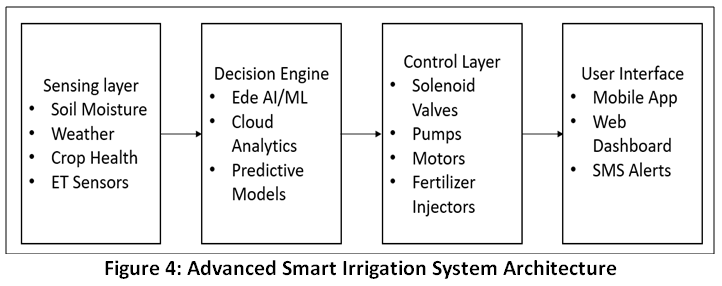
Figure 4 shows illustrates a comprehensive cyber-physical system that integrates multiple technological layers for precision water management.
The architecture begins with multi-layered sensing through soil moisture sensors at different root depths, weather stations, and crop health monitors that collect real-time field data. This data flows through intelligent processing layers where edge devices and cloud platforms analyze information using machine learning algorithms to generate optimized irrigation decisions. The system culminates in automated actuation where smart controllers operate irrigation valves and pumps based on predictive scheduling and real-time conditions, creating a closed-loop system that continuously adapts to crop water requirements while minimizing human intervention and resource waste.
Multi-sensor Data Fusion
Modern smart irrigation systems represent a paradigm shift from single-parameter to holistic decision-making.Lozoya et al.,35 describe advanced systems that integrate soil moisture measurements at multiple root zone depths, microclimate data from weather stations for evapotranspiration calculation, and crop health indicators from spectral sensors. This multi-modal data integration enables comprehensive irrigation prescriptions that account for soil-plant-atmosphere continuum dynamics.
Predictive Irrigation Scheduling
The integration of machine learning algorithms has revolutionized irrigation planning. Liakos et al.,23document systems employing ensemble methods and recurrent neural networks that can forecast water requirements 3-5 days in advance with >85% accuracy. This predictive capability enables proactive reservoir management and prevents both water stress and unproductive water applications, particularly crucial for water-intensive crops like rice and sugarcane.
Adaptive Control Algorithms
Modern irrigation controllers implement self-optimizing algorithms that continuously adjust irrigation based on real-time feedback. Balafoutis et al.,30 describe systems using reinforcement learning to adapt irrigation duration and frequency based on dynamic soil moisture retention characteristics and microclimate conditions, achieving 20-30% higher water use efficiency compared to conventional timer-based systems.
Indian Implementation Case Studies: Evidence of Transformative Impact
Recent peer-reviewed case studies reported in leading journals such as Computers and Electronics in Agriculture, Sensors, Agricultural Water Management, IEEE Access, and Biosystems Engineering consistently demonstrate the field-level feasibility of IoT-enabled precision agriculture systems across diverse agro-climatic conditions.23,26,28,30,33These studies collectively indicate that sensor-driven irrigation control integrated with low-power communication protocols and localized decision-support mechanisms can significantly enhance water-use efficiency, yield stability, and operational cost effectiveness. Furthermore, successful deployments emphasize context-specific system customization, farmer-centric mobile interfaces, and hybrid edge–cloud architectures to mitigate connectivity and infrastructure constraints commonly observed in developing agricultural regions.26,28
IIT Bombay Implementation
Patil et al.,32documented a comprehensive smart irrigation implementation in Maharashtra vineyards that achieved remarkable economic and environmental outcomes:
35% reduction in water consumption through precision scheduling
28% decrease in energy costs for irrigation pumping
22% improvement in yield quality parameters, commanding premium pricing
18-month return on investment through combined operational savings and yield quality improvements
The system's success was attributed to its innovative architecture employing capacitive soil moisture sensors, localized weather data integration, and automated drip irrigation control using ESP32-based controllers with LoRaWAN communication, specifically designed for Indian grape cultivation conditions.
Punjab Agricultural University Initiative
Cereal System Transformation: A large-scale implementation across 500 hectares of rice-wheat systems demonstrated significant resource conservation:
30% water savings compared to conventional flood irrigation practices
18% yield increase through optimized water stress management during critical growth stages
Substantial reduction in groundwater extraction, addressing Punjab's critical water table decline
Improved water productivity from 0.45 to 0.68 kg/m³, enhancing economic sustainability
The system utilized a hybrid approach combining soil moisture sensors and evapotranspiration-based scheduling, with decisions communicated to farmers through vernacular mobile applications.36
Tamil Nadu Precision Irrigation Project
Focusing on resource-constrained farmers, this implementation achieved exceptional adoption and impact:
40% water savings in high-value coconut and banana cultivation systems
25% reduction in labor requirements for irrigation management
15% increase in farm profitability through input optimization and yield maintenance
High adoption rate (75%) among participating farmers, indicating excellent user acceptance.
The project's success was fundamentally attributed to the development of ultra-low-cost sensor systems and extensive farmer training programs tailored to local contexts.10
Artificial Intelligence and Machine Learning In Precision Agriculture
The transition from simple data collection to intelligent, predictive decision-making is powered by Artificial Intelligence (AI) and Machine Learning (ML). These technologies can identify complex, non-linear patterns within the vast datasets generated by sensors and IoT platforms.
Machine Learning for Predictive Agronomy
Machine learning has been increasingly applied across several key areas of precision agriculture, including yield estimation, crop monitoring, nutrient management, soil analysis, and real-time decision support. In the context of yield prediction, a number of studies have shown that models such as random forests and neural networks can effectively combine weather, soil, and vegetation data to improve prediction accuracy.23,37–45,52 For crop health monitoring, the integration of remote sensing data with machine learning techniques has enabled earlier detection of stress conditions and spatial variability within fields.23–25
Similarly, research on nutrient management indicates that machine learning models, when used with spectral indices and soil parameters, can support more precise fertilizer application strategies.24, 46–51 Advances in soil property mapping further demonstrate that combining machine learning with spatial techniques improves the reliability of soil predictions across heterogeneous landscapes.50–52 In addition, the growing integration of machine learning with IoT-based systems is facilitating real-time decision-making in farming operations, particularly in irrigation and resource optimization.28,30,32,54
These developments are collectively summarized in Table 7.
To improve clarity and avoid redundancy, previously separate tables on yield prediction and nutrient management have been consolidated into a single synthesized table highlighting key methodological trends in precision agriculture.
Table 7: Synthesized trends in machine learning applications for precision agriculture, developed through critical analysis of published literature23–25, 28, 30, 32, 37–45, 46–52, 54
Application Area | Common Approaches | Typical Data Inputs | Key Insights from Literature | Limitations |
Crop Yield Prediction | Random Forest, Gradient Boosting, Artificial Neural Networks (ANN), Deep Learning (CNN, LSTM) | Vegetation indices (NDVI), weather data, soil characteristics, historical yield records | Models that combine multiple data sources generally achieve higher predictive accuracy than single-input models. Ensemble and deep learning approaches show improved performance in handling complex, non-linear agricultural systems. 23, 37–45, 52 | Performance is location-specific and depends heavily on data availability and quality. High computational demand for deep learning models. |
Crop Health & Vegetation Monitoring | Convolutional Neural Networks (CNN), spectral index-based ML models, hybrid ML approaches | Multispectral and hyperspectral imagery, satellite/drone data | Integration of spectral indices with ML techniques enables early detection of crop stress, disease, and variability across fields. 23–25 | Sensitive to environmental noise (e.g., cloud cover, atmospheric effects) and requires calibration. |
Nutrient & Nitrogen Management | Random Forest, Partial Least Squares Regression (PLSR), Support Vector Machines (SVM), hybrid ML–geostatistical models | NDRE, NBI, soil nutrient data, spectral reflectance | Machine learning improves site-specific nutrient management by enabling more precise estimation of nitrogen status and fertilizer needs. 24, 46–51 | Requires frequent calibration and validation under field conditions; model transferability is limited. |
Soil Property Mapping | Artificial Neural Networks (ANN), Random Forest with Kriging (RFRK), hybrid spatial models | Soil samples, geospatial and environmental data | Hybrid models combining machine learning with geostatistical techniques enhance prediction accuracy by capturing spatial variability and non-linear relationships. 50–52 | Computational complexity and need for dense sampling datasets. |
Decision Support & Smart Farming Systems | Ensemble ML models, reinforcement learning, IoT-integrated analytics | Sensor data (soil, weather), IoTplatforms, real-time field inputs | Integration of ML with IoT enables real-time monitoring and predictive decision-making, improving irrigation scheduling and resource efficiency. 28, 30, 32, 54 | Limited adoption in smallholder systems due to cost, infrastructure, and digital literacy barriers. |
A comprehensive review by Chlingaryan et al.,52 consolidates these findings, emphasizing that ML approaches consistently surpass traditional statistical methods. The key trends include the superiority of ensemble methods like Random Forest, the power of data fusion from multiple sources, and the effectiveness of hybrid modeling that combines ML with geostatistics.
Explainable AI and Federated Learning
Explainable AI (XAI): As models become more complex, XAI focuses on making their reasoning interpretable to farmers, using visualizations and providing clear trade-offs between different management options to build trust.53
Federated Learning: This approach addresses data privacy concerns by training AI models locally on a farmer's device. Only model updates, not raw data, are shared to improve a global model, enabling collective intelligence while ensuring data ownership.54
Implementation Challenges and Contextual Solutions For India
Translating technological potential into on-ground reality requires addressing India-specific challenges.
Economic Viability: The high initial cost is a major barrier. Solutions include promoting custom hiring centers (CHCs) and developing service-based subscription models.¹4
Digital Literacy: Complex user interfaces deter adoption. Solutions involve developing voice-based vernacular applications and leveraging KrishiVigyanKendras (KVKs) for hands-on training.
Power and Connectivity: Unreliable electricity and internet can disrupt systems. Solutions include using solar-powered sensor nodes and employing hybrid communication strategies like LoRaWAN.¹¹
Technical Support: The lack of local maintenance networks can lead to system failures. Solutions involve creating rural entrepreneur networks trained to install and repair sensors.
Future Directions
The future of PA in India lies in the convergence of several advanced technologies:
AI and Explainable Machine Learning: Developing models that are both powerful and interpretable for farmers.
Advanced and Affordable Sensing: Research into low-cost hyperspectral imaging and Nano sensors.
Federated Learning: Enabling collaborative model improvement while preserving data privacy.
Integrated Digital Ecosystems: Creating interoperable platforms that connect IoT data with market linkages, finance, and insurance services.
Conclusion
Precision agriculture has emerged as a promising approach to improving farm productivity while using water, nutrients, and other inputs more efficiently, particularly in the Indian context where small landholdings, resource constraints, and infrastructural limitations are common. This review highlights how recent advances in sensor technologies and IoT-based systems are enabling real-time monitoring and more informed, data-driven farm management decisions.
The analysis suggests that technologies such as capacitive soil moisture sensors, wireless sensor networks, and IoT-enabled irrigation systems hold considerable promise for enhancing resource-use efficiency. However, their performance and impact vary depending on local conditions, including farm size, economic capacity, and access to technical support.
A key insight from this review is that low-cost and scalable solutions are most suitable for smallholder farming systems. While several studies report notable improvements in water savings and productivity, these outcomes are often context-specific and may not be directly transferable across regions without adaptation. In many cases, the main barriers to adoption are not technological limitations but issues related to affordability, awareness, and infrastructure.
Looking ahead, the integration of advanced sensing technologies with artificial intelligence and flexible IoT architectures is expected to further strengthen precision agriculture practices. For meaningful large-scale adoption in India, future efforts should focus on developing cost-effective, user-friendly systems, strengthening extension services, and creating supportive policy and institutional frameworks. Establishing more standardized evaluation approaches will also be essential to ensure that reported benefits are reliable and comparable across different agricultural settings.
Acknowledgement
Authors extend their sincere acknowledgments to the Central Agricultural University-College of Agricultural Engineering & Post Harvest Technology, Gangtok, Sikkim and ICAR-CRP on Precision Farming and Micro Irrigation System project for their essential support and assistance.
Funding Sources
The author(s) received no financial support for the research, authorship, and/or publication of this article.
Conflictof Interest
The author(s) do not have any conflict of interest.
Data Availability Statement
In order to prepare this paper, the writers employed secondary data. These data's source references have been properly cited.
Ethical Statement
This review paper did not involve human participants, animal subjects, or any material that requires ethical approval.
Informed Consent Statement
This study did not involve human participants, and therefore, informed consent was not required.
Permission to reproduce material from other sources
Not Applicable
Authors Contributions
Ghanshyam T Patle: Conceptualization, Methodology,Writing (review and editing), Editing Resources
Anita Devi Ningthoujam: Writing (Original Draft Preparation), Writing – Review & Editing Resources, Review, Data Curation, and Format analysis
Ghanashyam Singh Yurembam: Data Curation, Writing, Review and Editing
Deepak Jhajharia: Data Curation, Writing, Review and Editing
References
- Gebbers R, Adamchuk VI. Precision agriculture and food security. Science. 2010;327(5967):828–831.
CrossRef - Zhang N, Wang M, Wang N. Precision agriculture—A worldwide overview. Comput Electron Agric. 2002;36(2–3):113–132.
CrossRef - Wolfert S, Ge L, Verdouw C, Bogaardt MJ. Big data in smart farming: a review. Agric Syst. 2017;153:69–80.
CrossRef - Javaid M, Haleem A, Singh RP, Suman R. Enabling technologies for sustainable smart farming for enhancing agricultural productivity: a comprehensive review. IEEE Sens J. 2023;23(3):1752–1769.
- Bhattacharyya T, Pal DK, Lal R. Soil carbon sequestration in India: potential and the way forward. Curr Sci. 2021;120(1):34–42.
- Department of Agriculture, Cooperation and Farmers Welfare. All India Report on Agriculture Census 2015–16. New Delhi: Government of India; 2020.
- Central Ground Water Board. Dynamic Ground Water Resources of India 2023. New Delhi: Ministry of Jal Shakti; 2023.
- ICAR-National Bureau of Soil Survey and Land Use Planning. Annual Report 2022. Nagpur: ICAR-NBSS&LUP; 2022.
- Ministry of Statistics and Programme Implementation. Situation Assessment of Agricultural HouseholdsNew Delhi: Government of India; 2021.
- Gautam R, Kumar U. Digital India and its impact on agriculture. J Agric Inform. 2021;12(1):1–15.
- Fraden J. Handbook of Modern Sensors: Physics, Designs, and Applications. 5th ed. New York: Springer; 2016.
CrossRef - ViscarraRossel RA, McBratney AB, Minasny B. Proximal Soil Sensing. Dordrecht: Springer; 2011.
CrossRef - Hardie M. Review of novel and emerging proximal soil moisture sensors for use in agriculture. Sensors. 2020;20(23):6934.
CrossRef - Jones HG, Vaughan RA, Fisher JB. Remote Sensing of Vegetation. Oxford: Oxford University Press; 2021.
- Smith R, Jones P, Brown L. Development of surface-mounted capacitive soil moisture sensors. Comput Electron Agric. 2020;175:105567.
- Johnson P, Lee H. Design of probe-type capacitive soil moisture sensor. IEEE Sens J. 2022;22(8):7689–7698.
- Chen L, Wang W, Li Z. Concentric ring capacitive sensor. Sens Actuators A Phys. 2023;354:114267.
- Anderson M, Brown C. Frequency-dependent capacitive sensing. Comput Electron Agric. 2021;187:106234.
- Wilson K, Davis T. Integrated soil moisture and temperature sensing. Sensors. 2022;22(11):4218.
- Taylor J, Kumar S, Patel R. Wireless soil moisture sensor nodes. IEEE Internet Things J. 2023;10(6):5324–5335.
- Martinez G, Lopez J, Hernandez M. Multi-depth soil moisture sensing arrays. Agric Water Manag. 2024;289:108512.
- Radocaj D, Jurisic M, Zimmer D. Soil moisture sensor technologies review. Agriculture. 2020;10(11):573.
- Liakos KG, Busato P, Moshou D, Pearson S, Bochtis D. Machine learning in agriculture. Sensors. 2018;18(8):2674.
CrossRef - Sishodia RP, Ray RL, Singh SK. Remote sensing in precision agriculture. Remote Sens. 2020;12(19):3136.
CrossRef - Lu Y, Wang X, Zhang J. Hyperspectral imaging. Remote Sens. 2020;12(19):3215.
CrossRef - Tzounis A, Katsoulas N, Bartzanas T, Kittas C. IoT in agriculture. Biosyst Eng. 2017;164:31–48.
CrossRef - Ray PP. IoT for smart agriculture. J Ambient Intell Smart Environ. 2017;9(4):395–420.
CrossRef - Farooq MS, Riaz S, Abid A, Abid K, Naeem MA. IoT-enabled smart agriculture. IEEE Access. 2020;8:175552–175580.
- International Telecommunication Union. Recommendation ITU-T Y.2060. Geneva: ITU; 2012.
- Balafoutis A, Beck B, Fountas S, et al. Precision agriculture technologies. Sustainability. 2017;9(8):1339.
CrossRef - National Academy of Agricultural Sciences. IoT for Transforming Indian Agriculture. New Delhi; 2022.
- Patil S, Deshmukh A, Kulkarni P. Smart irrigation system. Comput Electron Agric. 2022;196:106879.
- Elijah O, Rahman TA, Orikumhi I, et al. IoT and data analytics in agriculture. IEEE Internet Things J. 2018;5(5):3758–3773.
CrossRef - Vangala A, Vangala S, Gummadi S. Fog computing in agriculture. IEEE Access. 2020;8:191347–191358.
- Lozoya C, Mendoza C, Aguilar A, et al. Smart irrigation strategies. Agric Water Manag. 2022;260:107324.
CrossRef - Punjab Agricultural University. Smart irrigation technologies. Ludhiana; 2021.
- Pantazi XE, Moshou D, Alexandridis TK, et al. Wheat yield prediction. Comput Electron Agric. 2016;121:57–65.
CrossRef - Stas M, Van Orshoven J, Dong Q, et al. Wheat yield prediction using ML. Remote Sens. 2016;8(7):555.
- Heremans S, Dong J, Somers Z. Yield forecasting. Eur J Agron. 2015;71:99–110.
- Liang L, Di L, Zhang L, Deng M. LAI estimation. Remote Sens Environ. 2015;160:1–12.
- Wu C, Niu Z, Tang Q, Huang W. LAI estimation using ML. Remote Sens. 2015;7(5):6052–6072.
- Jin X, Kumar L, Li Z. AquaCrop optimization. Comput Electron Agric. 2016;127:222–233.
- Li X, Cheng T, Zhu Y et al. Grassland LAI prediction. Remote Sens. 2016;8(6):463.
- Papageorgiou EI, Markinos A, Gemtos TA. Fuzzy cognitive mapping. Expert Syst Appl. 2013;40(14):5543–5550.
- Kaul M, Hill RL, Walthall C. ANN yield prediction. Agron J. 2005;97(2):557–565.
- Song X, Zhang G, Liu F, Li D. Grain protein mapping. Remote Sens. 2017;9(3):243.
- Magney TS, Eitel JUH, Huggins DR, Vierling LA. NDRE sensing. Agron J. 2017;109(4):1517–1530.
- Castaldi F, Palombo A, Pascucci S. Nitrogen uptake prediction. Eur J Agron. 2016;79:1–10.
- Wang Z, Wang J, Liu L, Huang W. Leaf nitrogen estimation. Remote Sens. 2017;9(3):239.
- Guo L, Wang L, Liang L. Soil organic matter mapping. Geoderma. 2015;237–238:49–57.
CrossRef - Dai F, Zhou L, Liang L. ANN–kriging model. Soil SciSoc Am J. 2014;78(5):1595–1607.
- Chlingaryan A, Sukkarieh S, Whelan B. ML in agriculture review. Comput Electron Agric. 2018;151:61–69.
CrossRef - Antle JM, Jones JW, Rosenzweig CE. Agricultural system models. Agric Syst. 2017;155:179–185.
CrossRef - Benos L, Tagarakis AC, Dolias G, et al. ML in agriculture review. Sensors. 2021;21(11):3758.
CrossRef
Abbreviations
ADC Analog-to-Digital conversion
EVI Enhanced Vegetation Index
FDR Frequency Domain Reflectometer
GPS Global Positioning Systems
IoT Internet of Things
KVKs KrishiVigyanKendras
LoRaWANLong Range Wide Area Network.
NDVI Normalized Difference Vegetation Index
PA Precision Agriculture
VRT Variable Rate Technology