
Rising Heatwaves in India: Three Decades of Trends and District-Level Hotspots Using IMD Data
Ratika Samtani
*
 , Sidharth Sekhar Mishra
and Rinku Yadav
, Sidharth Sekhar Mishra
and Rinku Yadav
1
Centre for Climate, Environment and Health (CCEH),
International Institute of Health Management Research,
New Delhi,
India
Copy the following to cite this article:
Samtani R, Mishra S. S, Yadav R. Rising Heatwaves in India: Three Decades of Trends and District-Level Hotspots Using IMD Data. Curr World Environ 2026;21(1).
Copy the following to cite this URL:
Samtani R, Mishra S. S, Yadav R. Rising Heatwaves in India: Three Decades of Trends and District-Level Hotspots Using IMD Data. Curr World Environ 2026;21(1).
Citation Manager Publish History

Introduction
Among the most significant impacts of human-induced climate change is the escalating occurrence and severity of extreme weather events across the globe.¹ Over recent decades, the world has witnessed a significant rise in phenomena such as floods, droughts, wildfires, and particularly, heatwave events, reflecting growing instability within climatic systems.2,3
The intensification of these extreme temperature events is directly attributable to human influence on the climate system, with projections indicating further increases in their occurrence and duration.3-5
Among these, extreme heat has emerged as one of the most pervasive and rapidly intensifying climate hazards, with particularly severe implications for human health.
The health burden linked to extreme heat is disproportionately higher in low- and middle-income countries such as India, where severe environmental exposures intersect with existing structural vulnerabilities.6,7 These vulnerabilities include rapid, unplanned urbanization, substandard housing, diminishing urban green spaces, and high population density and large vulnerable populations.8-11 The implications of rising temperatures for India are severe, impacting public health, agriculture, infrastructure, and overall socio-economic development.8
Heat stress contributes to morbidity and mortality through multiple biological mechanisms, including ischemia, heat cytotoxicity, inflammatory responses, and rhabdomyolysis, leading to critical impacts on vital organs. Health effects manifest directly as heat exhaustion and heat stroke, and indirectly by exacerbating underlying physiological conditions, making all-cause mortality a robust indicator of the combined health burden.6,12,13 In India, HWEs pose a growing public health concern, with evidence indicating a significant rise in their frequency and intensity, particularly in the months flanked by March and June.14,15
The India Meteorological Department (IMD) classifies “heatwaves” based on departures from normal maximum temperatures.16-18 According to IMD criteria, ‘a heatwave is declared when the maximum temperature reaches at least 40°C in the plains or 30°C in hilly regions’. In areas where the normal maximum temperature is 40°C or below, a departure of 5–6°C above normal is categorized as a heatwave, while a deviation of 7°C or more is considered a severe heatwave. In regions where the normal maximum temperature exceeds 40°C, departures of 4–5°C and 6°C or more are classified as ‘heatwave’ and ‘severe heatwave’ conditions, respectively. Additionally, a heatwave is declared when the actual maximum temperature reaches 45°C or higher, irrespective of the normal temperature.17-19 The IMD employs regional and global numerical weather prediction models to forecast such extreme events.20
While India has experienced multiple severe heatwave events over recent decades, including major episodes in 1998, 1999, 2003, 2010, 2016, 2018, and 2019, existing research has largely focused on national aggregates, individual cities, or short-term meteorological analyses. Although the India Meteorological Department routinely reports the occurrence of extreme heat events, systematic analyses identifying district-level hotspots and spatial shifts in heatwave exposure across the country remain limited.
Understanding heatwave dynamics at a finer geographic resolution is critical because vulnerability to extreme heat is strongly influenced by local climatic conditions, urbanization patterns, land use, and socioeconomic characteristics. National or state-level analyses may obscure important sub-regional variations in exposure, which are essential for designing geographically targeted adaptation strategies.
To address this gap, the present study examines the evolution of heatwave events in India over the past three decades using IMD data, with a particular focus on identifying district-level hotspots and emerging geographic expansion of heatwave activity. In addition to national and state-level assessments, the study provides a sub-state analysis of Maharashtra, one of the most heatwave-prone states, to illustrate how heatwave patterns are evolving within states.
By integrating long-term trend analysis with district-level spatial assessment, this study offers novel insights into the geographic concentration and expansion of heatwave exposure in India, generating evidence to inform district-specific Heat Action Plans (HAP), early warning systems, and adaptation strategies for climate.
The study aimed to evaluate multi-decadal trends in heatwave events across India using records from the India Meteorological Department (IMD), identify hotspots at the state and district levels, and investigate sub-state spatial patterns of heatwave expansion, with Maharashtra serving as a case study.
Materials and Methods
Data Source
Data on the occurrence of Heat Wave Events (HWEs) was obtained from the IMD, the official national organization for monitoring and documenting extreme weather events. The IMD maintains systematic records of heatwave occurrences based on standardized meteorological criteria. Annual heatwave event data for the period 1990–2019 were used to assess long-term national trends, while district-level data for 2005–2019 were used to examine spatial patterns and hotspot distribution.
Heatwaves were defined according to the operational criteria established by the India Meteorological Department (IMD), as described in the Introduction.
Study Design and Spatial Unit
The study adopted an ecological time-series design to examine temporal trends and spatial distribution of heatwave events across India. Districts were used as the primary unit of analysis to enable a granular assessment of spatial heterogeneity in heatwave occurrence. State-level aggregation was also performed to identify regional patterns.
A detailed sub-state analysis was conducted for Maharashtra, one of the most heatwave-affected states, to examine district-level spatial patterns and emerging hotspots over time.
Data Processing
The IMD records were compiled into a structured dataset and subjected to several data-processing steps, including verification of annual event counts, removal of duplicate records, standardization of district and state identifiers, aggregation of heatwave frequency at national, state, and district levels. Descriptive statistics were used to summarize frequencyof heatwave events across the study period.
Trend Analysis
To evaluate temporal patterns in heatwave frequency, the non-parametric Mann–Kendall test was employed. It determines whether a statistically significant increase or decreasing trend is present over time.
To estimate the magnitude of change in heatwave frequency, Sen’s slope estimator was employed. This method calculates the median rate of change in a time series, providing a robust measure of trend magnitude.Positive slope values indicate an increase in heatwave frequency, whereas negative values signify a declining trend.
Trend analyses were conducted at the national and state levels to determine whether the observed increase in heatwave events was statistically significant.
Hotspot Identification
District-level heatwave frequencies were analyzed to identify persistent heatwave hotspots. Districts experiencing heatwave events in more than 50% of the study years were classified as hotspots. Spatial patterns were examined to identify geographic clustering and expansion of heatwave activity across the study region.
Ethical Considerations
The study was based solely on publicly available secondary data obtained from theIMDand did not involve human participants or any identifiable personal information. Therefore, ethical approval was not required.
Results
National Trends in Heatwave Events (1990-2019)
Figure 1 illustrates the annual number of heatwave events (HWEs) recorded in India between 1990 and 2019. The data indicate a substantial increase in the frequency of HWEs over the study period, rising from two events in 1990 to forty-eight events in 2019, suggesting a clear intensification of extreme heat occurrences in recent decades.
To determine whether the observed increase represents a statistically significant trend, the Mann–Kendall trend test was applied to the national time series. The analysis revealed a statistically significant upward trend in heatwave frequency in India during the period 1990–2019 (Z = 4.48, p < 0.001). Sen’s slope estimator indicated an average increase of 1.29 heatwave events per year, confirming a pronounced long-term escalation in extreme heat occurrences across the country. Inter-annual variability in heatwave events was assessed using the coefficient of variation (CV), which was estimated at 66%, indicating substantial year-to-year fluctuations. Despite this variability, the overall trajectory demonstrates a clear and consistent increasing long-term trend.
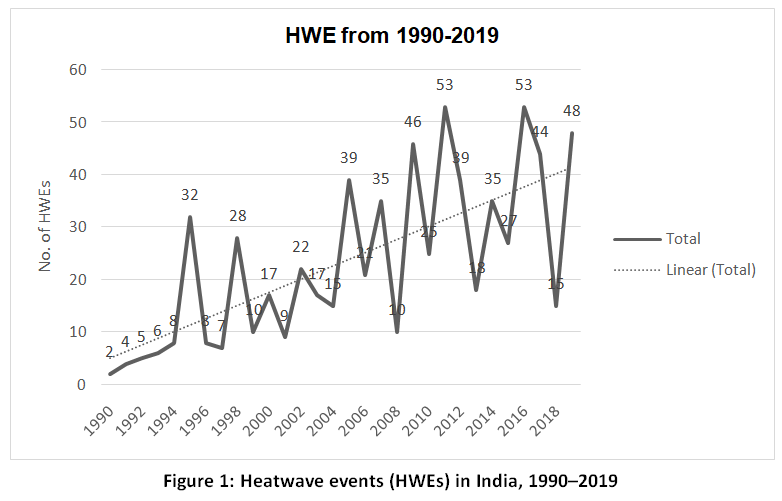 | Figure 1: Heatwave events (HWEs) in India, 1990–2019.
|
State-wise Distribution of Heatwave Events (1990–2019)
Table 1 presents the cumulative number of heatwave events recorded across Indian states between 1990 and 2019. Maharashtra recorded the highest number of heatwave events (1207), followed by West Bengal (1044), Kerala (725), and Karnataka (701). Together, these states account for a substantial proportion of heatwave occurrences in India, indicating clear geographic clustering of extreme heat events across central, eastern, and southern regions.
Table 1: Cumulative Heatwave Events by State (1990–2019)
Rank | State | Total HWEs (1990–2019) | % Contribution |
1 | Maharashtra | 1207 | 13.6 |
2 | West Bengal | 1044 | 11.8 |
3 | Kerala | 725 | 8.2 |
4 | Karnataka | 701 | 7.9 |
5 | Assam | 680 | 7.7 |
6 | Rajasthan | 525 | 5.9 |
7 | Uttar Pradesh | 501 | 5.6 |
8 | Bihar | 422 | 4.8 |
9 | Odisha | 417 | 4.7 |
10 | Himachal Pradesh | 409 | 4.6 |
11 | Madhya Pradesh | 325 | 3.7 |
12 | Tamil Nadu | 304 | 3.4 |
13 | Jammu & Kashmir | 272 | 3.1 |
14 | Andhra Pradesh | 252 | 2.8 |
15 | Punjab | 194 | 2.2 |
16 | Haryana | 160 | 1.8 |
17 | Gujarat | 151 | 1.7 |
18 | Chhattisgarh | 147 | 1.7 |
19 | Tripura | 74 | 0.8 |
20 | Arunachal Pradesh | 73 | 0.8 |
21 | Sikkim | 46 | 0.5 |
22 | Meghalaya | 35 | 0.4 |
23 | Manipur | 24 | 0.3 |
24 | Mizoram | 30 | 0.3 |
25 | Nagaland | 15 | 0.2 |
Heatwave Trends in Maharashtra (1990-2019)
Figure 2 depicts the annual number of heatwave events in Maharashtra between 1990 and 2019. The results indicate a non-linear yet overall increasing trend in heatwave frequency within the state.
The Mann–Kendall test identified a statistically significant upward trend in heatwave events in Maharashtra from 1990 to 2019 ( r = 0.47, p = 0.00044). Sen’s slope estimator indicated an average annual increase of 0.20 events, reflecting a steady rise in extreme heat occurrences.
The coefficient of variation was 95.2%, indicating substantial inter-annual variability in heatwave frequency despite the overall upward trend.
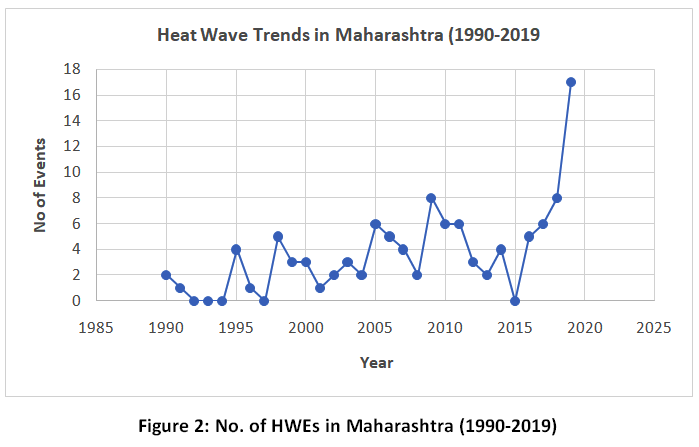 | Figure 2: No. of HWEs in Maharashtra (1990-2019).
|
District-Level Patterns and Hotspots in Maharashtra
District-level analysis revealed substantial spatial heterogeneity in heatwave occurrence within Maharashtra (Figure 3). The results indicate that north-eastern districts consistently experienced higher frequencies of heatwave events compared to other regions of the state.
Districts including Akola, Amravati, Yavatmal, Nanded, Chandrapur, Gadchiroli, Bhandara, Gondia, Wardha, and Nagpur recorded heatwave events across multiple years during the study period. In recent years, the spatial extent of heatwave activity expanded into central districts such as Jalgaon, Aurangabad, Jalna, Beed, Solapur, Kolhapur, Ahmednagar, and Nashik, indicating a widening geographic footprint of extreme heat exposure.
Based on temporal frequency criteria, four districts — Chandrapur, Amravati, Bhandara, and Yavatmal — were identified as persistent heatwave hotspots, each experiencing HWEs in more than 50% of the study years. These districts represent areas of sustained vulnerability and may require prioritized adaptation strategies.
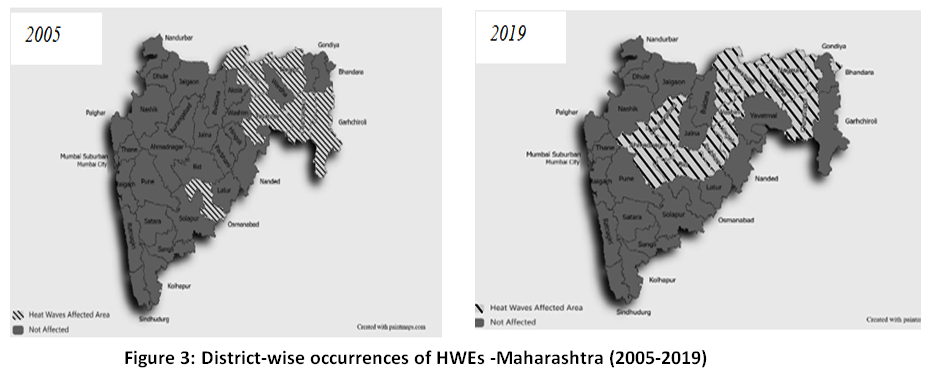 | Figure 3: District-wise occurrences of HWEs -Maharashtra (2005-2019)
|
Discussion
Our analysis demonstrates a rise in the frequency of heatwave events (HWEs) across India over the past three decades. This pattern is consistent with global evidence indicating an increase in extreme temperature events driven by ongoing climate change.¹
Trend analysis test revealed a statistically significant increasing trend in heatwave occurrences between 1990 and 2019, with Sen’s slope indicating a gradual rise over time. The observed cyclical yet consistently upward trajectory, rising from two events in 1990 to 48 in 2019, highlights a progressive intensification of heat stress across the nation. This aligns with other research indicating an increasing trend in the frequency and intensity of heatwaves over the Indian region.²¹Studies published in 2024 further indicate an increase in heatwave occurrences across the central, southeastern, and northwestern regions after 2000, with month-wise analyses revealing shifts such as a rise in heatwave days during historically cooler months like March in southern regions.²² Large parts of India, excluding the Indo-Gangetic plains, have experienced more occurrences of hot days with higher temperatures in recent periods compared to earlier decades, suggesting a broader shift in climatic patterns.²³
The spatial analysis revealed substantial regional variability in HWE occurrence across India. While some states in the North-East, such as Sikkim and Arunachal Pradesh, experienced no HWEs, others displayed a high concentration of events. Maharashtra recorded the highest number of cumulative heatwave events, followed by West Bengal, Kerala, and Karnataka. This pronounced heterogeneity emphasizes the need for geographically targeted interventions rather than a uniform national approach. The prominent regions of heatwave occurrences over the Indian region are consistently identified as the northwest and southeast parts.²¹
At the subnational level, the district-wise analysis in Maharashtra further elucidated the dynamic nature of HWE distribution. The results revealed a non-linear but increasing trend in heatwave events, particularly in the north-eastern districts of the state. Districts such as Chandrapur, Amravati, Bhandara, and Yavatmal consistently emerged as heatwave hotspots, experiencing HWEs in more than half of the study years. Importantly, the expansion of HWEs into previously less affected central and adjoining districts, including Nashik, suggests a widening geographic footprint of heat vulnerability. This spatial expansion indicates that regions considered less susceptible are increasingly experiencing extreme heat conditions, underscoring the need for adaptive planning and preparedness in emerging risk areas.
The rising frequency and widening geographical spread of heatwave events (HWEs) have far-reaching implications across multiple sectors in India. From a public health standpoint, sustained exposure to extreme temperatures increases the likelihood of heat-related morbidity and mortality, disproportionately affecting vulnerable groups such as older adults, children, outdoor workers, and individuals with pre-existing medical conditions.24,25 Heatwaves have caused considerable loss of life in India, with more than 24,000 deaths reported between 1992 and 2015.8,15 Heat-related illnesses range from heat exhaustion to heatstroke, and extreme temperatures can aggravate underlying physiological disorders, including cardiovascular and respiratory diseases. Urban populations face heightened vulnerability due to the urban heat island effect, which elevates ambient temperatures and degrades air quality. In India, heatwaves are estimated to account for approximately 1,116 deaths each year, with marked regional disparities.10
Economically, the agricultural sector faces severe threats. High temperatures, coupled with water scarcity and increased evaporation rates, can lead to drought, reduced crop yields, and widespread crop failures, threatening food security and the livelihoods of millions dependent on agriculture.8 The combined impact of extreme rainfall and air temperature during the summer monsoon season in India significantly influences food production and water availability.26 Increasing frequency of concurrent droughts and heatwaves are already impacting agricultural yields.10 Climate change poses a serious threat to food security, particularly in India due to its large population and the limited coping capacity of small and marginal farmers. Infrastructure, including power grids, transportation networks, and urban structures, is also highly susceptible, with critical impacts on the built environment leading to frequent and extended power outages and disruptions in essential services.27,28
To effectively mitigate these adverse impacts, a multi-faceted approach is imperative. This includes strengthening early warning systems, implementing robust Heat Action Plans (HAPs), developing heat-resilient infrastructure, promoting sustainable agricultural practices that can withstand extreme conditions, and launching public awareness campaigns to educate communities on preparedness and protective measures.28,10 India has been experimenting with various solutions to manage heat risk, particularly since Ahmedabad’s foundational HAP in 2013.10 These plans represent the country’s primary policy response, prescribing preparatory activities and disaster response mechanisms across government departments.28 Early warning systems yield the highest return on investment (50:1), while urban greening also demonstrates a strong benefit-to-cost ratio (3:1) in Indian cities.29
While this study provides important insights into HWE trends and spatial distribution based on IMD data, certain limitations must be acknowledged. These include reliance on aggregated secondary data, potential under-reporting or misclassification in IMD records, and the ecological nature of the analysis, which precludes individual-level exposure or health outcome assessment. Additionally, the study focuses primarily on the frequency of heatwave events and does not explicitly account for variations in heatwave duration or intensity. Future research could enhance understanding by incorporating climate models to project future HWE scenarios and evaluate the effectiveness of mitigation strategies.30 Exploring the socio-economic impacts of HWEs and the vulnerability of specific population groups would also provide a more comprehensive perspective for targeted interventions.6-8
Conclusion
In conclusion, the analysis reveals a statistically significant rising trend and considerable regional disparities in heatwave occurrences across India during the past three decades.The identification of persistent hotspots and the expanding spatial extent of heatwave activity underscore the increasing challenges associated with extreme heat under a changing climate. These findings emphasize the imperative for policymakers, urban planners, and public health authorities to acknowledge the severity of heat-related risks and strengthen adaptive and mitigation strategies. Ongoing research, systematic surveillance, and coordinated policy interventions are essential to enhance preparedness, identify vulnerable populations, and build resilience to the growing threat of heatwaves in India.
Acknowledgement
The authors would like to thank International Institute of Health Management Research (IIHMR) for their support.
Funding Sources
The author(s) received no financial support for the research, authorship, and/or publication of this article.
Conflict of Interest
The authors do not have any conflict of interest.
Data Availability Statement
This statement does not apply to this article
Ethics Statement
This research did not involve human participants, animal subjects, or any material that requires ethical approval.
Informed Consent Statement
This study did not involve human participants, and therefore, informed consent was not required.
Permission to reproduce material from other sources:
Not Applicable
Author Contributions
• Ratika Samtani: Conceptualization, Analysis, Methodology,
• Sekhar M: Analysis, Writing – Review & Editing.
• Rinku Yadav: Writing – Original Draft.
References
- Intergovernmental Panel on Climate Change. Climate Change 2023: Synthesis Report. Contribution of Working Groups I, II and III to the Sixth Assessment Report of the Intergovernmental Panel on Climate Change. Geneva, Switzerland: IPCC; 2023.
- Behera SK. Understanding the impact of climate change on extreme events. Front Sci. 2024;2:1433766. doi:10.3389/fsci.2024.1433766.
CrossRef - Quilcaille Y, Gudmundsson L, Schumacher DL, et al. Systematic attribution of heatwaves to the emissions of carbon majors. Nature. 2025;645:392-398. doi:10.1038/s41586-025-09450-9
CrossRef - Marx W, Haunschild R, Bornmann L. Heat waves: a hot topic in climate change research. TheorApplClimatol. 2021;146:781-800. doi:10.1007/s00704-021-03758-y
CrossRef - Wang C, Zheng J, Lin W, et al. Unprecedented heatwave in western North America during late June of 2021: roles of atmospheric circulation and global warming. Adv Atmos Sci. 2023;40:14-28. doi:10.1007/s00376-022-2078-2
CrossRef - De Bont J, Nori-Sarma A, Stafoggia M, et al. Impact of heatwaves on all-cause mortality in India: a comprehensive multi-city study. Environ Int. 2024;184:108461. doi:10.1016/j.envint.2024.108461
CrossRef - Guin P, Bhan N, Sethi K. Mortality due to heatstroke and exposure to cold: evidence from India. Temperature (Austin). 2025;12(2):179-199. doi:10.1080/23328940.2025.2475420
CrossRef - Debnath R, Bardhan R, Bell ML. Lethal heatwaves are challenging India’s sustainable development. PLOS Clim. 2023;2(4):e0000156. doi:10.1371/journal.pclm.0000156
CrossRef - Berger T, Chundeli FA. Tolerance to heat as a coping strategy of low-income households in India and Austria. In: Negotiating Resilience With Hard and Soft City. 2023.
CrossRef - Singh C, Vyas D, Patil S, et al. How are Indian cities adapting to extreme heat? Insights on heat risk governance and incremental adaptation from ten urban heat action plans. PLOS Clim. 2024;3(11):e0000484. doi:10.1371/journal.pclm.0000484
CrossRef - Malcoti MD, Zia H, Kabre C. Heat stress vulnerability of populations and role of urban heat island. Curr World Environ. 2023;18(1). doi:10.12944/CWE.18.1.25
CrossRef - Fu SH, Gasparrini A, Rodriguez PS, Jha P. Mortality attributable to hot and cold ambient temperatures in India: a nationally representative case-crossover study. PLoS Med. 2018;15(7):e1002619. doi:10.1371/journal.pmed.1002619
CrossRef - Choudhary RK, Joshi P, Ghosh S, et al. Excess mortality risk due to heat stress in different climatic zones of India. Environ Sci Technol. 2024;58(1):342-351. doi:10.1021/acs.est.3c05218
CrossRef - Ingole V, Kovats S, Schumann B, et al. Socioenvironmental factors associated with heat- and cold-related mortality in Vadu HDSS, western India: a population-based case-crossover study. Int J Biometeorol. 2017;61(10):1797-1804. doi:10.1007/s00484-017-1363-8
CrossRef - Ravindra K, Bhardwaj S, Ram C, et al. Temperature projections and heatwave attribution scenarios over India: a systematic review. Heliyon. 2024;10(4):e26431. doi:10.1016/j.heliyon.2024.e26431
CrossRef - Srivastava A, Mohapatra M, Kumar N. Hot weather hazard analysis over India. Sci Rep. 2022;12:19768. doi:10.1038/s41598-022-24065-0
CrossRef - Ratnam JV, Behera SK, Ratna SB, Rajeevan M, Yamagata T. Anatomy of Indian heatwaves. Sci Rep. 2016;6:24395. doi:10.1038/srep24395
CrossRef - van Oldenborgh GJ, Philip S, Kew S, et al. Extreme heat in India and anthropogenic climate change. Nat Hazards Earth Syst Sci. 2018;18(1):365-381.
CrossRef - Neethu C, Ramesh KV. Projected changes in heat wave characteristics over India. Clim Change. 2023;176(10):1-26.
CrossRef - Sudharsan N, Singh J, Ghosh S, Karmakar S. Increasing risk of oppressive heatwaves over India in the future warming. arXiv. 2025. https://arxiv.org/abs/2501.13359
- Lekshmi S, Chattopadhyay R, Pai DS. Dynamics of heat wave intensification over the Indian region. J Atmos Sci. 2026;83:45-66. doi:10.1175/JAS-D-24-0093.1
CrossRef - Mandal R, Joseph S, Waje S, et al. Heat waves in India: patterns, associations, and subseasonal prediction skill. Clim Dyn. 2024;63.
CrossRef - Joshi MK, Rai A, Kulkarni A, Kucharski F. Assessing changes in characteristics of hot extremes over India in a warming environment and their driving mechanisms. Sci Rep. 2020;10:2631. doi:10.1038/s41598-020-59427-z
CrossRef - Tiwari P, Mayank M. Analysis of heat and associated health risks in Delhi, India. Int J Environ Clim Change. 2024;14(2):902-914. doi:10.9734/ijecc/2024/v14i24004
CrossRef - Sapari H, Selamat MI, Isa MR, et al. The impact of heat waves on health care services in low- or middle-income countries: protocol for a systematic review. JMIR Res Protoc. CrossRef
CrossRef - Mishra V, Thirumalai K, Singh D, Aadhar S. Future exacerbation of hot and dry summer monsoon extremes in India. npjClimAtmos Sci. 2020;3:10. doi:10.1038/s41612-020-0113-5
CrossRef - Barcellos C. Heat waves, climate crisis and adaptation challenges in the global south metropolises. PLOS Clim. 2024;3(3):e0000367. doi:10.1371/journal.pclm.0000367
CrossRef - Pillai A, Dalal T. How Is India Adapting to Heatwaves? An Assessment of Heat Action Plans With Insights for Transformative Climate Action. Centre for Policy Research; 2023.
CrossRef - Takacs S, Souverijns N, Jones N, et al. Prioritizing heat adaptation measures across Indian cities: a benefit-cost analysis. npj Urban Sustain. 2025;5:98. doi:10.1038/s42949-025-00271-3
CrossRef - Molina MO, Soares PMM, Agarwal A, et al. Climate change impact on the heat index in India: seasonal and spatial analysis using CMIP6 projections. Research Square. Preprint. 2025. doi:10.21203/rs.3.rs-7022442/v1
CrossRef