
Evaluation of Weed Plant Species Potential for Phytoremediation in Heavy Metal Contaminated Soil
Nisha Patel
 and Ratna Kumar Srivastava
*
and Ratna Kumar Srivastava
*
1
Department of Environmental Science,
Government Science College,
Jabalpur,
Madhya Pradesh
India
http://dx.doi.org/10.12944/CWE.20.2.3
Copy the following to cite this article:
Patel N, Srivastava R. K. Evaluation of Weed Plant Species Potential for Phytoremediation in Heavy Metal Contaminated Soil. Curr World Environ 2025;20(2). DOI:http://dx.doi.org/10.12944/CWE.20.2.3
Copy the following to cite this URL:
Patel N, Srivastava R. K. Evaluation of Weed Plant Species Potential for Phytoremediation in Heavy Metal Contaminated Soil. Curr World Environ 2025;20(2).
Download article (pdf)
Citation Manager
Publish History

Introduction
The higher concentration of metal ions is toxic to the plants, but they are essential as trace elements. Heavy metals such as Arsenic, Cadmium, Mercury, Nickel and Lead, pose a significant global environmental hazard due to their persistence for hundreds to thousands of years, leading to severe negative impacts on human and animal health. Weed plants are a viable option for remediation of heavy metals. The evaluation of weed plant species for phytoremediation in lead, nickel, cadmium, and arsenic-contaminated soil represents a crucial intersection of environmental science and sustainable agriculture. Phytoremediation is a sustainable approach that utilizes the inherent ability of certain plants to uptake, store, and neutralize toxic heavy metals from polluted soils, offering an effective strategy to mitigate environmental contamination. Given the rising concerns over heavy metal contamination in agricultural and urban areas, understanding which weed species can effectively remediate such soils is significant for ecological restoration efforts and public health.1,2 Various studies have identified both invasive and non-invasive weed species that exhibit the potential to uptake heavy metals. Invasive species like Parthenium hysterophorus and Alternanthera philoxeroides have shown remarkable abilities to thrive in contaminated environments and accumulate metals such as zinc and cadmium, positioning them as viable candidates for soil remediation initiatives.3,4 Conversely, non-invasive species such as Bidens pilosa have also demonstrated capabilities as hyperaccumulators, indicating a diverse range of options for phytoremediation efforts.1,2 The mechanisms underlying these species' effectiveness include their unique root structures, physiological adaptations, and beneficial interactions with soil microorganisms, all of which play roles in enhancing metal uptake and stabilization in contaminated environments.3,4 Notably, while phytoremediation offers several advantages, including cost-effectiveness and ecological sustainability, it is not without challenges. Controversies surrounding the long-term ecological impacts of using certain plant species and the potential toxicity of accumulated metals on local ecosystems raise important questions about the efficacy and safety of phytoremediation strategies. Furthermore, the slow nature of phytoremediation processes necessitates comprehensive research to optimize species selection and management practices in real-world contaminated sites.5,6 As the field advances, a focus on enhancing the growth of hyperaccumulating species and understanding the environmental factors influencing phytoremediation outcomes will be essential for maximizing the potential of these plant-based solutions in mitigating heavy metal pollution.1,2,5
Weed plant species have shown considerable potential for the phytoremediation of soils contaminated with heavy metals owing to their rapid growth, stress tolerance, and high biomass production. Several studies have reported that species such as Amaranthus spinosus, Parthenium hysterophorus, and Echinochloa colona exhibit significant heavy metal uptake capacity, with bioaccumulation factors often exceeding 1.0 for elements like lead (Pb) and cadmium (Cd). For instance, Parthenium hysterophorus has been documented to accumulate up to 320 mg kg-1 of Pb (lead) and 85 mg kg-1 of Cd (cadmium) in shoot tissues when grown in mining-affected soils, highlighting its phytoextraction efficiency. Similarly, Amaranthus viridis grown in industrially polluted sites recorded Cd uptake ranging from 2.8–4.2 mg kg-1 in roots and 1.6–2.4 mg kg-1 in shoots, demonstrating its role as a Cd accumulator. Grasses like Cynodon dactylon have also proven effective in phytostabilization, with studies showing a reduction of Pb mobility in soil by nearly 35–40% through rhizosphere immobilization. Moreover, weed species frequently display higher tolerance indices (70–90%) under heavy metal stress compared to sensitive crop plants, which often record values below 50%. In addition, the translocation factor of Amaranthus spinosus for Zn has been reported in the range of 1.3–1.7, indicating efficient transfer of metals from roots to shoots and further emphasizing its suitability for phytoextraction. These findings collectively suggest that few weed species, can be instrumental in the management of soils contaminated with heavy metals.
Weed Plant Species
Weed plant species have garnered significant interest for their potential in phytoremediation, particularly in the context of soils contaminated with heavy metals. Various studies have identified several invasive and non-invasive species that exhibit the capability to uptake and tolerate heavy metals (lead, cadmium, nickel, and arsenic).
Invasive Species
Certain invasive plant species, such as Parthenium hysterophorus and Alternanthera philoxeroides, have been noted for their capability to accumulate heavy metals from contaminated soils.7 Research indicates that Parthenium hysterophorus effectively absorbs zinc (Zn) and can thrive in contaminated environments, demonstrating both tolerance and accumulation capabilities for various heavy metals.8 Similarly, Alternanthera philoxeroides displays resilience against heavy metal stress and can effectively uptake metals, making it a viable candidate for soil remediation.1,2
Non-Invasive Species
On the other hand, non-invasive species like Bidens pilosa have also shown promising results in accumulating cadmium, suggesting a diverse range of plant options for phytoremediation efforts.9 This species is recognized for its cadmium tolerance and accumulation characteristics, indicating its potential as a hyperaccumulator.3
Mechanisms of Accumulation
The effectiveness of these weed species in phytoremediation can be attributed to various mechanisms, including their root structure, physiological responses to metal exposure, and interactions with soil microorganisms.10 For example, plants such as Siam weed Chromolaena odorata and Spartina densiflora have demonstrated the ability to uptake heavy metals like cadmium, lead, and zinc, which may be influenced by their root morphology and environmental adaptability.1,2
Future Research Directions
Despite the promising capabilities of these weed species, further research is necessary to explore their long-term viability in remediation practices. Key areas of investigation include understanding the physiological adaptations that allow these species to thrive in metal-contaminated soils and the potential ecological impacts of their introduction in remediation projects. Additionally, studies on enhancing the growth of hyperaccumulating species in severely polluted environments could open new avenues for effective soil remediation strategies.2,3
Mechanisms of Phytoremediation
Phytoremediation has emerged as a promising technique for the removal of heavy metals. Phytoremediation emerged as a technique of reclaiming soils contaminated with toxic and hazardous substances with the help of plants through the mechanisms of phytoextraction, phytostabilization, phytodegradation and rhizofiltration. It is an eco-friendly technique that utilizes the ability of plants to absorb, accumulate and detoxify pollutants, contributing to soil health restoration and environmental sustainability.11 The phytoremediation technique utilizes various metal-binding proteins (MBPs) in plants, including phytochelatins, metalloenzymes, metallothioneins, metal-activated enzymes and other metal storage, carrier and channel proteins, which play a crucial role in the remediation of heavy metal-contaminated soils. Moreover, Plants suitable for phytoremediation must be fast growing with high rate of biomass production and should be able to accumulate metals from low external metal concentration. Weeds, by nature, grow rapidly without the need for additional fertilizers and plant protection practices, and many of them possess the ability to take up and store heavy metals.
Phytoextraction
Phytoextraction is a process where plants absorb pollutants from the soil and concentrate them in their aerial parts, such as stems and leaves.12 This technique is effective particularly for the removal of potentially toxic and hazardous compounds from contaminated soils. Certain plants, often referred to as hyperaccumulators, have the ability to accumulate heavy metals to concentrations exceeding 0.1% of their dry weight in their shoots, making them suitable candidates for this remediation strategy.2,4 The effectiveness of phytoextraction can be enhanced through methods such as continuous phytoextraction, which utilizes native hyperaccumulators, and induced phytoextraction, which employs chemical agents like chelates to facilitate metal uptake and translocation within the plant.5
Phytodegradation and Phyto-transformation
Phytodegradation, or phyto-transformation, involves the metabolic breakdown of pollutants absorbed by plants.13 This process can render harmful substances less toxic or even harmless through enzymatic activities facilitated by the plant itself and associated soil microorganisms.2,4 For instance, certain genetically modified plant species have demonstrated the ability to transform highly toxic metals into less harmful forms, thus enhancing their capacity for bioremediation.Although this mechanism is generally more applicable to organic pollutants, it can play a vital role in the detoxification of some inorganic contaminants as well.14
Phytovolatilization
Phytovolatilization refers to the process where plants absorb volatile contaminants and release into the atmosphere through the process of transpiration.15 This mechanism allows for the removal of specific organic pollutants, contributing to the overall detoxification of contaminated sites. While phytovolatilization is not as widely studied as phytoextraction, it offers a unique approach to mitigate certain environmental pollutants.4
Phytostabilization
Phyto-stabilization is a mechanism where plants immobilize contaminants in the soil, preventing their migration into groundwater or uptake by other organisms.16 This is achieved through root exudation, which enhances metal precipitation and adsorption onto root surfaces, thus limiting metal bioavailability and toxicity.2,5 While phyto-stabilization is effective for containing heavy metals in situ, it does not remove them from the environment, making it less effective for long-term remediation compared to phytoextraction.17
Phytofiltration
Phytofiltration also referred as “rhizofiltration”, is a mechanism of phytoremediation that specifically targets the removal of contaminants from water through the roots of plants. This mechanism employs plant root systems to absorb, filter and concentrate pollutants from the aqueous environments, thus playing a critical role in the remediation of contaminated water bodies.4
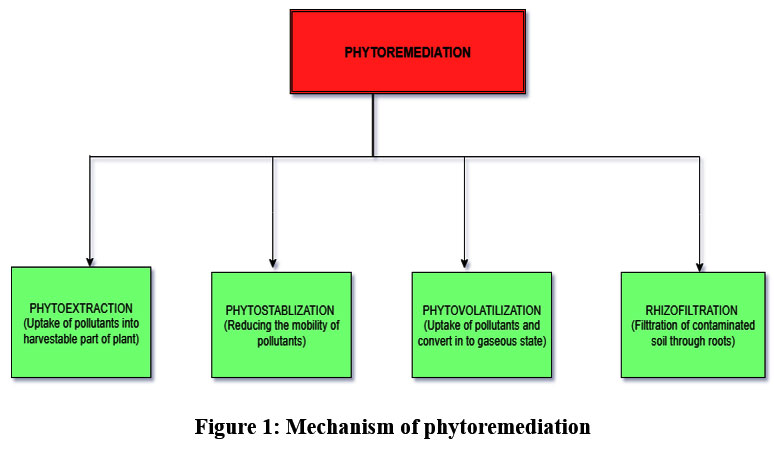 | Figure 1: Mechanism of phytoremediation
|
Overview of methods used in the literature
Heavy Metal Analysis
To assess the potential of different weed species in remediating soils contaminated with lead, nickel, cadmium, and arsenic, where heavy metal concentrations were quantified using inductively coupled plasma mass spectrometry (ICP-MS). The calibration curves for arsenic (As), cadmium (Cd), mercury (Hg), and lead (Pb) demonstrated excellent linearity across the calibration range.6 This involved the preparation of standard addition solutions utilizing heavy metal mix TraceCERT VIII standard solutions, ensuring accuracy in the calibration process.18
Sample Preparation
Homogenization of the samples is critical for reproducibility and accuracy in the analysis. Samples are grounded using various milling techniques to obtain a fine powder with a particle size of 100 µm or smaller.19 This included methods such as cryogenic milling with stainless steel or zirconia milling beakers and balls, which offered different throughput and homogeneity outcomes. The digestion of samples was performed using a microwave digestion system, optimizing conditions to achieve clear solutions suitable for ICP-MS analysis.6
Recovery Rates
The recovery rates for the heavy metals are assessed to ensure the reliability of the analytical methods employed. The results indicates that recovery rates for all analyzed heavy metals fell within an acceptable range of ±10%, confirming the method's effectiveness in accurately measuring heavy metal concentrations.6
Plant Uptake and Translocation Assessment
Bioconcentration factor (BCF) and translocation factor (TF) are the key factors which are used to assess the capacity of weed species to uptake and translocate heavy metals.20 The BCF evaluates the addition of heavy metals in plant tissues relative to their concentration in the surrounding soil, while the TF measures the efficiency of metal transport from roots to aerial parts of the plants.5 A translocation factor of 1 or more indicates the ability of a plant species to effectively transfer metals to its aerial parts, an essential characteristic for successful phytoremediation.4
Phytoremediation Strategies
Various phytoremediation strategies are assessed, focusing on the potential enhancement of metal uptake and detoxification mechanisms.10 The study of hyperaccumulator plants has been vital in understanding how specific species can handle and store heavy metals, thereby providing insights into optimizing their use for soil remediation.2 This included exploring genetic engineering and microbe-assisted approaches that may further increase the efficiency of these plants in contaminated environments.5
Evaluation of Plant Species
The selection of plant species for phytoremediation must consider several characteristics: high tolerance to toxic effects of heavy metals, significant biomass production, and the ability to thrive in contaminated soils.5 Previous studies aimed to identify and evaluate weed species that possess these traits to enhance the efficiency of phytoremediation practices, ultimately contributing to the detoxification of contaminated sites.21 The collected data from heavy metal analyses, recovery rates, and plant uptake assessments provide a robust framework for evaluating the potential of various weed species in addressing soil contamination issues.22
Environmental Factors Influencing Phytoremediation
Phytoremediation is significantly affected by various environmental factors, which influence the efficiency of plants in removing, stabilizing, or translocating potentially toxic elements (PTEs) from contaminated soils.23 These factors include soil properties, pH levels, nutrient availability, and moisture conditions.
Soil Properties
The physico-chemical properties of soil play a vital role in phytoremediation outcomes.24 Soil texture, organic matter (OM) content and the existence of specific minerals can affect the bioavailability of heavy metals.25 For instance, sandy soils may enhance drainage but also limit nutrient retention, which is essential for plant growth and health.26Addition of organic matter can improve soil structure and enhance microbial activity, which in turn can aid in the degradation of contaminants and improve metal bioavailability.4
pH Levels
Soil pH significantly impacts the solubility and availability of heavy metals.27 High pH levels can result in increased metal retention and decreased solubility, thereby limiting plant uptake.4 Conversely, lower pH levels typically increase the availability of metals like cadmium (Cd), making them more accessible to plant roots. The increase in soil pH from 8.5 to 9.1 after contamination with Cd and Pb illustrates that how contamination can alter soil chemistry and affect nutrient absorption by plants.26
Nutrient Availability
The availability of key nutrients like nitrogen (N), phosphorus (P), and potassium (K) plays a crucial role in supporting the growth and efficiency of plants used in phytoremediation.24 Nutrient deficiencies can limit plant growth and, consequently, their ability to uptake heavy metals. Research indicates that contaminated soils often show decreased levels of available nutrients, which can hinder the effectiveness of phytoremediation efforts. For example, in studies involving Jacaranda mimosifolia, reduced concentrations of N, P and K were noted in plants grown in contaminated soils compared to controls.26
Moisture Conditions
Water availability is another critical factor that influences phytoremediation. The moisture content of the soil affects both the physiological processes of plants and the mobility of contaminants.28 Inadequate water can lead to stress in plants, reducing their capacity to absorb nutrients and contaminants effectively.26Additionally, varying moisture conditions can influence the microbial communities in the soil, which are important for bioremediation processes.29
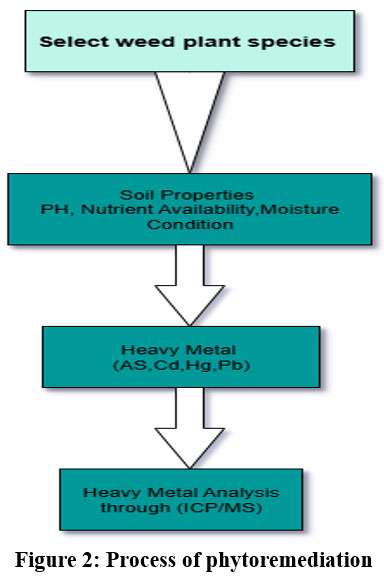 | Figure 2: Process of phytoremediation
|
Case Studies
Overview of Phytoremediation Successes
Phytoremediation technique has emerged as a promising technology for addressing soil contamination, particularly for the hazardous and toxic heavy metals such as lead, nickel, cadmium and arsenic.30 Various case studies demonstrate the effectiveness of specific plant species in remediating contaminated sites.31 For example, plants like Jacaranda mimosifolia have shown potential as effective phytoextractors for cadmium, with reports indicating that they can achieve bioconcentration factors (BCFs) suitable for remediation under certain conditions.26,32
Urban Phytoremediation Projects
In urban environments, community-driven phytoremediation projects have gained traction.33 Local residents often engage in initiatives such as tree planting and urban gardening, which not only improve the local ecology but also foster community involvement and stewardship of the environment.34 These efforts frequently include the use of plants that are known for their heavy metal absorption capabilities, contributing to the reduction of soil contamination while simultaneously enhancing green spaces in citieS.35
Comparative Studies of Plant Species
Comparative studies of different plant species have classified them based on their heavy metal absorption capabilities.36 Species can be categorized as heavy metal (HM) aggregators, indicators, or excluders, each with distinct physiological traits that influence their effectiveness in phytoremediation.37 For instance, HM aggregators are adept at accumulating heavy metals to levels significantly higher than that of the surrounding soil, making them invaluable for remediative efforts.2,38 Research has highlighted the role of dense root systems in facilitating the uptake of metals such as Pb, Cd and Zn; reinforcing the importance of selecting appropriate plant species for specific contaminated sites.39
Parthenium hysterophorus
A pot experiment demonstrated its ability to accumulate cadmium (Cd) and lead (Pb) from soil. Highest Cd in shoots: 283.6 mg/kg (without EDTA) and 300.1 mg/kg (with EDTA); Pb in shoots ranged from 4.30–9.56 mg/kg, enhanced by EDTA.44
Pteris vittata
It is also known as Chinese brake fern, a common invasive weed which accumulated arsenic (As) up to 22630 mg/kg in leaves, while soil contained 38.9 mg/kg As.45
Challenges and Future Directions
While the success stories in phytoremediation are encouraging, several challenges remain.40 Limited research exists on the long-term ecological impacts of using certain plant species, including potential toxic effects of accumulated metals on surrounding wildlife and ecosystems.1 Furthermore, there is a pressing need to develop strategies for promoting the growth of hyperaccumulating species in severely contaminated environments, such as abandoned mining sites where soil quality is poor.39Addressing these issues is crucial for the future of phytoremediation as a viable environmental restoration technique.37
Discussion
Reported Phytoremediation Potential of Weed Species
There is considerable evidence that supports the capacity of several weed species to accumulate heavy metals such as cadmium (Cd), lead (Pb), chromium (Cr) and arsenic (As). Across greenhouse and field studies, weed plants often show higher adaptability and biomass accumulation under stress than many hyperaccumulator species, making them valuable for practical phytoremediation applications.
Meta-analysis has revealed that Amaranthus retroflexus can significantly accumulate metals including Cd, Pb, and Zn, showing bioaccumulation factors (BAF) and translocation factors (TF) frequently above 1.0, which indicates strong potential for phytoextraction. Field studies demonstrated that shoots of Amaranthus can accumulate over 200 mg/kg Cd and 500 mg/kg Pb under contaminated conditions, while maintaining biomass yields sufficient for repeated harvest.46 Parthenium hysterophorus, an invasive weed in South Asia, has been evaluated for its ability to absorb Cd and Pb. When combined with chelating agents (e.g., EDTA or citric acid), its uptake efficiency increased significantly, with leaf concentrations exceeding 300 mg/kg Pb in contaminated soils. This species’ aggressive growth and wide distribution make it a practical choice, though its invasiveness and potential allelopathic effects on native flora are management concerns.48 Solanum nigrum has been reported to tolerate and accumulate high concentrations of Cd, with shoot Cd concentrations reaching up to 150 mg/kg in controlled experiments. Its ability to translocate Cd from root to shoot makes it an effective candidate for phytoextraction. Moreover, intercropping studies suggest that growing S. nigrum alongside food crops can help immobilize Cd in non-edible plant tissues, thereby reducing entry into the food chain.50 Plantago major and Plantago lanceolata have shown strong accumulation of metals such as Pb, Zn, and Cu in urban roadside soils. While not classical hyperaccumulators, their ecological tolerance, perennial habit, and ability to survive in disturbed soils make them useful as bioindicators and for localized stabilization of polluted sites. Aquatic invasive species such as water hyacinth (Eichhornia crassipes) exhibit strong rhizofiltration potential. Studies show that roots of E. crassipes can accumulate up to 3000 mg/kg Pb and over 2000 mg/kg Zn from wastewater. Its rapid growth and ease of harvesting make it ideal for treating metal-contaminated ponds or effluents, though biomass disposal remains a critical issue.49
The criteria for the selection of plants used in phytoremediation should be that they should be high metal tolerant and have shorter life cycle, broad distribution and large biomass generation potential. There are two main factors are commonly applied for the assessment of the phytoremediation potential of a plant: bioconcentration factor and translocation factor. The shoot-to-root ratio of heavy metal and the root-to-soil ratio of heavy metal is referred as the TF and BCF. Plants with more than one TF and BCF (TF > 1 and BCF > 1) are expected to be used in phytoextraction (Table 1).56
Table 1: Some plants used in phytoremediation
Heavy Metals | Plant Species | BCF | TF | References |
As (468.0, 442.0, 304.0 mg/kg) | Pteridium aquilinum; Ludwigia erecta; Sacciolepis cymbiandra | 3.31 1.01 1.47 | 0.16 0.56 0.81 | Onyia et al., 202154 |
Cr (100 mg/kg) | Brachiaria mutica; Leptochloa fusca | 1.28 2.0 | 0.02 0.03 | Ullah et al., 202155 |
Cd (100 mg/kg) | Lantana camara | 4.78 | 4.90 | Liu et al., 201951 |
Zn (160 mg/kg) | Tagetes erecta | 10.5 | 0.24 | Madanan et al., 202153 |
Pb | Pinus sylvestris | 1.60 | 0.18 | Andras et al., 201652 |
BCF= Bioconcentration factor; TF= Translocation factor
Comparative Efficacy of Weed Species
Across studies, Amaranthus retroflexus and Parthenium hysterophorus consistently rank high in both BAF and TF, making them strong candidates for phytoextraction. Solanum nigrum shows species-specific specialization for Cd, while Plantago spp. are more effective in stabilization roles. Aquatic weeds like Eichhornia dominate in rhizofiltration scenarios. This functional diversity indicates that weed species can be matched to remediation goals: removal (phytoextraction) vs immobilization (phytostabilization).47
Meta-analysis suggests that Amaranthus can remove 5–10 times more metal per unit biomass compared to grasses commonly used in remediation, while aquatic weeds like Eichhornia outperform terrestrial weeds in water systems by two orders of magnitude.46, 49
Environmental and Management Considerations
Phytoremediation, the use of plants to remediate contaminated environments, presents a promising solution for addressing heavy metal pollution in soils, particularly those contaminated with lead, nickel, cadmium, and arsenic.30 This method is not only cost-effective but also ecologically sustainable, as it utilizes natural processes and solar energy to extract or stabilize contaminants within plant tissues, thereby mitigating environmental hazards associated with traditional remediation techniques.2, 40
Metal Bioavailability
Metal uptake efficiency depends strongly on soil chemistry. Chelating agents (e.g., EDTA, DTPA) can increase phytoavailability, but pose risks of leaching into groundwater. More sustainable amendments such as biochar, compost, and organic acids are being studied as alternatives that enhance uptake while maintaining environmental safety.
Weed Invasiveness
Many of the species with high remediation potential are invasive (Parthenium, Eichhornia). While their aggressive growth aids phytoremediation, it also risks ecological imbalance. Thus, containment strategies, harvest management, and risk-benefit analysis are essential before large-scale deployment.
Biomass Disposal
Table 2: A persistent challenge is the safe disposal of contaminated biomass. Strategies include:
Incineration | with controlled ash management. |
Phytomining | where valuable metals (e.g., Ni) are recovered |
Composting with immobilization agents | though this is only safe for low-to-moderate contamination. Without proper disposal, secondary contamination risks outweigh phytoremediation benefits |
Benefits of Phytoremediation
Phytoremediation offers multiple advantages over conventional methods of soil decontamination.41 It can efficiently reduce the concentration of heavy metals, which are persistent pollutants that pose a serious risks to the health of human beings and animals, as well as the broader ecosystem.42 This process enhances soil fertility and prevents erosion, as plants stabilize heavy metals and reduce leaching into groundwater.40 Moreover, it can be applied on a large scale, making it feasible for extensive contaminated sites.5 The use of phytoremediation can lead to improved biodiversity by promoting the growth of various plant species that are capable of thriving in contaminated soils. This biodiversity is crucial for maintaining ecological balance and resilience against environmental stressors. Involving local communities in phytoremediation initiatives not only encourages a sense of responsibility and ownership toward environmental challenges but also strengthens social ties and promotes awareness of sustainable practices.34
Limitations and Challenges
Despite its many benefits, phytoremediation has limitations that must be acknowledged. The process can be slow, often requiring several growing seasons to achieve significant reductions in pollutant levels.40 Research into the efficacy of specific plant species is often conducted in controlled environments, which may not accurately reflect the complexities of field conditions.26 Therefore, long-term studies are necessary to fully understand the capabilities and potential of various plant species in real-world scenarios. Furthermore, certain heavy metals may be more challenging for plants to uptake and translocate, necessitating the integration of biotechnological approaches or the use of specific microbial species to enhance the effectiveness of phytoremediation.2As climate change increases the frequency of extreme weather events, the stability and effectiveness of phytoremediation may also be compromised, leading to potential recontamination of treated areas.43
Conclusion
Overall, phytoremediation offers an eco-friendly and economical strategy for reducing heavy metal contamination in soils, especially in cases involving lead, nickel, cadmium and arsenic. Weed plant species, both invasive and non-invasive, exhibit significant potential for hyperaccumulation and stabilization of these metals, leveraging unique adaptations and soil interactions. Despite its promise, challenges such as slow remediation processes, ecological impacts, and site-specific limitations necessitate further research. Advancements in species selection, biotechnological integration, and management practices will be critical for optimizing this green technology. As a scalable and environmentally friendly approach, phytoremediation holds the potential to significantly contribute to ecological restoration and public health enhancement.
Acknowledgement
The author would like to thank Government Science College, Jabalpur for granting the Ph.D. research work. The Department of Environmental Science, Government Science College is highly appreciated for allowing the environmental science related work.
Funding Sources
The author(s) received no financial support for the research, authorship, and/or publication of this article.
Conflict of Interest
The authors do not have any conflict of interest.
Data Availability Statement
This statement does not apply to this article.
Ethics Statement
This research did not involve human participants, animal subjects, or any material that requires ethical approval.
Informed Consent Statement
This study did not involve human participants, and therefore, informed consent was not required.
Author Contributions
Nisha Patel: Data Collection, Analysis, Writing – Review & Editing.
R. K. Srivastava: Conceptualization, Methodology, Writing – Original Draft
References
- Khan IU, Qi SS, Gul F, et al. A green approach used for heavy metals ‘phytoremediation’ via invasive plant species to mitigate environmental pollution: a review. Plants. 2023; 12(4):725.
- Islam MM, Saxena N, Sharma D. Phytoremediation as a green and sustainable prospective method for heavy metal contamination: a review. RSC Sustain. 2024.
- Bode G. Back to the Root - The Role of Botany and Plant Physiology in Cannabis Testing, Part I: Understanding Mechanisms of Heavy Metal Uptake in Plants. Cannabis Sci Technol. 2020; 3(2):26-29.
- Alsafran M, Usman K, Ahmed B, et al. Understanding the phytoremediation mechanisms of potentially toxic elements: a proteomic overview of recent advances. Front Plant Sci. 2022; 13:881242.
- Yan A, Wang Y, Tan SN, et al. Phytoremediation: a promising approach for revegetation of heavy metal-polluted land. Front Plant Sci. 2020; 11:359.
- Altmaier S. The big four heavy metals in Cannabis: sample preparation and analysis via ICP-MS. Cannabis Sci Technol. 2021; 4:24-29.
- Waheed M, Haq SM, Arshad F, et al. Phyto-ecological distribution patterns and identification of alien invasive indicator species in relation to edaphic factors from semi-arid region. Ecol Indic. 2023; 148:110053.
- Bashar HK, Juraimi AS, Ahmad-Hamdani MS, et al. A mystic weed, Parthenium hysterophorus: threats, potentials and management. Agronomy. 2021;11(8):1514.
- Afzal MR, Naz M, Wan J, et al. Insights into the mechanisms involved in lead (Pb) tolerance in invasive plants—the current status of understanding. Plants. 2023;12(11):2084.
- Kushwaha A, Rani R, Kumar S, Gautam A. Heavy metal detoxification and tolerance mechanisms in plants: Implications for phytoremediation. Environ Rev. 2015; 24(1):39-51.
- Lavanya MB, Viswanath DS, Sivapullaiah PV. Phytoremediation: An eco-friendly approach for remediation of heavy metal-contaminated soils - A comprehensive review. Environ Nanotechnol Monit Manag. 2024; 100975.
- Ghori Z, Iftikhar H, Bhatti MF, et al. Phytoextraction: the use of plants to remove heavy metals from soil. In: Ahmad P, ed. Plant Metal Interaction. 2016; 385-409.
- Singh OV, Jain RK. Phytoremediation of toxic aromatic pollutants from soil. Appl Microbiol Biotechnol. 2003; 63:128-135.
- Ijaz A, Imran A, Anwar ul Haq M, et al. Phytoremediation: recent advances in plant-endophytic synergistic interactions. Plant Soil. 2016; 405:179-195.
- Limmer M, Burken J. Phytovolatilization of organic contaminants. Environ Sci Technol. 2016; 50(13):6632-6643.
- Shackira AM, Puthur JT. Phytostabilization of heavy metals: understanding of principles and practices. In: Ahmad P, ed. Plant-Metal Interactions. 2019; 263-282.
- Wang L, Rinklebe J, Tack FM, Hou D. A review of green remediation strategies for heavy metal contaminated soil. Soil Use Manage. 2021; 37(4):936-963.
- Krata AA, Wojciechowski M, Kalabun M, Bulska E. Reference measurements of cadmium and lead contents in candidates for new environmental certified materials by isotope dilution inductively coupled plasma mass spectrometry. Microchem J. 2018; 142:36-42.
- Sánchez-Moreno RA, Gismera MJ, Sevilla MT, Procopio JR. Direct and rapid determination of ultratrace heavy metals in solid plant materials by ET-AAS ultrasonic-assisted slurry sampling. Phytochem Anal. 2010; 21(4):340-347.
- Cakaj A, Lisiak-Zieliska M, Han A, et al. Common weeds as heavy metal bioindicators: a new approach in biomonitoring. Sci Rep. 2023; 13(1):6926.
- Khattak WA, Sun J, Hameed R, et al. Unveiling the resistance of native weed communities: insights for managing invasive weed species in disturbed environments. Biol Rev. 2024; 99(3):753-777.
- Aghili S, Golzary A. Greening the earth, healing the soil: A comprehensive life cycle assessment of phytoremediation for heavy metal contamination. Environ Technol Innov. 2023; 32:103241.
- Chen L, Beiyuan J, Hu W, et al. Phytoremediation of potentially toxic elements (PTEs) contaminated soils using alfalfa (Medicago sativa L.): A comprehensive review. Chemosphere. 2022; 293:133577.
- Pinto E, Aguiar AA, Ferreira IM. Influence of soil chemistry and plant physiology in the phytoremediation of Cu, Mn, and Zn. Crit Rev Plant Sci. 2014;33(5):351-373.
- Zhang C, Yu ZG, Zeng GM, et al. Effects of sediment geochemical properties on heavy metal bioavailability. Environ Int. 2014; 73:270-281.
- El-Mahrouk ES, Ebrahim HM, Gaber MK, et al. Performance of Growth and Remediation Potency of Jacaranda mimosifolia in Cadmium and Lead Contaminated Soil. BioResources. 2025; 20(1):1547-1576.
- Chuan MC, Shu GY, Liu JC. Solubility of heavy metals in a contaminated soil: effects of redox potential and pH. Water Air Soil Pollut. 1996; 90:543-556.
- Magdziak Z, Gsecka M, Goliski P, Mleczek M. Phytoremediation and environmental factors. In: Ansari AA, Gill SS, Gill R, Lanza GR, Newman L, eds. Phytoremediation: Management of Environmental Contaminants. 2015; 1:45-55.
- Haghollahi A, Fazaelipoor MH, Schaffie M. The effect of soil type on the bioremediation of petroleum contaminated soils. J Environ Manage. 2016; 180:197-201.
- Sarwar N, Imran M, Shaheen MR, et al. Phytoremediation strategies for soils contaminated with heavy metals: modifications and future perspectives. Chemosphere. 2017; 171:710-721.
- Cunningham SD, Berti WR. Remediation of contaminated soils with green plants: an overview. In Vitro Cell Dev Biol Plant. 1993; 29:207-212.
- Cortés-Jiménez EV, Mugica-Álvarez V, González-Chávez MCA, et al. Natural revegetation of alkaline tailing heaps at Taxco, Guerrero, Mexico. Int J Phytoremediation. 2013; 15(2):127-141.
- Singh AK, Shukla S, Singh MK, et al. Urban Forests: Importance, Challenges and Opportunities. In: Urban Forests, Climate Change and Environmental Pollution. Springer; 2024:23-45.
- Nissim WG, Labrecque M. Reclamation of urban brownfields through phytoremediation: Implications for building sustainable and resilient towns. Urban For Urban Green. 2021; 65:127364.
- El-Keblawy A, Almehdi AM, Elsheikh EA, et al. Native desert plants have the potential for phytoremediation of phytotoxic metals in urban cities: implications for cities sustainability in arid environments. Sci Rep. 2024;14(1):13761.
- Tangahu BV, Sheikh Abdullah SR, Basri H, et al. A review on heavy metals (As, Pb, and Hg) uptake by plants through phytoremediation. Int J Chem Eng. 2011; 939161.
- Saxena G, Purchase D, Mulla SI, Saratale GD, Bharagava RN. Phytoremediation of heavy metal-contaminated sites: eco-environmental concerns, field studies, sustainability issues, and future prospects. Rev Environ Contam Toxicol. 2020; 249:71-131.
- Kaur N, Bashir S, Vadhel A, et al. Assessment of Phytoremediation Potential of Three Weed Plant Species in Soil Contaminated with Lead and Chromium. Int J Agron. 2023; 2271039.
- Weis JS, Weis P. Metal uptake, transport and release by wetland plants: implications for phytoremediation and restoration. Environ Int. 2004; 30(5):685-700.
- Mahar A, Wang P, Ali A, et al. Challenges and opportunities in the phytoremediation of heavy metals contaminated soils: A review. Ecotoxicol Environ Saf. 2016; 126:111-121.
- Liu N, Zhao J, Du J, et al. Non-phytoremediation and phytoremediation technologies of integrated remediation for water and soil heavy metal pollution: A comprehensive review. Sci Total Environ. 2024; 174237.
- Wani ZA, Ahmad Z, Asgher M, et al. Phytoremediation of potentially toxic elements: Role, status and concerns. Plants. 2023; 12(3):429.
- Zhang Y, Shen Z, Zhou W, et al. Environmental problems of emerging toxic metals and treatment technology and methods. RSC Adv. 2024; 14(50):37299-37310.
- Ejaz U, Khan SM, Aqeel M, et al. Use of Parthenium hysterophorus with synthetic chelator for enhanced uptake of cadmium and lead from contaminated soils—a step toward better public health. Front Public Health. 2022; 10:1009479. doi:10.3389/fpubh.2022.1009479
- Ma LQ, Komar K M, Tu C, Zhang W, Cai Y, & Kennelley ED. A fern that hyperaccumulates arsenic. Nature. 2001; 409(6820):579-579.
- Tozsér D, Yelamanova A, Sipos B, Magura T, Simon E. A meta-analysis on the heavy metal uptake in Amaranthus species. Environ Sci Pollut Res. 2023;30(36):85102-85112.
- Oubohssaine M, Dahmani I. Phytoremediation: Harnessing plant power and innovative technologies for effective soil remediation. Plant Stress. 2024; 14:100578.
- Ejaz U, Khan SM, Aqeel M, Khalid N, Sarfraz W, Naeem N, et al. Use of Parthenium hysterophorus with synthetic chelator for enhanced uptake of cadmium and lead from contaminated soils—a step toward better public health. Front Public Health. 2022; 10:1009479.
- Churko EE, Nhamo L, Chitakira M. Phytoremediation capacity of water hyacinth (Eichhornia crassipes) as a nature-based solution for contaminants and physicochemical characterization of lake water. Water. 2023;15(14): 2540.
- Kama R, Ma Q, Nabi F, Aidara M, Huang P, Li Z, et al. Hyperaccumulator Solanum nigrum L. intercropping reduced rice cadmium uptake under a high-bed and low-ditch planting system. Plants. 2023;12(23): 4027.
- Liu S, Ali S, Yang R, Tao J, Ren B. A newly discovered Cd-hyperaccumulator Lantana camara L. J Hazard Mater. 2019;371: 233-242.
- Andráš P, Turisová I, Buccheri G, de Matos JMX, Dirner V. Comparison of heavy-metal bioaccumulation properties in Pinus sp. and Quercus sp. in selected European Cu deposits. Web Ecol. 2016;16: 81-87.
- Madanan MT, Shah IK, Varghese GK, Kaushal RK. Application of Aztec marigold (Tagetes erecta L.) for phytoremediation of heavy metal polluted lateritic soil. Environ Chem Ecotoxicol. 2021;3: 17-22.
- Onyia PC, Ozoko DC, Ifediegwu SI. Phytoremediation of arsenic-contaminated soils by arsenic hyperaccumulating plants in selected areas of Enugu State, southeastern Nigeria. Geol Ecol Landscapes. 2021;5: 308-319.
- Ullah S, Mahmood S, Ali R, Khan MR, Akhtar K, Depar N. Comparing chromium phyto-assessment in Brachiaria mutica and Leptochloa fusca growing on chromium polluted soil. Chemosphere. 2021; 269:128728.
- Sharma JK, Kumar N, Singh NP, Santal AR. Phytoremediation technologies and their mechanism for removal of heavy metal from contaminated soil: An approach for a sustainable environment. Front Plant Sci. 2023; 14:1076876.