The Changing Perspective of Livelihood in Rural Society and the Role of NGOs in Livelihood Diversification: A Case Study of Chamoli’s Agrarian Communities
Roosen Kumar1
 , Shri Ram Singh2
*
and Mohan Lal Meena2
, Shri Ram Singh2
*
and Mohan Lal Meena2
1
Department of Geography,
Delhi School of Economics,
University of Delhi,
India
2
School of Social Sciences,
Jawaharlal Nehru University,
New Delhi,
India
http://dx.doi.org/10.12944/CWE.20.2.29
Copy the following to cite this article:
Kumar R, Singh S. R, Meena M. L. The Changing Perspective of Livelihood in Rural Society and the Role of NGOs in Livelihood Diversification: A Case Study of Chamoli’s Agrarian Communities. Curr World Environ 2025;20(2). DOI:http://dx.doi.org/10.12944/CWE.20.2.29
Copy the following to cite this URL:
Kumar R, Singh S. R, Meena M. L. The Changing Perspective of Livelihood in Rural Society and the Role of NGOs in Livelihood Diversification: A Case Study of Chamoli’s Agrarian Communities. Curr World Environ 2025;20(2).
Download article (pdf)
Citation Manager
Publish History

Introduction
The mountain regions of India, particularly in the Himalayan belt, represent a unique socio-economic landscape where traditional agrarian practices intersect with modern development challenges. These regions, characterised by difficult terrain, limited accessibility, and fragile ecosystems, have witnessed significant transformations in livelihood patterns over the past few decades.¹ The concept of livelihood, encompasses the capabilities, assets, and activities required for securing a means of living, particularly in the context of sustainable development.² In rural mountain communities, this traditional understanding of livelihood has undergone substantial evolution, influenced by factors ranging from climate change and environmental degradation to market integration and technological advancement.³ Chamoli district in Uttarakhand, nestled in the Garhwal Himalayas, exemplifies the complex dynamics of rural mountain society undergoing rapid socio-economic transformation. The district, with an area of 8,030 sq. km. and a predominantly rural population dependent on agriculture and allied activities, has experienced significant shifts in traditional livelihood strategies.4 The 2011 Census data indicates that over 80 % of Chamoli's population resides in rural areas, with agriculture serving as the primary occupation for nearly 70 % of the workforce.5 However, the sustainability of these traditional livelihood systems has come under increasing pressure due to factors such as declining agricultural productivity, outmigration of youth, and the impacts of climate change on mountain ecosystems.6
The role of Non-Governmental Organisations (NGOs) in facilitating livelihood transitions and rural development in mountain regions has gained considerable attention in recent decades. NGOs have emerged as a crucial bridge between government programs and local communities, often filling gaps in service delivery and promoting participatory development approaches.7 In the context of the Chamoli district, various NGOs have been actively involved in promoting alternative livelihood options, capacity building, and sustainable resource management practices.8 NGOs and local community-based organisations have implemented numerous interventions aimed at diversifying income sources and enhancing the resilience of mountain communities.9 The changing perspective of livelihood in rural mountain areas reflects a broader paradigm shift from subsistence-oriented agriculture to diversified income strategies that incorporate both traditional and modern economic activities.10 This transformation is particularly evident in the adoption of cash crops, eco-tourism initiatives and skill-based enterprises.¹¹ However, this transition is not without challenges, as it often involves trade-offs between economic gains and cultural preservation, environmental sustainability, and social equity. The theoretical framework for understanding livelihood changes in mountain regions draws from sustainable livelihood approaches that emphasise the importance of assets (natural, physical, human, financial, and social), institutions, and vulnerability contexts in shaping livelihood outcomes. Ellis's concept of livelihood diversification provides another lens through which to analyse the strategies adopted by mountain communities to reduce risk and enhance income security. Ellis's livelihood diversification concept describes how households pursue multiple income sources rather than relying on one activity. It serves two main purposes: reducing risk (if one income fails, others provide backup) and increasing total earnings. For mountain communities, this typically means combining farming with livestock, seasonal labour migration, trading, crafts, or tourism services. The strategy spreads activities across different sectors, seasons, and locations to create economic resilience in environments prone to weather shocks, market volatility, and seasonal constraints. The approach requires access to various resources - skills, social networks, capital, and infrastructure and evolves as opportunities and circumstances change.12
The primary objectives of this research are to analyse the changing patterns of livelihood in Chamoli district, assess the role and effectiveness of NGO interventions in livelihood transformation, identify challenges and opportunities in the current livelihood scenario, and provide recommendations for sustainable livelihood development. These objectives guide the comprehensive investigation into the socio-economic dynamics of the region and the impact of external interventions on community welfare. This study addresses several critical questions that form the foundation of the research inquiry. This study examines livelihood transformations in Chamoli district over the past decade, analysing changing economic patterns and their driving factors. It assesses the scope and nature of NGO interventions in the district, evaluating community perceptions and measuring the effectiveness of these programs in improving household incomes and livelihood security.
Study Area Profile
Chamoli district, covering an area of 8,030 sq. km, is one of the thirteen districts of Uttarakhand state in northern India. Strategically located along the Indo-Tibet border, the district has an elevation ranging from 800 to 8,000 meters above mean sea level, making it one of the most geographically diverse regions in the state. The district is administratively divided into nine blocks: Dasoli, Ghat, Tharali, Karnaprayag, Pokhari, Dewal, Gairsain, Joshimath, and Chamoli, each with distinct geographical and socio-economic characteristics that influence livelihood patterns and development priorities. The demographic characteristics of Chamoli district reflect typical patterns found in mountain regions of India. With a population of 391,605 according to the 2011 Census, the district has a relatively low population density of 49 persons per square kilometre, significantly below the national average. which is largely attributed to the overwhelmingly large proportion of the geographical area falling under permanent ice cover and forest land. The literacy rate of 82.65 % is above the national average, indicating the district's emphasis on education. However, the rural population constitutes 89.31 % of the total, highlighting the predominantly rural character of the district and the importance of rural development initiatives. The economy of Chamoli district is primarily agrarian, with agriculture and allied activities employing approximately 75 % of the workforce, making it the backbone of the local economy. Traditional crops include wheat, rice, mandua (finger millet), jhangora (barnyard millet), and various vegetables, mostly grown under rain-fed conditions with limited irrigation facilities. Horticulture, particularly apple cultivation in higher altitudes and citrus fruits in lower regions, has gained importance in recent years and represents a significant opportunity for income enhancement. Tourism, centred around famous religious sites like Badrinath and Kedarnath, Hemkund Sahib and Valley of Flowers, contributes significantly to the local economy, providing employment opportunities in hospitality, transportation, and related services, though its seasonal nature creates income volatility for dependent households. The figure 1 below shows the study area:
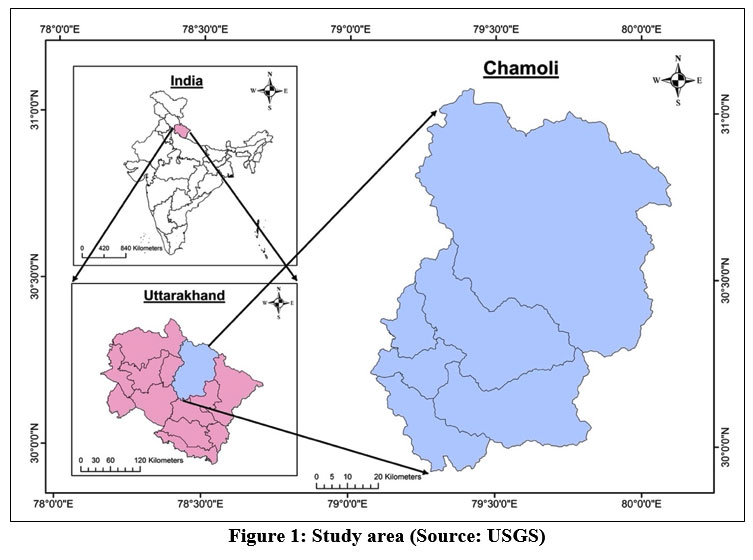 | Figure 1: Study area (Source: USGS)
|
Materials and Methods
Research Design
This study employed a mixed-method approach, combining quantitative survey data with qualitative insights from focus group discussions and key informant interviews to provide a comprehensive understanding of livelihood dynamics and NGO interventions in Chamoli district. A cross-sectional survey design was adopted to capture the current livelihood status and changes over time through retrospective questions, allowing for analysis of trends and patterns without the time and resource constraints of a longitudinal study. The mixed-method approach enabled triangulation of data sources.
Sampling Strategy
A multi-stage stratified random sampling technique was employed to ensure representative coverage across the diverse geographical and socio-economic landscape of Chamoli district. The sampling strategy involved selecting two blocks from the nine administrative blocks based on accessibility, presence of NGO activities, and geographical diversity. From the selected blocks of Pokhari and Karnaprayag, 50 households were randomly selected from each block, resulting in a total sample size of 100 households. This sampling approach ensured adequate representation of different altitudinal zones, livelihood patterns, and levels of development intervention while maintaining the feasibility of data collection within the study's resource constraints.
Data Collection
Primary data collection was conducted through structured questionnaires from those who possessed comprehensive knowledge about household livelihood activities and historical changes. The questionnaire was designed to capture demographic information, current and past livelihood activities, income sources and levels, interactions with NGOs and government programs, and perceptions about livelihood changes and challenges. Focus group discussions were conducted in each block with community members, including both NGO beneficiaries and non-beneficiaries, to gather collective perspectives on livelihood changes, NGO effectiveness, and community priorities for future development.
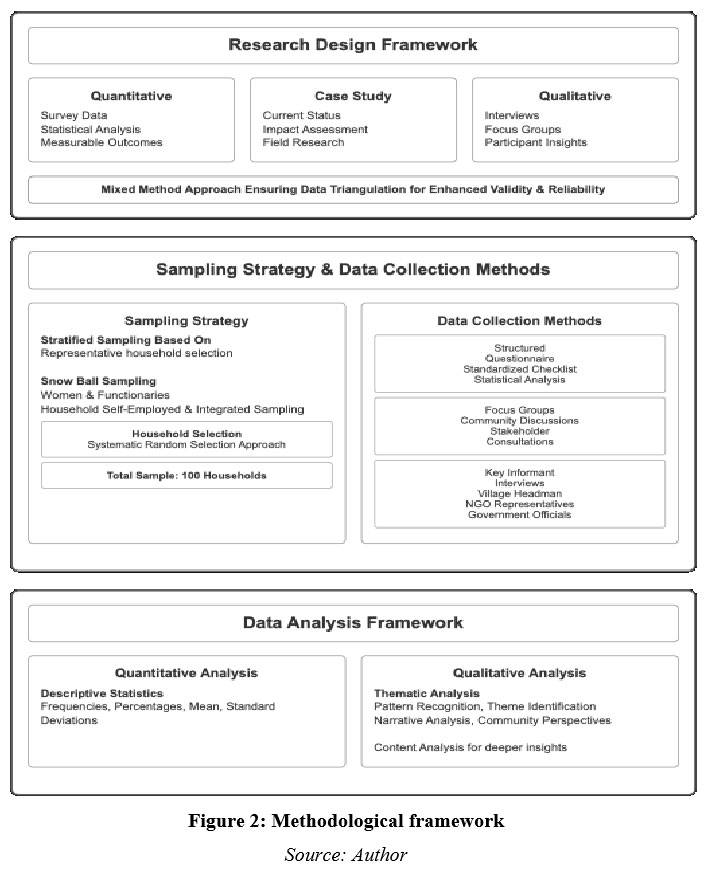 | Figure 2: Methodological framework
|
Source: Author
Data Analysis
Statistical analysis was performed using descriptive statistics to summarise the key characteristics of the sample and identify patterns in livelihood activities and NGO interventions. Frequencies, percentages, means, and standard deviations were calculated for relevant variables to provide a comprehensive picture of the current situation. Thematic analysis was applied to qualitative data from focus group discussions to identify recurring themes, community perceptions, and insights that complemented the quantitative findings.
Results
Demographic Characteristics of the Sample
The demographic profile of the 100 sample households reveals important characteristics that influence livelihood patterns and development outcomes in Chamoli district (Table 1). Male-headed households constitute 68 % of the sample, while female-headed households account for 32 %, reflecting the significant impact of male out-migration on household structure and decision-making processes. The high proportion of female-headed households indicates the feminisation of rural areas and has implications for agricultural practices, income generation, and development program design. The age distribution of household heads shows that 41 % fall in the 36-50 years category, representing the most economically active segment of the population. This group is typically in their prime working years and most likely to engage in livelihood diversification activities. The 28 % of household heads in the 51-65 years category represents an experienced segment that often maintains traditional livelihood practices while gradually adapting to new opportunities.
Younger household heads (20-35 years) comprise 23 % of the sample and are more likely to adopt innovative livelihood strategies, while only 8 % are above 65 years, indicating either out-migration of younger family members or joint family structures where older members maintain nominal headship. Educational level among household heads shows that 34 % have secondary education, followed by 28 % with primary education, indicating reasonable literacy levels in the sample. However, 15 % are illiterate, primarily among older respondents and women, highlighting the need for adult literacy programs. The 16 % with higher secondary education and 7 % with graduate and above qualifications represent the more educated segment that is likely to engage in diverse income-generating activities and demonstrate greater adaptability to changing economic conditions. Family size distribution indicates that 47 % of households have 5-7 members, representing the typical extended family structure common in rural areas. Smaller families of 2-4 members constitute 42 % of the sample, possibly reflecting nuclear family trends or the impact of out-migration. Only 11 % of households have 8 or more members, suggesting a trend toward smaller family sizes compared to traditional patterns in the region.
Table 1: Household Characteristics
Characteristic | Category | Frequency | Percentage |
Gender of Household Head | Male | 68 | 68 |
Female | 32 | 32 | |
Age Group | 20-35 years | 23 | 23 |
36-50 years | 41 | 41 | |
51-65 years | 28 | 28 | |
Above 65 years | 8 | 8 | |
Education Level | Illiterate | 15 | 15 |
Primary | 28 | 28 | |
Secondary | 34 | 34 | |
Higher Secondary | 16 | 16 | |
Graduate and above | 7 | 7 | |
Family Size | 2-4 members | 42 | 42 |
5-7 members | 47 | 47 | |
8+ members | 11 | 11 |
Source: Author based on primary survey.
Livelihood Pattern Analysis
Primary Livelihood Sources
The analysis of primary livelihood sources reveals a dramatic transformation in Chamoli district over the past decade, demonstrating the dynamic nature of rural economies and the adaptive capacity of mountain communities (Table 2). The most striking change is the substantial decline in households dependent solely on agriculture, which dropped from 58 % in 2014 to just 23 % in 2024, representing a 35 % decrease. This shift indicates that pure subsistence agriculture is no longer viable for the majority of households, likely due to factors such as declining land productivity, climate variability, and limited market access for agricultural products. The category of agriculture combined with animal husbandry has shown a modest increase from 24 % to 31 %, suggesting that households are maintaining agricultural activities while intensifying livestock rearing as a complementary income source. This combination represents a traditional livelihood strategy that provides both food security and income generation opportunities. This becomes important in mountain regions where livestock can utilise marginal lands and forest resources. Small business and trade activities have emerged as significant livelihood sources, increasing from 8 % to 18 % of households over the decade. This growth reflects entrepreneurial adaptation to changing economic conditions and includes activities such as small retail shops, agricultural input supply, handicraft production, and local service provision. The doubling of wage labour participation from 6 % to 12 % indicates increased integration with the broader labour market, often involving seasonal migration to construction sites, agricultural operations in plains areas, or employment in emerging local industries.
Government service employment has increased from 3 % to 8 %, reflecting improved educational levels and increased opportunities in public sector employment, including teaching, health services, and administrative positions. Tourism-related livelihoods, while still modest at 5 %, represent a fourfold increase from just 1 % in 2014, indicating the growing importance of the tourism sector despite its seasonal limitations (nature). The emergence of remittances as a livelihood source, accounting for 3 % of households, reflects the formalisation of migration patterns and the increasing role of external income sources in household economies.
Table 2: Primary sources of livelihood, past and present
Livelihood Source | Current (2024) | Past (2014) | Change |
Agriculture only | 23 | 58 | -35% |
Agriculture + Animal Husbandry | 31 | 24 | +7% |
Small Business/Trade | 18 | 8 | +10% |
Wage Labor | 12 | 6 | +6% |
Government Service | 8 | 3 | +5% |
Tourism-related | 5 | 1 | +4% |
Remittances | 3 | 0 | +3% |
Source: Author based on primary survey.
Income Diversification
The analysis of income diversification patterns (Table 3) reveals that 67 % of households now engage in multiple income-generating activities, marking a significant departure from traditional single-source livelihood strategies. Among diversified households, 43 % maintain exactly two income sources, representing the most common diversification pattern and indicating a balanced approach to risk management without over-extending household resources. Households with three income sources comprise 19 % of the sample, demonstrating more intensive diversification strategies often adopted by larger families with diverse skill sets and greater labour availability. The 5 % of households maintaining four or more income sources represent the most diversified segment, typically characterised by entrepreneurial orientation, higher education levels, and strategic positioning to exploit multiple economic opportunities simultaneously. The mean number of income sources per household stands at 1.96 with a standard deviation of 0.87, indicating that while diversification is common, most households maintain a relatively focused approach rather than pursuing numerous small-scale activities. One-third of households (33 %) still dependent on single income sources are primarily concentrated among older household heads, those with limited education, or households facing constraints such as limited labour availability or capital access. This segment requires particular attention in development programming as they remain most vulnerable to economic shocks and livelihood disruptions.
Table 3: Number of income sources per household
Number of Income Sources | Frequency | Percentage |
Single source | 33 | 33% |
Two sources | 43 | 43% |
Three sources | 19 | 19% |
Four or more sources | 5 | 5% |
Source: Author based on primary survey.
Monthly Household Income Distribution
The monthly household income distribution provides insights into the economic status of households and the effectiveness of livelihood diversification strategies in improving household welfare (Table 4). The largest segment of households (34 %) earns between INR 10,001 and 20,000 per month, representing low income levels that provide basic subsistence but limited scope for savings or investment. 28 % of households earning between INR 20,001 and 30,000 represent a more secure economic position with greater capacity for asset building and investment in livelihood enhancement. Households earning below INR 10,000 per month comprise 18 % of the sample and represent the most economically vulnerable segment, often dependent on subsistence agriculture or irregular wage labour. This group requires priority attention in poverty alleviation and livelihood enhancement programs. At the upper end of the income distribution, 15 % of households earn between INR 30,001 and 50,000, indicating successful livelihood diversification or engagement in high-value economic activities such as small businesses, government employment, or intensive agricultural production. The top 5 % of households earning above INR 50,000 per month represent successful entrepreneurs, government officials, or households with multiple income sources and engaged in diverse high-value activities. The mean monthly income of INR 22,350 with a standard deviation of INR 12,480 indicates significant income variability within the sample, while the median income of INR 19,500 suggests that half the households earn below this level, highlighting the continued prevalence of modest income levels despite diversification efforts.
Table 4: Monthly household income categories
Income Range (INR) | Frequency | Percentage | Cumulative Percentage |
Below 10,000 | 18 | 18% | 18% |
10,001 - 20,000 | 34 | 34% | 52% |
20,001 - 30,000 | 28 | 28% | 80% |
30,001 - 50,000 | 15 | 15% | 95% |
Above 50,000 | 5 | 5% | 100% |
Source: Author based on primary survey.
NGO Intervention and Benefits
NGO Presence and Awareness
The analysis of NGO presence and community interaction reveals that 87 % of households demonstrate awareness of NGO activities in their areas (Table 5). This high level of awareness indicates effective community outreach and suggests that NGOs have successfully established their presence across diverse geographical and social segments of the district. The awareness spans across different demographic groups, though variations exist based on proximity to main transportation routes and settlement patterns. Direct interaction with NGOs has been experienced by 64 % of households, demonstrating that NGO engagement extends beyond mere awareness to actual program participation and service delivery. This interaction rate suggests that NGOs have moved beyond urban and easily accessible areas to reach rural and remote communities, though the 23 % gap between awareness and interaction indicates potential barriers or selective targeting in program implementation. Actual beneficiary status, reported by 52 % of households, represents those who have received concrete benefits from NGO programs rather than just participating in meetings or awareness activities. This conversion rate from interaction to tangible benefits indicates reasonably effective program implementation, though the drop from interaction to benefits suggests that not all NGO activities result in measurable household-level impacts. The satisfaction rate of 38 % among all surveyed households, while representing the lowest figure in the interaction chain, provides important insights into program quality and effectiveness. This satisfaction level suggests that while NGOs have achieved good coverage and participation, there remains substantial room for improvement in program design, implementation quality, and alignment with community needs and expectations.
Table 5: NGO awareness and interaction
Parameter | Percentage |
Households aware of NGO presence | 87 |
Households that have interacted with NGOs | 64 |
Households benefiting from NGO programs | 52 |
Households satisfied with NGO services | 38 |
Source: Author based on primary survey.
Types of NGO Interventions
Among the 52 households that have benefited from NGO programs, the distribution of intervention types reveals the strategic priorities of NGO activities in Chamoli district (Table 6). Skill development training emerges as the dominant intervention, reaching 73 % of beneficiary households, indicating that NGOs recognise human capital enhancement is being fundamental to livelihood transformation. These training programs typically cover areas such as improved agricultural techniques, livestock management, handicraft production, computer literacy, and entrepreneurship development, reflecting the diverse skill needs of mountain communities.
Microfinance and Self-Help Group formation reach 58 % of beneficiaries, demonstrating the critical role of financial inclusion in livelihood enhancement strategies. These interventions address the persistent challenge of limited access to formal financial services in remote areas and provide both credit facilities and platforms for collective action. The formation of SHGs particularly benefits women by providing them with economic opportunities and social empowerment platforms.
Sustainable agriculture programs, benefiting 45 % of participants, reflect NGO efforts to address environmental challenges while improving agricultural productivity. These programs typically promote organic farming, water conservation, soil health improvement, and climate-resilient crop varieties, addressing both immediate livelihood needs and long-term environmental sustainability.
Healthcare and nutrition programs reach 37 % of beneficiaries, addressing basic welfare needs that indirectly support livelihood activities by maintaining household health and productivity.
Education support, benefiting 29 % of participants, includes activities such as scholarship programs, school infrastructure development, and adult literacy initiatives that build long-term human capital.
Disaster risk reduction programs, reaching 23 % of beneficiaries, reflect the vulnerability of mountain communities to natural disasters and climate-related risks. Women empowerment programs, while reaching only 21 % of beneficiaries, represent targeted interventions addressing gender-specific challenges and opportunities in the region.
Table 6: NGO program/skills participation
Program Type | Participants | Percentage of Beneficiaries |
Skill Development Training | 38 | 73% |
Microfinance/SHG Formation | 30 | 58% |
Sustainable Agriculture | 23 | 45% |
Healthcare/Nutrition | 19 | 37% |
Education Support | 15 | 29% |
Disaster Risk Reduction | 12 | 23% |
Women Empowerment | 11 | 21% |
Source: Author based on primary survey.
Impact Assessment of NGO Programs
The assessment of NGO program impacts across different dimensions reveals varying levels of effectiveness and suggests areas where interventions have been most successful (Table 7). In the area of skill enhancement, 54 % of beneficiaries report high impact, with an additional 35 % experiencing moderate impact, indicating that capacity-building programs have been largely successful in improving household capabilities. This high success rate reflects the direct and tangible nature of skill development interventions and their immediate applicability to livelihood activities.
Access to credit shows strong positive impacts, with 42 % of beneficiaries reporting high impact and 38 % experiencing moderate impact. This effectiveness reflects the critical importance of financial services in rural areas and suggests that microfinance and SHG programs have successfully addressed a key constraint to livelihood development. Only 4 % reporting no impact indicates that most beneficiaries experience some level of benefit from financial inclusion programs.
Income generation impacts show more modest results, with 29 % reporting high impact and 44 % experiencing moderate impact. While the majority of beneficiaries experience some positive income effects, the relatively lower proportion reporting high impact suggests that translating capacity building and credit access into substantial income improvements requires additional support or time to materialise.
Women empowerment programs demonstrate solid effectiveness, with 35 % reporting high impact and 40 % experiencing moderate impact. These results indicate that targeted gender programs have succeeded in improving women's status, participation in decision-making, and economic opportunities, though continued efforts are needed to reach more women and deepen impacts.
Agricultural productivity improvements show mixed results, with only 23 % reporting high impact while 31% experiencing low impact. This pattern suggests that agricultural interventions face significant challenges, possibly related to market access, climate variability, or the inherent limitations of small-scale farming in mountain conditions. The relatively high proportion reporting low or no impact indicates that agricultural programs require redesigning to be more effective.
Table 7: Perceived impact of NGO programs
Impact Area | High Impact | Moderate Impact | Low Impact | No Impact |
Income Generation | 29% | 44% | 21% | 6% |
Skill Enhancement | 54% | 35% | 10% | 2% |
Access to Credit | 42% | 38% | 15% | 4% |
Agricultural Productivity | 23% | 37% | 31% | 10% |
Women Empowerment | 35% | 40% | 19% | 6% |
Source: Author based on primary survey.
Challenges in Livelihood Transformation
The identification and analysis of challenges faced by households in livelihood transformation reveals systemic constraints that limit the effectiveness of development interventions and community adaptation strategies (Table 8). Limited market access emerges as the most significant challenge, affecting 78 % of households and reflecting the fundamental constraint imposed by difficult terrain, poor transportation infrastructure, and limited linkages with broader economic networks. This challenge particularly affects agricultural households who struggle to sell their produce at remunerative prices and access inputs at reasonable costs.
The lack of technical knowledge, cited by 65% of households, indicates substantial gaps in information and skills needed for effective livelihood diversification. Despite NGO training programs, this challenge suggests that capacity building efforts need to be more intensive, practical, and sustained to ensure effective technology transfer and adoption. The technical knowledge gap is particularly acute in areas such as modern agricultural practices, business management, and market intelligence.
Insufficient credit facilities affect 58% of households, indicating that despite microfinance interventions, credit constraints remain a significant barrier to livelihood investment and business development. This challenge suggests that existing credit programs may not fully meet household needs in terms of loan amounts, repayment terms, or accessibility, particularly for larger investments in livelihood diversification.
Poor transportation infrastructure, affecting 54% of households, represents a fundamental constraint that limits market access, increases transaction costs, and restricts mobility for employment and business opportunities. This infrastructure deficit particularly affects remote villages and hampers the integration of mountain communities with broader economic networks.
Climate change impacts are increasingly recognized as a significant challenge, with 47 % of households reporting its effects on their livelihood activities. These impacts include erratic rainfall patterns, increased frequency of extreme weather events, changing pest and disease patterns, and shifts in crop productivity, requiring adaptive strategies and resilient livelihood options.
Youth migration, cited by 43 % of households, represents both a challenge and an adaptive strategy, as it provides external income opportunities while depleting local human resources and traditional knowledge systems. This trend affects agricultural activities, community social structure, and the sustainability of traditional livelihood systems.
Limited government support affects 39 % of households, indicating gaps in public service delivery and program effectiveness. This challenge suggests the need for better coordination between government agencies and improved design of public programs to meet community needs effectively.
Water scarcity, affecting 36 % of households, reflects both seasonal variations and longer-term changes in water availability that constrain agricultural activities and livestock rearing. This challenge is expected to intensify with climate change and requires both adaptation strategies and infrastructure investments.
Table 8: Major challenges faced by households
Challenge | Percentage |
Limited market access | 78% |
Lack of technical knowledge | 65% |
Insufficient credit facilities | 58% |
Poor transportation infrastructure | 54% |
Climate change impacts | 47% |
Youth migration | 43% |
Limited government support | 39% |
Water scarcity | 36% |
Source: Author based on primary survey.
Association between Education and Income Diversification
The statistical analysis reveals a significant association between education level and income diversification patterns among households in the Chamoli district. The study indicates that educational level correlates positively with the number of income sources maintained by households, suggesting education plays a crucial role in enabling livelihood diversification strategies (Table 9).
Among illiterate household heads, 53 % remain dependent on single income sources while 47 % have diversified into multiple activities. This pattern indicates that even without formal education, nearly half of the illiterate households have managed to diversify their livelihoods, likely through traditional knowledge, social networks, and experiential learning. However, the higher proportion dependent on a single income source suggests that illiteracy creates barriers to identifying and accessing diverse livelihood opportunities.
Households with primary education show improved diversification patterns, with 57 % engaging in multiple income sources compared to 43 % maintaining single sources. This improvement suggests that basic literacy and numeracy skills facilitate access to information, training programs, and economic opportunities that support livelihood diversification.
The pattern becomes more pronounced among households with secondary education, where 74 % have diversified income sources and only 26 % remain dependent on a single source. This shift indicates that secondary education provides critical skills in communication, problem-solving, and planning that enable more sophisticated livelihood strategies and better adaptation to changing economic conditions.
Households with higher secondary education and above show the strongest diversification pattern, with 83 % maintaining multiple income sources and only 17 % dependent on a single source. This group demonstrates the highest capacity for livelihood adaptation, likely due to enhanced analytical skills, greater confidence in exploring new opportunities, and better access to information and networks that support economic diversification.
Table 9: Educational attainment and income generation
Education Level | Single Source | Multiple Sources | Total |
Illiterate | 53% | 47% | 15 |
Primary | 43% | 57% | 28 |
Secondary | 26% | 74% | 34 |
Higher Secondary+ | 17% | 83% | 23 |
Source: Author based on primary survey.
Discussion
The findings of this study reveal a fundamental transformation in livelihood patterns. This is characterised by a decisive shift away from traditional single-source agricultural livelihoods toward diversified economic strategies. The decline in households dependent solely on agriculture from 58% to 23% represents a profound adaptation to changing environmental and socio-economic ground realities.12,13 This transformation aligns with broader patterns observed in mountain regions globally, where communities facing similar challenges of climate variability, market remoteness, and declining agricultural productivity have adopted multiple livelihood strategies as risk management mechanisms. Similar diversification patterns have been documented in the Himalayan communities, wherein the majority of households have shifted from mono-agricultural systems to diversified income portfolios.14 Similarly, another study reported that Nepalese mountain households adopted non-farm activities as primary adaptation strategies to environmental and economic pressures,15 similar to the diversification rate observed in Chamoli district.
The emergence of non-farm activities such as small business, tourism, and wage labour demonstrates the adaptive capacity of rural communities and their ability to identify and exploit new economic opportunities despite geographical and infrastructural constraints.16,17 This finding resonates with studies from other mountain regions, where similar entrepreneurial responses were found in the Hindu Kush-Himalayas, and households engaging in small-scale enterprises as livelihood diversification strategies.18 The persistence and slight growth of agriculture combined with animal husbandry indicate that, rather than abandoning traditional activities entirely, many households are intensifying complementary practices that enhance overall livelihood security.
Studies in Uttarakhand showed similar trends, with integrated agro-pastoral systems increasing, validating the sustainability of this approach.19 The growth in tourism-related livelihoods represents significant potential given the district's religious and ecological significance. However, the seasonal nature of tourism in the region presents challenges documented in post-pandemic mountain tourism studies and in Char Dham pilgrimage analyses, where tourism dependency creates vulnerability periods requiring complementary income sources.20,21 Studies from similar pilgrimage destinations in Nepal show tourism contributing to minor household incomes.22
NGOs have established themselves as significant development players in achieving remarkable reach. The focus on skill development training reflects a strategic understanding that human capital enhancement forms the foundation for effective livelihood transformation.23,24 This approach aligns with successful interventions in mountain development programs, where skill-based interventions showed higher participation rates with sustained impact on household capabilities.25 The emphasis on Self-Help Group formation, benefiting the majority of participants, addresses one of the most persistent constraints to livelihood development in remote areas (access to financial services).26 The identification of limited market access as the primary challenge of households highlights a fundamental constraint that undermines the effectiveness of production-oriented interventions.27 The prevalence of technical knowledge gaps reveals that despite NGO training efforts, substantial capacity-building needs remain unmet. Climate change impacts represent an emerging challenge that requires both immediate adaptive responses and long-term resilience building. These findings align with IPCC (2014) assessments, indicating that mountain regions experience disproportionate climate impacts.28 Similar vulnerability patterns in mountain communities have been documented, with many households reporting climate-related challenges to traditional livelihood systems.29,30
The challenge of youth migration reflects complex dynamics documented extensively in mountain development literature, where young people seek better opportunities elsewhere while leaving behind ageing populations.31 Migration provides essential income through remittances while simultaneously depleting local human capital and social cohesion. The finding that few households are headed by women reflects the profound impact of male out-migration on household structure and decision-making processes.32 This aligns with patterns documented in similar migration-affected areas.33 NGO programs on women’s empowerment have shown encouraging results. The success of SHG programs, particularly among women participants, demonstrates the importance of financial inclusion in women's empowerment. These findings align with research showing that women's participation in microfinance programs generates broader empowerment outcomes beyond income improvement.34 However, the relatively low participation rate in women empowerment programs indicates that such interventions need scaling up to address the growing feminisation of rural areas. The findings of this study have significant implications for development practice in mountain regions. The success of livelihood diversification strategies suggests that development interventions should support multiple income streams rather than focusing solely on improving single sectors.12 The importance of market access constraints, documented across mountain regions, indicates that infrastructure development and value chain interventions should be prioritised alongside production improvements.26,27 The mixed results of NGO interventions highlight the need for more participatory approaches to program design and implementation that better align with community priorities and contexts.
Conclusion
This study demonstrates that the district has undergone significant livelihood transformation over the past decade, characterised by a shift from traditional agriculture-based livelihoods to diversified income strategies. NGOs have played a crucial role in facilitating this transformation through skill development, microfinance, and sustainable agriculture programs. The positive income differential between NGO beneficiaries and non-beneficiaries indicates the effectiveness of these interventions. However, challenges such as limited market access, inadequate technical knowledge, and climate change impacts continue to constrain livelihood security. The satisfaction rate with NGO services suggests the need for improved program design and implementation approaches. Future interventions should focus on strengthening market linkages, enhancing technical support systems, and developing climate-resilient livelihood options. The study's findings contribute to the understanding of livelihood dynamics in mountain regions and provide insights for designing more effective development interventions. The research highlights the importance of multi-stakeholder collaboration involving NGOs, government agencies, and communities for sustainable livelihood development.
Acknowledgement
The authors gratefully acknowledge the support and cooperation of the households in Chamoli district who generously shared their time and insights during fieldwork. Sincere thanks are extended to the local NGOs who facilitated access to study sites and provided valuable background information. The authors also appreciate the guidance and encouragement received from academic mentors and colleagues throughout the research process. This study was made possible through institutional support and resources, for which the author is deeply thankful. Any errors or omissions are the responsibility of the author alone.
Funding Sources
The authors received no financial support for the research, authorship or publication of this article.
Conflict of Interest
The authors do not have any conflict of interest.
Data Availability Statement
The data that support the findings of this study are available from the corresponding author upon reasonable request.
Ethics Statement
This research did not involve animal subjects, or any material that requires ethical approval.
Informed Consent Statement
I wish to emphasize that all data collection was conducted with proper participant consent and comprehensive privacy protection measures. Prior to survey administration, all participants completed a consent form that was provided in both English and the local language to ensure full comprehension
Permission to reproduce material from other sources
Not Applicable
Author Contributions
Roosen Kumar: Conceptualisation.
Sri Ram: and Methodology and Writing original draft preparation.
Mohan Lal Meena: Resources and writing review and editing.
References
- Jodha NS. Mountain agriculture: the search for sustainability. J Rural Dev. 1991;10(1):1-30.
- Chambers R, Conway G. Sustainable rural livelihoods: practical concepts for the 21st century. IDS Discussion Paper. 1992;296:1-33.
- Blaikie P, Brookfield H. Land Degradation and Society. London: Methuen; 1987.
- Government of Uttarakhand. District Statistical Handbook: Chamoli. Dehradun: Directorate of Economics and Statistics; 2020.
- Census of India. District Census Handbook: Chamoli. New Delhi: Office of the Registrar General and Census Commissioner; 2011.
- Sharma E, Chettri N, Tse-ring K, et al. Climate change impacts and vulnerability in the Eastern Himalayas. ICIMOD Technical Publication. 2009;2:1-48.
CrossRef - Bhose JS. NGOs and Rural Development: Theory and Practice. New Delhi: Concept Publishing Company; 2003.
- Gupta M. Role of NGOs in women empowerment: case studies from Uttarakhand, India. J Enterprising Communities. 2021;15(1):26-41.
CrossRef - Berreman GD. Hindus of the Himalayas: Ethnography and Change. 2nd ed. Delhi: Oxford University Press; 1997.
- Barrett CB, Reardon T, Webb P. Nonfarm income diversification and household livelihood strategies in rural Africa: concepts, dynamics, and policy implications. Food Policy. 2001;26(4):315-331.
CrossRef - Barah BC. Hill agriculture: problems and prospects for mountain agriculture. Indian J Agric Econ. 2010;65(3).
- Ellis F. Rural Livelihoods and Diversity in Developing Countries. Oxford: Oxford University Press; 2000.
CrossRef - Bebbington A. Capitals and capabilities: a framework for analyzing peasant viability, rural livelihoods and poverty. World Dev. 1999;27(12):2021-2044.
CrossRef - Pandey R, Jha SK, Alatalo JM, Archie KM, Gupta AK. Sustainable livelihood framework-based indicators for assessing climate change vulnerability and adaptation for Himalayan communities. Ecol Indic. 2017;79:338-346.
CrossRef - Gentle P, Maraseni TN. Climate change, poverty and livelihoods: adaptation practices by rural mountain communities in Nepal. Environ Sci Policy. 2012;21:24-34.
CrossRef - Rigg J. Land, farming, livelihoods, and poverty: rethinking the links in the rural South. World Dev. 2006;34(1):180-202.
CrossRef - Start D, Johnson C. Livelihood Options? The Political Economy of Access, Opportunity and Diversification. Working Paper 233. London: Overseas Development Institute; 2004.
- Hoermann B, Banerjee S, Kollmair M. Labour Migration for Development in the Western Hindu Kush-Himalayas: Understanding a Livelihood Strategy in the Context of Socioeconomic and Environmental Change. Kathmandu: International Centre for Integrated Mountain Development; 2010.
CrossRef - Singh SP, Bassignana-Khadka I, Karky BS, Sharma E. Climate change in the Hindu Kush-Himalayas: the state of current knowledge. Mt Res Dev. 2014;34(3):188-206.
- Nepal SK. Adventure travel and tourism after COVID-19: business as usual or opportunity to reset? Tourism Geogr. 2020;22(3):646-650.
CrossRef - Sharma P, Thakur S. Religious tourism in the Himalayas: a case study of Char Dham Yatra. Int J Religious Tourism Pilgrimage. 2018;6(2):23-35.
- Nyaupane GP, Budruk M. South Asian heritage tourism: conflict, colonialism and cooperation. In: Timothy DJ, Nyaupane GP, eds. Cultural Heritage and Tourism in the Developing World: A Regional Perspective. London: Routledge; 2009:127-145.
- Edwards M, Hulme D, eds. Making a Difference: NGOs and Development in a Changing World. London: Routledge; 2013.
- Sen A. Development as Freedom. New York: Oxford University Press; 1999.
- Lewis D, Kanji N. Non-Governmental Organizations and Development. London: Routledge; 2009.
CrossRef - Dorward A, Kydd J, Morrison J, Urey I. A policy agenda for pro-poor agricultural growth. World Dev. 2004;32(1):73-89.
CrossRef - Kreutzmann H. Development indicators for mountain regions. Mt Res Dev. 2001;21(2):132-139.
CrossRef - IPCC. Climate Change 2014: Impacts, Adaptation, and Vulnerability. Cambridge: Cambridge University Press; 2014.
- Smit B, Wandel J. Adaptation, adaptive capacity and vulnerability. Glob Environ Change. 2006;16(3):282-292.
CrossRef - Smit B, Wandel J. Adaptation, adaptive capacity and vulnerability. Glob Environ Change. 2006;16(3):282-292.
CrossRef - De Haan A, Rogaly B. Introduction: migrant workers and their role in rural change. J Dev Stud. 2002;38(5):1-14.
CrossRef - Deshingkar P, Start D. Seasonal Migration for Livelihoods in India: Coping, Accumulation and Exclusion. Working Paper 220. London: Overseas Development Institute; 2003.
- Lastarria-Cornhiel S. Feminization of Agriculture: Trends and Driving Forces. Washington: World Bank; 2006.
- Kabeer N. Gender equality and women's empowerment: a critical analysis of the third millennium development goal 1. Gend Dev. 2005;13(1):13-24.
CrossRef