
Ecological Disruption in Assam: A Review of Key Invasive Plants and their Impacts on Biodiversity, Ecosystem, Socio-economy and Livelihood.
Soujit Kumar1
 , Sajidur Rahman2
, Somim Nasreen1
, Warin Akhtar3
, Atlanta Kalita4
and Bishakha Hazarika5
, Sajidur Rahman2
, Somim Nasreen1
, Warin Akhtar3
, Atlanta Kalita4
and Bishakha Hazarika5
1
Department of Zoology,
Devi Charan Baruah Girls’ College,
Dibrugarh University, Jorhat,
Assam
India
2
Department of Zoology,
Namrup College,
Dibrugarh University,
Dibrugarh,
Assam
India
3
Department of Life Sciences,
Debraj Roy College, Dibrugarh University,
Golaghat,
Assam
India
4
Department of Botany,
Dakshin Kamrup College, Gauhati University,
Kamrup,
Assam
India
5
Department of Botany,
Devi Charan Baruah Girls’ College,
Dibrugarh University,
Jorhat,
Assam
India
http://dx.doi.org/10.12944/CWE.20.3.7
Copy the following to cite this article:
Kumar S, Rahman S, Nasreen S, Akhtar W, Kalita A, Hazarika B. Ecological Disruption in Assam: A Review of Key Invasive Plants and their Impacts on Biodiversity, Ecosystem, Socio-economy and Livelihood. Curr World Environ 2025;20(3). DOI:http://dx.doi.org/10.12944/CWE.20.3.7
Copy the following to cite this URL:
Kumar S, Rahman S, Nasreen S, Akhtar W, Kalita A, Hazarika B. Ecological Disruption in Assam: A Review of Key Invasive Plants and their Impacts on Biodiversity, Ecosystem, Socio-economy and Livelihood. Curr World Environ 2025;20(3).
Download article (pdf)
Citation Manager
Publish History

Introduction
One of the top three worldwide risks that scientist have identified is the invasion of natural ecosystems and the replacement of local flora by invasive alien species. Although some invasive species are used for purposes such as furniture, crops, and medicine to meet daily needs, their negative impacts outweigh the benefits they provide. In several research, India has also emphasized on the negative consequences of plant invasion and established goals for reducing this threat in future.1 Assam being one of the Northeastern states with a large number of natural streams and tributaries as well as valley regions of northeast India is crossed by the two huge rivers, the mighty Brahmaputra and the Barak. Both Barak and Brahmaputra valleys are divided by low- to medium-hilly areas. Over the past decades, the Assam plain overrun by a wide range of foreign invasive plants. It is due to more globalization of industry, increasing the movement of people and products as well as the corresponding transportation of microorganisms, plants and animals worldwide. This increasing number of invasive species adversely impacts Assam wildlife and faunal biodiversity, specifically Mimosa, Chromolaena, Ipomoea etc., are one of those extensively growing species that ultimately effect wild habitats of Rhinoceros along with their indirect impacts on human health. There are a very few literatures on Invasive species of Assam. Earlier, some researchers carry out their research on invasive floral and faunal diversity and dynamics of Assam.2 Different studies from Assam have reported numerous invasive plants such as 18 invasive alien plants from 10 families from the roadside areas of Jorhat, 25 invasive species and 57 invasive flora from Amchang wildlife Santuary such as Ageratum conyzoides (L.) L., Blumea lacera (Burm. f.) DC., Crotalaria pallida Aiton, Evolvulus nummularius (L.) L. etc., 4 invasive plant species Ageratum conyzoides (L.), Chromolaena Odorata (L.) R. M. King & H. Rob. etc. from Rajiv Gandhi orang National Park, and Ageratum conyzoides L., Chromolaena odorata L., Lantana camara L. etc. are the aggressive and noxious invaders in Hailakandi district.3-7
The main objectives of this paper are –
To review the diversity of invasive species of Assam.
To analyze their impact on surrounding environment including human health, livelihood, forest resources.
To identify and assess the management and control strategies
Methodology
This article is prepared by conducting a comprehensive search of peer-reviewed literature, reports, and relevant sources focusing on invasive plant species in Assam and their ecological, biodiversity, and livelihood impacts. Databases, viz., Scopus, Web of Science, and Google Scholar, were searched by using the keywords mainly “invasive plants”, “Assam”, “biodiversity loss”, “ecosystem impacts”, and “livelihood challenges”. Articles published between 1990 and 2025 were prioritized to capture recent developments, although earlier landmark studies were also considered where relevant. Only studies directly addressing invasive plant dynamics in Assam or closely comparable ecosystems were included, while non-English articles and unrelated studies were excluded. The literature that was collected was screened and grouped under thematic categories such as biodiversity disruption, ecosystem processes, and socioeconomic consequences. A narrative synthesis approach was then adopted to highlight key patterns, knowledge gaps, and future research needs.
Study Area
The study was reviewed in and around the Indian state of Assam, situated between 26°04'18.48'' North, longitude 92°51'16.20' East. The state comprises 78,438 square kilometers (30,297 square miles) and stretches about 800 kilometers (500 miles) up the valley of the great Brahmaputra River from west to northeast, with the Barak valley providing a southern extension in the middle. It shares boundary with 6 states viz., Tripura, Arunachal Pradesh, Nagaland, Manipur, Mizoram and Meghalaya. These states along with Assam named as ‘Seven Sisters’ of North-east India. The state also linked with international boundaries i.e., in the north to Bhutan and in the south-west to Bangladesh.8
Invasive Plant Species in Assam
Surveys conducted by many ecologists recorded a number of invasive plant species all over Assam. A total of 32 invasive plant species are documented by extensive literature review. These plants comprise of herbs, shrubs, under shrubs, aquatic, grasses and climbers. Among these, shrubs and herbs species were found to be dominant (Figure 2). Based on floristic aspect, these species consist of 16 families viz.- Asteraceae, Amaranthaceae, Papaveraceae, Caesalpiniaceae, Euphorbiaceae, Solanaceae, Pontederiaceae, Convolvulaceae, Verbenaceae, Onagraceae, Fabaceae, Rosaceae, Leguminosae, Poaceae, Cyperaceae, and Chenopodiaceae. The family wise distribution of these invasive plant species is presented in supplementary table. From the literature review, we have found that the studies were mostly conducted in grassland, evergreen forest and wetlands. Based on these, some of the most predominant key invasive species found in Assam are included in the following supplementary table.
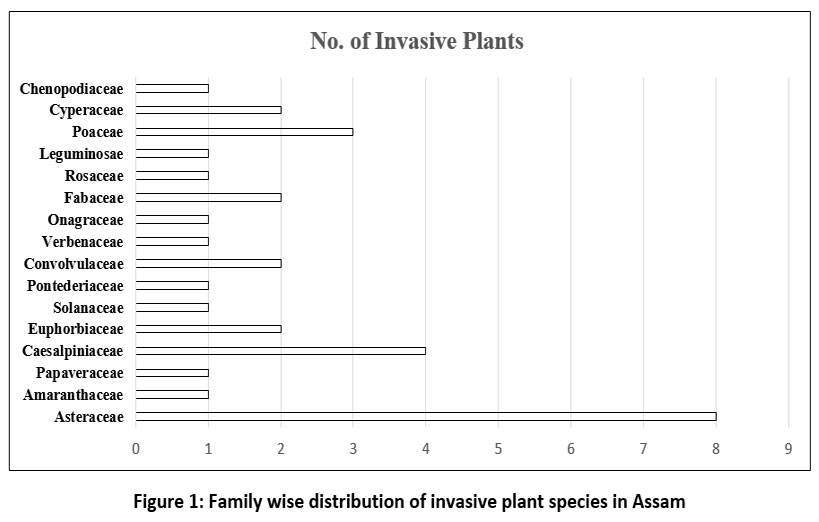 | Figure 1: Family wise distribution of invasive plant species in Assam
|
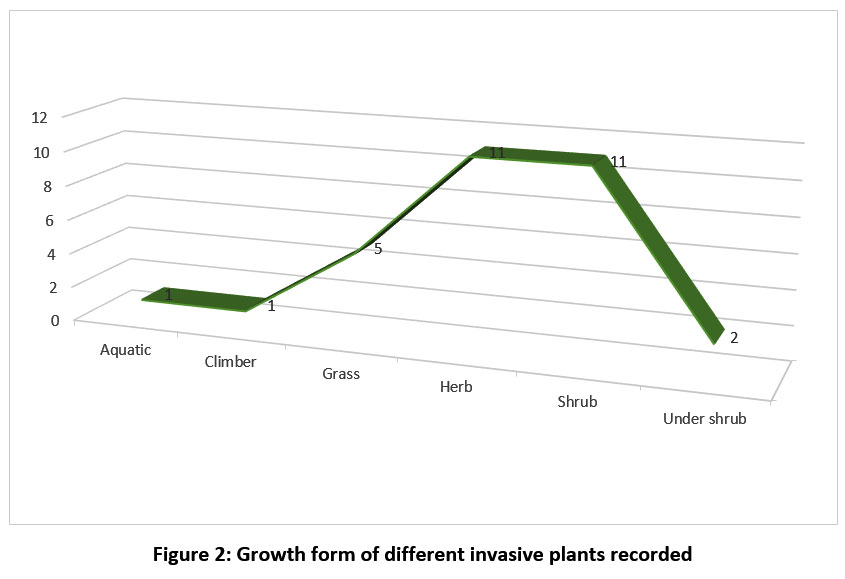 | Figure 2: Growth form of different invasive plants recorded
|
Impact on Wildlife and Biodiversity
Invasive species caused a significant ecological hazard both globally and in north-eastern region of Assam, where they scrambled biodiversity, changing the habitat structures and diminish the ecosystems. These non - indigenous animals and plants conquer native species, leading to cascading effects on grasslands, wetlands and protected areas such as Kaziranga, Orang, Manas and Pobitora National Parks. Globally, after the habitat destruction, the invasive species are measured as serious risk to biological diversity.20-23
In the region of Assam, invasive plants like Parthenium hysterophorus, Mikania micrantha, and Ipomoea spp. have been affecting the sources of food for larger herbivorous animals like the greater one-horned rhinoceros by suppressing the native grasslands (Table 1).12 A study has found that Ipomoea decline native grasses by competing for nutrients, which creates limitations in the availability of forage for herbivorous animals.24 Similarly, aquatic species like Eichhornia crassipes block wetlands, alter hydrology and convert water bodies into marshes, further disrupting aquatic biodiversity and enabling terrestrial invasions.25
Table 1: The impact on different Rhino Habitats by invasive plant species
Invasive plants species | Habitats | Impacts | Reference |
Mimosa | Kaziranga National Park | Extensively High | 12 |
Chromolaena | Orang National Park | Moderate | |
Mikania | Manas National Park | High | |
Ipomoea | Pabitora Wildlife Sanctuary | High | 12, 26 |
This ecological disturbance extends to underground systems. While plants provide organic matter, soil organisms—such as soil bacteria and fauna—control the pace at which nutrients are returned to the plants through mineralization and decomposition processes.27 The resulting imbalance influence on ecological succession, reduces species richness due to increased competition for resources such as light and nutrients.7 Economically, the invasive plants have vast impacts on native plants. These can reduce agricultural productivity as many invasive plants act as harmful weeds across crop fields, degrade livestock foraging areas and harm both human as well as animal health. Moreover, species such as Eichhornia crassipes and Ipomoea carnea obstructs the drainage systems which increase the risk of hazards like flood.3,28 In rural Assam, the deterioration of wetlands affects livelihoods based on agriculture and fishing.28
Economic and Agricultural Consequences
Plant invasions in unfamiliar habitats significantly alter the composition of native animal and plant communities, decrease the diversity of species found there, and interfere with the normal functioning of ecosystems. These modifications result in notable imbalances in the economy and environment.13 Non-native weeds comprise of 73% of crop weed species which inflict a 12% loss in potential crop production annually, costing over $23 billion and necessitating $3 billion in herbicide expenditure in US.29 Weeds were responsible for a 13% reduction in global agricultural output across eight major crops.30
Invasive species pose a significant threat to agriculture, leading to reduced crop yields and potentially impacting the food security.31 In agricultural areas, alien invasive plants that invade contend with agricultural crops for essential resources like nutrients and water, this competition severely jeopardizes the production of crops.32 For instance, rice is the most important crop of Assam, an invasive weed Ludwigia linifolia, established itself in rice fields roughly 40 to 50 years ago. It has become a dominant weed in rice cultivation, persisting throughout the rice growth cycle and displays strong competitive traits like grows to nearly the same height as the rice, forms a broad, bushy structure and has an extensive, shallow root system, enabling it to effectively compete for resources like nutrients and effects the rice production.2 Mikania micrantha is the ‘driver’ species of climbing habit and invaded both cropland and non-cropland areas, it reduces the agricultural productivity by 10-15% based on its growth intensity in field, reducing the quantity and quality of the product.2,33,34 Ageratum conyzoides, one of the dominant herb species in crop fields exhibiting competitive behaviour by depleting soil nutrients and displays potent allelopathic and potentially pathogenic characteristics.19,35 Mikania micrantha, Ageratum hostonianum and Borreria articularis are some of the invasive species in Northeastern Region (NER) grows extensively in sugarcane fields and when left uncontrolled results in reduction of cane yield.36 Dominant invasive weed species in young and mature tea cultivation are Mimosa pudica, Mikania micrantha, Paspalum conjugatum, Lantana camara, Cynodon dactylon, Melastoma malabathricum, Mimosa diplotricha, Osbechia nepalensis, Borreria articularis, Hyptis suaveolensis, Gynura bicolor, Axonopus compressus, Sida acuta, Chromolaena odorata.36 The invasive weed Parthenium hysterophorus is rapidly spreading within citronella plantations in the Golaghat, Karbi Anglong and Dima Hasao districts of Assam.37
Human and Livelihood impacts
Human health and rural livelihoods in Assam are seriously threatened by invasive plant species, particularly in environmentally delicate areas like the Brahmaputra floodplains and forest edges. Invasive plant species are believed to be one of the major factors of loss of biodiversity, which is also responsible for alteration of ecosystem services and socioeconomic situations in a number of ways. The economic effects of invasive alien species can be severe for human endeavors including forestry, agriculture and fishing 38 as shown in the Figure 3.
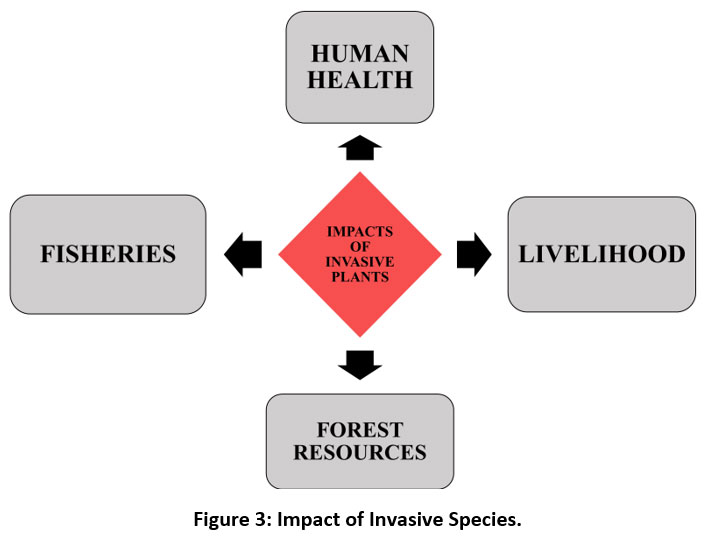 | Figure 3: Impact of Invasive Species.
|
Impact on Human Health
Invasive plant species indirectly affect human health by altering environmental parameters (such as air, water, and soil) as well as ecosystem structure (such as biodiversity, food availability and land-use change). They can increase exposure to toxins and allergens resulting in illness, harm and even death as well.39 Parthenium hysterophorus is known to be responsible for a number of health issues like skin allergy, rhinitis and eye irritation of the inhabitants in the vicinity. Moreover, it can be considered as a factor of fodder scarcity as it is inedible and toxic to livestock.9 Mosquitoes use species like Lantana camara and Eichhornia crassipes as their habitat, and their invasion has resulted in an increase in mosquito-borne diseases. Eichhornia crassipes' death and decay pollute water bodies and increase the incidence of bacterial infections that spread water-borne infectious diseases, such as Ageratum conyzoides and Calotropis procera (Ait.) R. Br. (Apple of Sodom), which cause allergies in people and animals.32
Impact on Livelihoods
Agriculture
According to a recent study, foreign species are responsible for 40% of all pest damage to crops in the United States.40 The underlying factors that bring about the distribution of invasive plant species are regional as well as global, even if their effects are mostly local and national. One of the most apparent repercussions of invasive species is direct loss of crops owing to infestations. In addition, IAPS tend to hinder forest diversity and act as weeds, which lowers agricultural productivity worldwide.41 One of the ten most harmful IAPS in the world, Lantana camara is quickly spreading throughout India and altering the physico-chemical characteristics of soil.42
Fisheries
Many aquatic plants, including macroalgae, have been brought into the world either intentionally because they were thought to be beautiful or otherwise desired, or accidentally because they were released from aquariums or water gardens, or because they contaminated agricultural stock or solid ballast.43 A considerable number of invasive plant species in freshwater ecosystems will continue to rise as a result of anthropogenic activities that push new alien species outside of their native habitats and the filling of prospective ranges by established aliens.32
Leersia hexandra and Eichhornia crassipes are the most common invasive species of aquatic environments. After being brought to rice fields 40–50 years ago, Ludwigia linifolia has grown to be a dominating weed that fiercely competes with crops. Alongside other species, it flourishes in shallow waters in non-cropland locations. One of the most invasive aquatic weeds, Ipomoea carnea var. fistula, was first introduced in the 1970s and can obstruct water flow and create artificial floods. Ludwigia peruviana, another significant aquatic invader, was initially discovered in 2003 and has since quickly expanded throughout the Karbi-Anglong marshy areas. It significantly lowers species richness and outcompetes significant natural wetland plants like Acorus calamus, Arundo donax, and Alpinia allughus.2
Forest Resources
Another dangerous tropical American pest, Lantana camara (Verbenaceae), has spread over vast tracts of land, particularly in forests where it has essentially supplanted the vegetation on the forest floor and stunted tree development. Additionally, it hinders forest activities due to its bushy and spreading growth.9 A perennial weed of Neotropical origin, Mikania micrantha has grown to be a serious hazard to plantations, natural forests, and agricultural systems in northeastern and southwest India.44
Management and Control Strategies
The widespread problem of invasive plant species (IPS) in Assam requires an integrated approach that incorporates several strategies suitable to target species, ecological conditions and available resources such as public education, policy implementation, biological control methods and integrated weed management., The effect of invasive plant species (IPS) on diverse environment of Assam can be managed and mitigated effectively by making collaboration among indigenous people, different governmental organizations and NGOs. The most economical approach is still prevention, which emphasizes strict quarantine regulations at points of entry and early detection and rapid response (EDRR) systems to find and eliminate new invasion before the invasive species get established.45 For effective management of invasive plants, a multi-pronged approach is required which integrates various control methods (mechanical and chemical) under an Integrated Weed Management (IWM) framework. Figure 4 shows some of the control strategies which are required to eliminate the invasion of invasive plant species.
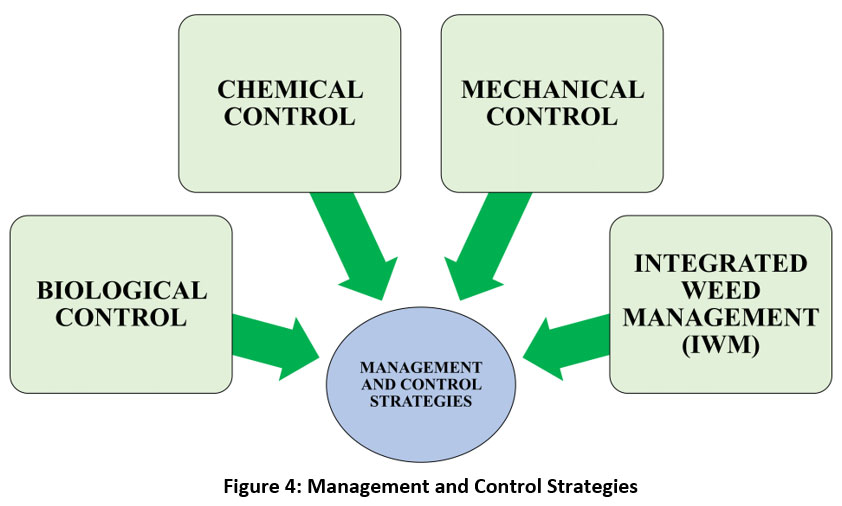 | Figure 4: Management and Control Strategies
|
Mechanical Control
Among the mechanical control techniques, Assam commonly used bush hogging, cutting (both high and low, for climbers and lianas), weed wrenching, mowing, hand pulling, digging, brush cutting and weed whipping, prescribed burning, and pulling with a tractor and chain or brush. With this approach, the species is directly removed by hand or with the use of suitable equipment, such as harvesting trucks (for water hyacinth, for example), weapons (for large mammals, for example), or traps (for animals).46 Manual removal (hand-pulling/digging) is effective for seedlings (Mikania sp., Chromolaena sp.) and aquatic weeds (Eichhornia sp.) in small infestations or sensitive zones, offering high output without chemical use.47-48 However, it needs a huge man power and may cause soil disturbance. It may lead to re-growth of the plants if root systems are not fully removed.46,49 Mowing/cutting manages dense stands of species like Mikania sp. and Lantana sp., primarily to prevent seeding and reduce biomass rather than eradicate.50 This technique is faster than pulling but it rarely kills perennial weeds, requiring repeated applications to suppress vigorous re-growth from roots or stems.49,51 Effective long-term control in Assam usually requires integration of these mechanical methods with other strategies and persistent application, regularly followed by restoration efforts.47
Chemical Control
Chemical control using herbicides like glyphosate, Metsulfuron-methyl, 2,4-D (2,4-Dichlorophenoxyacetic acid), paraquat and triclopyr provides rapid control for challenging invasive plants such as Mikania, Chromolaena, Lantana, and Eichhornia in Assam, often in conjugation with Integrated Weed Management (IWM) strategies.9,47 Application methods range from foliar sprays to more targeted techniques such as cut-stump treatments, are essential for reducing non-target damage.47 Nonetheless, there are serious environmental issues, especially in the highly biodiverse and heavily precipitated region of Assam which include damage to native flora and fauna52 high risk of water contamination affecting aquatic life53 the possibility of soil degradation54 and the emergence of herbicide resistance.55 To reduce the risk to sensitive ecosystem of Assam, the chemical control should be used judiciously, prioritizing targeted applications, adhering to safety protocols, keeping buffer zones and carefully incorporating it into the broader Integrated Weed Management (IWM) plans.56
Biological Control
Biological control refers an environmentally targeted strategy to managing invasive plants that put the rich biodiversity of Assam at risk. This approach involves introduction of host-specific natural enemies (usually insects or pathogens) beyond its native range to suppress its population density.57 Population of several invasive plants which are common to Assam can be controlled by biological control methods. In particular, the leaf-feeding beetle Zygogramma bicolorata has demonstrated efficacy in managing Parthenium hysterophorus in different parts of India which may be relevant to the infestations in Assam.58 Additionally, agents such as the stem-galling fly, Cecidochares connexa have been introduced to combat against Chromolaena odorata, one of the major invaders in Northeast India.59 Moreover, the rust fungus Puccinia spegazzinii has been investigated as a potential biocontrol agent against the "mile-a-minute" weed, Mikania micrantha, demonstrating host specificity.60 Weevils such as Neochetina bruchi and Neochetina eichhorniae have been introduced to control aquatic weeds like water hyacinth (Eichhornia crassipes) in water bodies. Still thorough host-specificity testing and post-release monitoring are utmost important to confirm non-target impacts on native flora.61-62 Thorough ecological assessment and incorporation into more comprehensive management strategies are crucial for successful implementation of this method.
Integrated Weed Management (IWM)
The most effective method for managing Invasive Plant Species (IPS) such as Mikania sp., Chromolaena sp., Lantana sp., and Eichhornia sp. that endanger ecosystems and livelihoods is Integrated Weed Management (IWM).63 IWM incorporates continuous monitoring,64 early detection and rapid response (EDRR)65 and prevention.66 Biological control (e.g., Neochetina weevils for Eichhornia), mechanical (e.g., pulling, slashing), ecological/cultural practices, and prudent chemical application (e.g., cut-stump treatments) are all integral to the core.9,67 Ecological restoration with native species is crucial after control.68 Strong community participation and stakeholder involvement are critical for long-term success.69
Assam faces significant ecological threats from invasive plants like Chromolaena odorata. Effective management requires integrating diverse control tactics, continuous monitoring,70 ecological restoration with native flora71 and exploring value-added products from these weeds.72
Discussion
In the northeastern region of India, Assam, invasive plant species intertwined ecological, economic, and social effects which has been emphasized in this review paper. The spread of this species not only threatening the native biodiversity and habitats of the wildlife as well as also declines the productivity agriculture, fisheries, and forest resources, ultimately harming human health and livelihoods. According to these results, the effects are not isolated but rather reinforce one another, posing interconnected problems for resource management and conservation.
Even though there are several control measures, including mechanical, chemical, and biological tactics, the data indicates that none of the mentioned strategies is sufficient over the long run. Integrated weed management is one of the most sustainable methods that encompasses ecological, socioeconomic, and policy perspectives. Further regional research is necessary to recognize the scenario of localized invasion and to come up with ideas regarding adaptiveness. Future studies must focus on the correlation between endurance and ecological consequences in order to boost Assam's socioeconomic integrity and to conserve its biodiversity.
Conclusion
In Assam, a comprehensive and long-term approach is required for controlling invasive plant species. Future efforts should place a higher priority on systematic ecological monitoring, the development of early detection and rapid response systems, and the application of community-based management frameworks in light of the increasing effects of invasive flora on native biodiversity, agriculture, and local livelihoods. Special attention should be given on the research on biological control agents, the ecological restoration of damaged habitats, and the sustainable utilization of specific invasive species for the development of bioresources. The active participation of academic institutions, local communities, and policymakers in awareness campaigns and mitigation strategies can increased the long-term ecological resilience. Furthermore, the spread of invasive species under different climate change scenarios can be predicted by the use of remote sensing technology and ecological modeling. The development of a state-specific invasive species policy, based on rigorous scientific evidence and traditional ecological knowledge, holds great promise for preserving distinctive ecological legacy of Assam in the next decades.
The uncontrolled expansion of invasive plant species in Assam endangers local biodiversity, ecological services and rural socio-economy. Invasive taxa such as Parthenium hysterophorus and Mikania micrantha have interrupted biological succession, destroyed habitats essential to endemic animals (including the one-horned rhinoceros) and harmed agricultural productivity and food security. Despite increasing recognition of the problem, effective intervention remains limited due to fragmented data and policy gaps. This analysis emphasizes the critical need for region – specific integrated management strategies that incorporate biological control, habitat restoration, community participation and regulatory enforcement. A transdisciplinary framework based on ecological science and socio-economic resilience is essential for mitigating the long - term effects of invasive plant species in Assam.
Acknowledgement
The author(s) would like to express their sincere gratitude to Devi Charan Baruah Girls’ College, Namrup College, Debraj Roy College and Dakshin Kamrup College for their valuable support and encouragement provided during paperwork.
Funding Sources
The author(s) received no financial support for the research, authorship, and/or publication of this article.
Conflicts of Interest
The authors do not have any conflict of interest.
Data Availability Statement
This statement does not apply to this article.
Ethics Statement
This research did not involve human participants, animal subjects, or any material that requires ethical approval.
Informed Consent Statement
This study did not involve human participants, and therefore, informed consent was not required.
Permission to reproduce material from other sources
Not Applicable
Author Contributions
Soujit Kumar, Sajidur Rahman, Somim Nasreen, Warin Akhtar, Atlanta Kalita, and Bishakha Hazarika: Conceptualization
Soujit Kumar, Sajidur Rahman, Somim Nasreen, Warin Akhtar, Atlanta Kalita, and Bishakha Hazarika: Writing original draft
Soujit Kumar: Manuscript preparation
Soujit Kumar, Sajidur Rahman, Somim Nasreen: Writing – review & editing
References
- Bhatt J. R, Singh J. S, Singh S. P, Tripathi R. S, Kohli R. K, eds. Invasive alien plants: an ecological appraisal for the Indian subcontinent. Wallingford, UK: CABI; 2012.
CrossRef - Barua I. C, Deka J, Devi M. Invasive weeds and vegetation dynamics in Assam. In: Weed Science Society Conference October 22-25, 2013; Bandung, Indonesia. 2013.
- Das K, Duarah P. Invasive alien plant species in the roadside areas of Jorhat, Assam: Their harmful effects and beneficial uses. International Journal of Engineering Research and Applications. 2013; 3(5): 353-358.
- Singh M. K. Distribution and implication of alien invasive plant species of Assam: a review. Annals of Horticulture. 2017; 10(2): 120-127.
CrossRef - Sarma N, Shankar U, Mao A. A. An assessment of the invasive flora of Amchang Wildlife Sanctuary in the Kamrup District of Assam, India. Pleione. 2019; 13: 326.
CrossRef - Choudhury M. R, Deb P, Singha H. Status of invasive plant species in the dry savanna grasslands of Rajiv Gandhi Orang National Park, Assam. International Journal of Ecology and Environmental Sciences. 2017; 43(3): 245-250.
- Sakachep Z. K, Rai P. K. Impact Assessment of invasive alien plants on soil organic carbon (SOC) status in disturbed and moderately disturbed patches of Hailakandi District in an Indo Burma Hotspot region. Indian journal of Ecology. 2021; 48(6): 1698-1704.
- Khan, M. Assam. In: The Territories and States of India 2024. London, UK: Routledge; 2024: 86-96. https://doi.org/10.4324/9781003476900
CrossRef - Kohli R. K, Batish D. R, Singh H. P, Dogra K. S. Status, invasiveness and environmental threats of three tropical American invasive weeds (Parthenium hysterophorus L., Ageratum conyzoides L., Lantana camara L.) in India. Biological invasions. 2006; 8: 1501-1510. https://doi.org/10.1007/s10530-005-5842-
CrossRef - Shankar U, Tripathi R. S, Pandey, H. N. Structure and seasonal dynamics of humid tropical grasslands in Meghalaya, India. Journal of Vegetation Science. 1991; 2: 711-714.
CrossRef - Das P, Biswas G, Borah A. A Review on Ethnomedicinal uses of Some Invasive Plant Species of Assam, India. In: Research Trends in Medicinal Plant Sciences. Vol 9. New Delhi, India; 2020.
- Lahkar B, Talukdar B, Sarma P. Invasive species in grassland habitat: an ecological threat to the greater one-horned rhino (Rhinoceros unicornis). Pachyderm. 2011; 49: 33-39. https://doi.org/10.69649/pachyderm.v49i.248
CrossRef - Dogra K. S, Sood S. K, Dobhal P. K, Sharma S. Alien plant invasion and their impact on indigenous species diversity at global scale: A review. Journal of ecology and the natural environment. 2010; 2(9): 175-186.
- Shankar U. Wealthy wilds intimidated in Kaziranga. Hima-Paryavaran. 2002; 14(15): 6-8.
- Vattakkavan J, Vasu N. K, Varma S, Gureja N, Aiyadurai A. Silent stranglers: eradication of mimosa in Kaziranga National Park, Assam. New Delhi, India: Wildlife Trust of India; 2002: 55.
- Mishra M. Improving protection and building capacity of staff at Kaziranga National Park. Technical Report No. 4; 2005.
- Singh M K, Verma P, Bharti A, Kumar R. Forest Invasive Species: A Serious Threat to Native Species in Forest Habitat of Assam, India. Archive of Life Science and Environment (Arch. Life Sci. & Env.). 2018; 2(1): 97-104.
- Roy S, Goswami N. Diversity of Invasive plant species in Nilachal hill, Kamrup metro, Assam. 2021.
- Sakachep Z. K, Rai P. K. Influence of invasive alien plants on vegetation of Hailakandi district, Assam, North-East, India. Indian Journal of Ecology. 2021; 48(1): 261-266.
- Sharma M, Devi A, Badola R, Sharma R. K, Hussain S. A. Impact of management practices on the tropical riverine grasslands of Brahmaputra floodplains: Implications for conservation. Ecological Indicators. 2023; 151: 110265. https://doi.org/10.1016/j.ecolind.2023.110265
CrossRef - Nath A, Sinha A, Lahkar B. P, Brahma, N. In search of Aliens: Factors influencing the distribution of Chromolaena odorata L. and Mikania micrantha Kunth in the Terai grasslands of Manas National Park, India. Ecological engineering. 2019; 131: 16-26. https://doi.org/10.1016/j.ecoleng.2019.02.012
CrossRef - Vilà M, Espinar J. L, Hejda M, Hulme P. E, Jarošík V, Maron J. L, Pergl J, Schaffner U, Pyšek, P. Ecological impacts of invasive alien plants: a meta?analysis of their effects on species, communities and ecosystems. Ecology letters. 2011; 14(7): 702-708. https://doi.org/10.1111/j.1461-0248.2011.01628.x
CrossRef - Pyšek P, Jarošík V, Hulme P. E, Pergl J, Hejda M, Schaffner U, Vilà M. A global assessment of invasive plant impacts on resident species, communities and ecosystems: the interaction of impact measures, invading species' traits and environment. Global change biology. 2012; 18(5): 1725-1737. https://doi.org/10.1111/j.1365-2486.2011.02636.x
CrossRef - Mworia J. K, Kinyamario J. I, John E. A. Impact of the invader Ipomoea hildebrandtii on grass biomass, nitrogen mineralisation and determinants of its seedling establishment in Kajiado, Kenya. African Journal of Range and Forage Science. 2008; 25(1): 11-16. https://doi.org/10.2989/AJRFS.2008.25.1.2.380
CrossRef - Chakraborty S. K, Sanyal P, Ray R. Pollution, Environmental Perturbation and Consequent Loss of Wetlands. Wetlands Ecology. 2023; 521-582. https://doi.org/10.1007/978-3-031-09253-4_8
CrossRef - Sarma P, Talukdar B, Sarma K, Barua M. Assessment of habitat change and threats to the greater one-horned rhino (Rhinoceros unicornis) in Pabitora Wildlife Sanctuary, Assam, using multi-temporal satellite data. Pachyderm. 2009; 46: 18-24.
CrossRef - De Almeida T, Forey E, Chauvat, M. Alien invasive plant effect on soil fauna is habitat dependent. Diversity. 2022; 14(2): 61. https://doi.org/10.3390/d14020061
CrossRef - Adhya T, Banerjee S. Impact of wetland development and degradation on the livelihoods of wetland-dependent communities: a case study from the lower gangetic floodplains. Wetlands. 2022; 42(7): 65. https://doi.org/10.1007/s13157-022-01588-w
CrossRef - Pimentel D. Economic and environmental impacts of invasive species and their management. Pesticides and you. 2001; 21(1): 10-11.
- Oerke E. C, Dehne H. W, Schonbeck F, Weber A. Crop production and crop protection: estimated losses in major food and cash crops. Amsterdam, Netherlands: Elsevier; 2012.
- Cook D. C, Fraser R. W, Paini D. R, Warden A. C, Lonsdale W. M, De Barro P. J. Biosecurity and yield improvement technologies are strategic complements in the fight against food insecurity. PLoS One. 2011; 6(10): e26084. https://doi.org/10.1371/journal.pone.0026084
CrossRef - Kumar A, Prasad S. Threats of Invasive alien plant species. International research journal of management Science and Technology. 2014; 4: 605-624.
- Anitha V, Santheep K. V, Jyotsna Krishnakumar J. K. Social and economic implications of Mikania micrantha in the Kerala Western Ghats. In: Sankaran KV, Murphy ST, Evans H eds. Invasive alien plants: impacts on development and options for management. Wallingford, UK: CABI; 2017: 29-38.
CrossRef - Vijay, B. Invasive plants a major threat to Mikania micrantha biological diversity- A review. International Journal of Advanced Research in Science and Engineering. 2015; 4: 48-52.
- Ekleme F, Forcella F, Archer D. W, Akobundu I. O, Chikoye D. Seedling emergence model for tropic ageratum (Ageratum conyzoides). Weed Science. 2005; 53(1): 55-61.
CrossRef - Barua I. C, Gogoi A. K. Phytosociological studies of sugarcane weeds in Assam. World Weeds. 1995; 2(2): 107-115.
- Deka J, Barua I. C. Problem weeds and their management in the North-East Himalayas. Indian Journal of Weed Science. 2015; 47(3): 296–305.
- McGarry D, Shackleton C. M, Fourie S, Gambiza J, Shackleton S. E, Fabricius C. F. A rapid assessment of the effects of invasive species on human livelihoods, especially of the rural poor. Department of Environmental Science, Rhodes University, Grahamstown. 2005; 6140.
- Jones B. A, McDermott S. M. Health impacts of invasive species through an altered natural environment: assessing air pollution sinks as a causal pathway. Environmental and Resource Economics. 2018; 71: 23-43.https://doi.org/10.1007/s10640-017-0135-6
CrossRef - Pimentel D, Lach L, Zuniga R, Morrison D. Environmental and economic costs of nonindigenous species in the United States. BioScience. 2000; 50(1): 53-65.
CrossRef - Haines A. Addressing challenges to human health in the Anthropocene epoch—an overview of the findings of the Rockefeller/Lancet Commission on Planetary Health. Public health reviews. 2016; 37: 1-5. https://doi.org/10.1186/s40985-016-0029-0
CrossRef - Mark R. N. Biotic invasions: causes, epidemiology, global consequences, and control. Ecol. Appl. 2000; 10: 689-710.
CrossRef - Strayer D. L. Alien species in fresh waters: ecological effects, interactions with other stressors, and prospects for the future. Freshwater biology. 2010; 55: 152-74. https://doi.org/10.1111/j.1365-2427.2009.02380.x
CrossRef - Sankaran K. V, Sreenivasan M. A. Status of Mikania infestation in the Western Ghats. Alien weeds in most tropical zones: banes and benefits. KFRI/CABI Biosience, Kerala/Ascot. 2001; 67-76.
- Reaser J. K, Burgiel S. W, Kirkey J, Brantley K. A, Veatch S. D, Burgos-Rodríguez J. The early detection of and rapid response (EDRR) to invasive species: a conceptual framework and federal capacities assessment. Biological Invasions. 2020; 22: 1-19. https://doi.org/10.1007/s10530-019-02156-w
CrossRef - Rajasekaran A, Singh M, Shantaram P. Management of selected invasive alien plant species and restoration 9 of invaded habitats. ICFRE Handbook; 2020.
- Sharma G. P, Raghubanshi A. S. How Lantana invades dry deciduous forest: a case study from Vindhyan highlands, India. Tropical Ecology. 2010; 51(2): 305-316.
- Malik A. Environmental challenge vis a vis opportunity: the case of water hyacinth. Environment international. 2007; 33(1): 122-138. https://doi.org/10.1016/j.envint.2006.08.004
CrossRef - Zachariades C, Day M, Muniappan R, Reddy G. V. Chromolaena odorata (L.) king and robinson (Asteraceae). Biological control of tropical weeds using arthropods. Cambridge University Press, Cambridge. 2009; 5: 130-62.
CrossRef - Parsons W. T, Cuthbertson E. G. Noxious Weeds of Australia. 2nd ed. Collingwood, VIC, Australia: CSIRO Publishing; 2001.
- Waterhouse D. F. Biological control of weeds: Southeast Asian prospects. ACIAR Monograph No. 26. Canberra, Australia: Australian Centre for International Agricultural Research; 1994.
- Shea K, Chesson P. Community ecology theory as a framework for biological invasions. Trends in Ecology & Evolution. 2002; 17(4): 170-176.
CrossRef - Borggaard O K, Gimsing A L. Fate of glyphosate in soil and the possibility of leaching to ground and surface waters: a review. Pest Management Science: formerly Pesticide Science. 2008; 64(4): 441-56.https://doi.org/10.1002/ps.1512
CrossRef - Zabaloy M. C, Garland J. L, Gomez M. A. An integrated approach to evaluate the impacts of the herbicides glyphosate, 2, 4-D and metsulfuron-methyl on soil microbial communities in the Pampas region, Argentina. Applied soil ecology. 2008; 40(1): 1-12.
CrossRef - Powles S. B, Yu Q. Evolution in action: plants resistant to herbicides. Annual review of plant biology. 2010; 61(1): 317-347.
CrossRef - Bora A. R, Babu D. S, Chetry S, Kalita S. Management options of Mikania micrantha: A review. Agricultural Reviews. 2023; 44(3): 393-6.https://doi.org/10.18805/ag.r-2201
CrossRef - McFadyen R. E. C. Biological control of weeds. Annual review of entomology. 1998; 43(1): 369-393.
CrossRef - Afaq U, Kumar G, Siddiqui A. Zygogramma bicolorata (Coleoptera: Chrysomelidae): an exotic biocontrol agent of the noxious weed, Parthenium hysterophorus (Asteraceae). The Canadian Entomologist. 2024; 156: e4. https://doi.org/10.4039/tce.2023.30
CrossRef - Muniappan R, Reddy G. V. P, Lai P. Y. Distribution and biological control of Chromolaena odorata. In: Inderjit, ed. Invasive plants: ecological and agricultural aspects. Basel: Birkhäuser Basel; 2005:223-233. https://doi.org/10.1007/3-7643-7380-6
CrossRef - Ellison C. A, Evans H. C, Djeddour D. H, & Thomas, S. E. Biology and host range of the rust fungus Puccinia spegazzinii: a new classical biological control agent for the invasive, alien weed Mikania micrantha in Asia. Biological Control. 2008; 45(1): 133-145. https://doi.org/10.1016/j.biocontrol.2007.12.001
CrossRef - Kumar S. History, progress and prospects of classical biological control in India. Indian Journal of Weed Science. 2015; 47(3): 306-320.
CrossRef - Schwarzländer M, Hinz H. L, Winston R. L, Day M. D. Biological control of weeds: an analysis of introductions, rates of establishment and estimates of success, worldwide. BioControl. 2018; 63: 319-331.
CrossRef - Zimdahl R. L. Weed-crop competition: a review (2nd ed.). USA, The Journal Weed Science. 2007.
- Rew L. J, Pokorny M. L. Inventory and Survey Methods for Nonindigenous Plant Species. Bozeman: Montana State University Extension;2006.
- Rejmánek M, Pitcairn M. J. When is eradication of exotic pest plants a realistic goal? In C. R. Veitch and M. N. Clout (Eds), Turning the tide: The eradication of invasive species: Proceedings of the International Conference on eradication of Island Invasives. 2002; 249-253. IUCN. https://www.icun.org/content/turning-tide-eradication-invasive-speciesproceedings-international-conference-eradication-island-invasives
- Hulme P. E. Beyond control: wider implications for the management of biological invasions. Journal of Applied Ecology. 2006; 43(5): 835-847. https://doi.org/10.1111/j.1365-2664.2006.01227.x
CrossRef - Hobbs R. J, Humphries S. E. An integrated approach to the ecology and management of plant invasions. Conservation Biology. 1995; 9(4) ;761-770. https://doi.org/10.1046/j.1523-1739.1995.09040761.x
CrossRef - D'Antonio C. M, Meyerson L. A. Exotic plant species as problems and solutions in ecological restoration: a synthesis. Restoration Ecology 2002; 10(4): 703-713.
CrossRef - Wittenberg R, Cock M. J. Invasive alien species: a toolkit of best prevention and management practices. Cabi Publishing. 2001; 2 – 228. https://doi.org/10.1079/9780851995694.0000
CrossRef - Kaur A, Singh G, Menon S, Kumari, K. Integrated Weed Management: A Comprehensive Review of Conventional, Non-Conventional, and Emerging Strategies for Sustainable Agriculture. Journal of Advances in Biology & Biotechnology. 2024; 27(8):156–67. https://doi.org/10.9734/jabb/2024/v27i81130.
CrossRef - Yadav S. P. S, Mehata D. K, Pokhrel S, Ghimire N, Gyawali P, Katel S, Timsina U. A. Comprehensive Study of Banmara (Invasive Alien Plant Species): Understanding the Invasive Potential and Ecological Consequences for Biodiversity Conservation, and Management Strategies. Journal of Agriculture and Food Research. 2024; 101031. https://doi.org/10.1016/j.jafr.2024.101031.
CrossRef - Sharma V, Pant S. Weed as Underutilized Bio-resource and Management Tool: A Comprehensive Review. Waste and Biomass Valorization. 2019; 10(7):1795–1810. https://doi.org/10.1007/S12649-018-0212-2
CrossRef
Abbreviations
IPS - Invasive Plant Species,
NGOs – Non-Government Organizations,
EDRR - Early Detection and Rapid Response,
IWM - Integrated Weed Management