
Nanobiofertilizer: A Review on Environment-friendly Approach in the Field of Agriculture
Sumitra Das
*

1
Department of Chemistry,
Sreegopal Banerjee College,
University of Burdwan,
Bardhaman,
West Bengal
India
http://dx.doi.org/10.12944/CWE.21.1.2
Copy the following to cite this article:
Das S. Nanobiofertilizer: A Review on Environment-friendly Approach in the Field of Agriculture. Curr World Environ 2026;21(1). DOI:http://dx.doi.org/10.12944/CWE.21.1.2
Copy the following to cite this URL:
Das S. Nanobiofertilizer: A Review on Environment-friendly Approach in the Field of Agriculture. Curr World Environ 2026;21(1).
Download article (pdf)
Citation Manager
Publish History

Introduction
Agriculture is one of the prime pillars of the economy all over the world. The production of agriculture should be developed to meet the urgent demand of the increased population of one country. The use of chemical fertilizer1,2 resolves the problem to some extent. It mainly contains inorganic nitrogen, phosphorous and potassium, and promotes plant growth gradually by supplying nutrients slowly. Owing to its target-specific efficiency, cost-effectiveness and concentrated nutrient supply make it more popular among farmers within a very short period. But abrupt use of chemical fertilizer results in decreasing soil quality and texture, nutrient imbalance, human health hazards and environmental pollution.3,4 The run-off of the chemical fertilizer into the water body gives rise to eutrophication, reduction of DO levels and, thereby, aquatic life is at stake.5 In this alarming situation, a suitable bio-friendly approach towards sustaining the quality and quantity of agricultural products is biofertilizers. Biofertilizers6,7 are substances containing a variety of microbes that have the capacity to enhance plant nutrient uptake by colonizing the rhizosphere and making the nutrients easily accessible to plant root hairs. A wide variety of metabolites, plant hormones and polysaccharides are released by the biofertilizers which help to promote soil quality,8 initiate plant growth9 and also inhibits the growth of plant pathogens and thereby increases the crop yield. But, its target specificity, short shelf-life and extreme reaction condition prohibits its activity.10,11 In the last few years, nanotechnology has promoted wide possibilities for sustainable agriculture through the development of nanopesticides12,13 and nanofertilizers.14,15 Having a large surface area, high solubility and the lightness of the nanoparticles make it more appropriate for nutrient supply, enhancing plants' growth and resisting them from different diseases over chemical fertilizers and biofertilizers. Nanobiofertilizer (NBF)16,17 is the derivative product of the fusion of nanotechnology and biotechnology that successfully overcomes the drawbacks of chemical and biofertilizers, increasing crop yield in an eco-friendly manner by maintaining food security. It has been synthesized by encapsulating biofertilizer with a nanomaterial that increase its stability, inhibits the process of bidegradation and confirms the supply of nutrients to the soil deliberately, thereby minimizes the environmental hazards. Several reports establish the fact that it promotes plant growth by successful quenching the harmful effect of abiotic stress on the environment of the plant. Nanobiofertilizer is a unique combination of bioinoculants and nanoparticles that improves the delivery of nutrients to the target plants for the better crop production. But, the scarcity of knowledge of microbe-plant interaction restricts it application in a broad way. With an aim to minimize the knowledge gap between the laboratory experiment and practical field application, this review describes the synthesis, interaction between plant and nanoparticles, applications, advantages, disadvantages, and future prospects in an elaborate manner to carry out further research to improve its efficiency. A pictorial representation of the synthesis, mode of application and usefulness of nanobiofertilizer have been summarized in Figure 1.
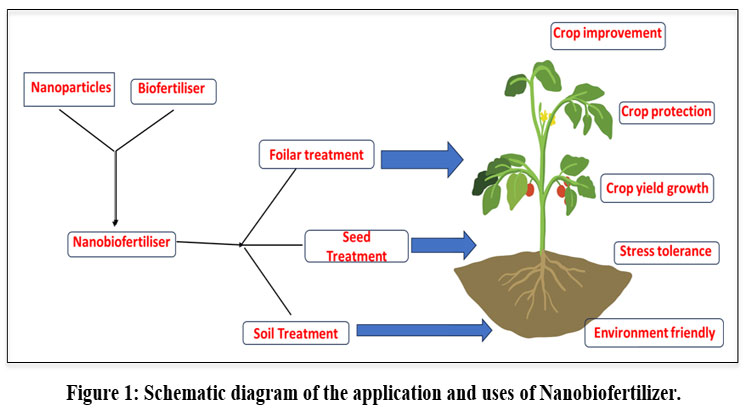 | Figure 1: Schematic diagram of the application and uses of Nanobiofertilizer.
|
Methodology
An extensive systematic literature survey methodology, leading to journal searches according to the Preferred Reporting Items for Systematic Reviews and Meta Analyses (PRISMA) flow guidelines. PRISMA guidelines are a well-known standard for assessing systematic reviews and meta-analyses. Database search has been carried out to assemble peer-reviewed articles, mainly emphasize on the work “nanobiofertilizer in the field of agriculture” that were published between 2017 and 2026. Data were retrieved from the articles available in Scopus, Google Scholar and Science Direct using keywords such as ‘nanobiofertilizer’, ‘biofertilizer’, ‘chemical fertilizer’, and ‘agriculture’. The selection process followed PRISMA guidelines, as represented in Figure 2.
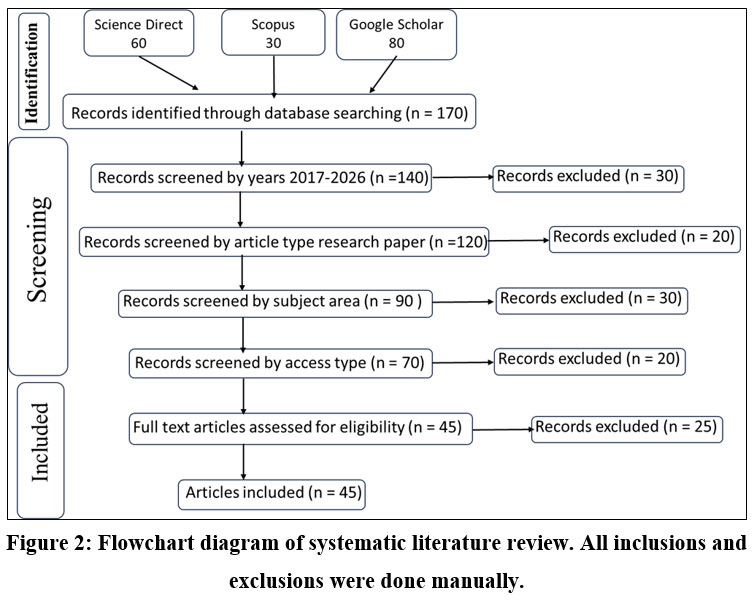 | Figure 2: Flowchart diagram of systematic literature review. All inclusions and exclusions were done manually.
|
Synthesis
Metal nanoparticles, biofertilizer and the encapsulating agents are the three prime ingredients for the synthesis of nanobiofertilizer. Nowadays stress has been given on the “Green” synthesis of metal nanoparticles (MNPs) apart from the conventional physical (Top-down approach)18 and chemical methods19 because of their environment friendliness.
Green Synthesis of Metal-nanoparticles (MNPs)
Synthesis of nanobiofertilizer (NBF) primarily involves the “Green Synthesis” of MNPs because of its environment friendly manner and less hazardousness. Moreover, it is highly beneficial over the conventional method as the NPs produce having the perfect combination of size and stability. A wide variety of microorganisms like algae, fungi, bacteria, and different parts of plants such as leaves, petals, stalk, fruits, seeds, roots are used for this biosynthesis. They are so chosen as they have the potential to absorb the metal ions from their surroundings. This type of synthesis includes two major categories that are described below:
Microorganisms aided synthesis
Intracellular and extracellular are the two major pathways for the microorganism’s aided synthesis of MNPs.20 The negatively charged cell wall of the microorganisms plays an important role in the intracellular method. The positively charged metal ions are deposited on the negatively charged cell wall through electrostatic interaction followed by the reduction of the metal ion by nitrate reductase enzyme via metabolic reactions to synthesise the MNPs. The extracellular method involves the conversion of metal ions to their respective MNPs, via nitrate reductase enzyme method. The extracellular method is more advantageous over the intracellular one, as the former does not require any kind of follow-up steps to recover the intercellular nanoparticles, which make it less time-consuming and more cost-effective. This method has become more popular as it needs optimum external conditions like pressure, temperature, pH etc to develop the MNPs and its growth rate is also very high. A wide variety of microorganisms like yeast, bacteria, fungi, algae have been proven to be more challenging to execute both intracellular and extracellular method. Recently, myconanotechnology21 has emerged a new area to synthesize MNPs using fungi like Aspergillus sp., Fusarium oxysporum etc., which found to be more effective because of it widespread availability than other microorganisms. Some microorganisms aided syntheses of nanoparticles used in the formation of nanobiofertilizer are tabulated in Table 1.
Table 1: Microorganisms aided syntheses of nanoparticles for nanobiofertilizer
Microorganisms | Nanoparticles | Effect on plant |
Microalgal extract | Iron oxide nanoparticles | Promote the growth of plants22 |
Acidophilus, Lactobacillus casei, and Bifdobacterium sp. | Cu nanoparticles | Enhance the plant immunity against the different types of diseases23 |
Microalgae | Ag nanoparticles | Having antioxidant property24 |
Plant Facilitated Synthesis
Plant is the most commonly available natural resources to prepare MNPs. The extracts obtained from different parts of the plant contain flavonoids, ketones, aldehydes, terpenoids, quinones act as electron donors to reduce metal ions to MNPs from the aqueous solution. The reducing agent also serves as capping agent to stabilize the MNPs. Table 2 depicts the plant prompted synthesis of nanoparticles for nanobiofertilizer.
Table 2: Plant facilitated syntheses of nanoparticles for nanobiofertilizer
Plant Extract | Nanoparticles | Effect on plant |
Clove buds | Zn nanoparticles | Improve the yield and growth of Pisum sativum L.25 |
Leaf extract of Parthenium hysterophorus L | ZnO nanoparticles | Enhance the germination of seeds and vegetative growth of Sesamum indicum L26 |
Fruit extracts of Cornus mas L | Iron oxide nanoparticles | Root and shoot biomass have been stimulated27 |
Leaf extract of Aloe barbadensis Mill | ZnO nanoparticles | Act as rich nutrient source to the plant28 |
Metal nanoparticles so far synthesized combines with plant growth promoting Rhizobacteria (PGPR) like Azotobacter, Azospirillum, Pseudomonas sp., Bacillus sp., Mycorrhizal fungi, Blue-green algae, and then encapsulated with chitosan, starch, alginate solution to form nanobiofertilizer. Systematic stepwise synthesis of nanobiofertilizer has been depicted in Figure 3.
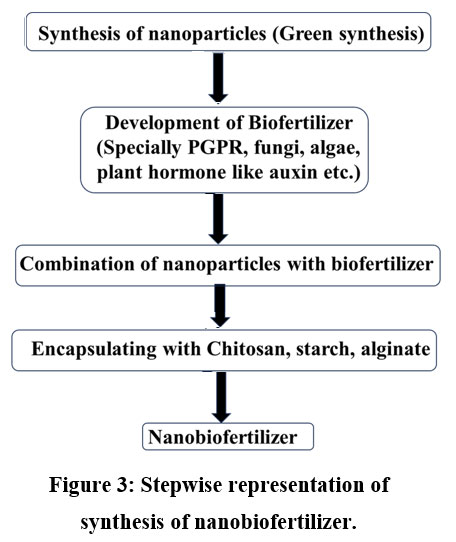 | Figure 3: Stepwise representation of synthesis of nanobiofertilizer.
|
Characterization of nanobiobertilizer
Nanobiofertilizers have been synthesized so far and are characterized29 by examining the activity of their nanoscale components, followed by assessing the interaction between plants and the biological components and evaluating their performances through UV-Vis spectroscopy, Single Electron microscopy (SEM), Transmission electron microscopy (TEM), Fourier Transform Infra Red Spectroscopy (FTIR), X-Ray Diffractometer (XRD), Zeta Potential Analysis etc.
Mode of application and interaction of nanobiofertilizer with plants
The suitable method of application of nanobiofertilizer has played a crucial role in the growth of plants. The choice depends on the soil quality, weather type and nutrient accessibility. Concerning these facts, suitable selection of the mode of application of nanobiofertilizer makes it more useful in modern agriculture. Three primary methods30 that have been employed for the application of nano-biofertilizers are foliar application, seed nanopriming and soil treatment. A foliar application31 involves the spraying of a nanobiofertilizer onto the leaf's surface, leading to its direct absorption through stomata, and further penetrate into vascular bundles and spread throughout the plant body following symplastic and apoplastic pathways. Cuticle on the surface area of the leaf hinders the absorption of nutrients through stomata which has further overcome by the formation of nanobiofertilizer. The treatment of seeds with nanobiofertilizer before planting is the major concern of the seed priming method.32 This mode of application increases the rate of germination of the seed along with specific delivery of nutrients in minimum concentration to avoid its toxic effect on plants. The application of nanobiofertilizer to the soil in the required amount during planting is included in the soil treatment mode32 of application. The applied nutrients have been absorbed by the root of the plants through endocytosis method and then carried out throughout the whole plant body by symplastic and apoplastic pathways. This method has several beneficial aspects, like application feasibility, controlled release of nutrients, thereby minimizing the loss of nutrients and improving plant growth. Some methods like root dipping, main field application etc. have also been applied by farmers to get a better effect from it. A systematic representation of the mode of interaction of the nanobiofertilizer with the target plants has been shown in Figure 4.
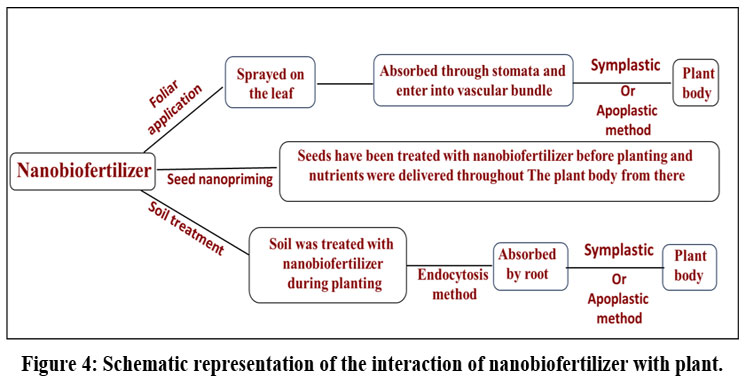 | Figure 4: Schematic representation of the interaction of nanobiofertilizer with plant.
|
Usefulness of Nanobiofertilizer
Nanobiofertilizer improves the plant growth and nutrition uptake by imparting different qualities to the soil and plant. The nanoencapsulation of biofertilizer with nanoparticles enhance its stability thereby minimize the rate of dissolution of fertiliser as well as increased surface area of nanobiofertilizer results in its higher activity and greater interaction with plant, thereby slow release of nutrients to plant. Bioorganic part of nanobiofertiliser synergistically maximizing the soil nutrient capacity through various mechanisms like fixation of atmospheric nitrogen into the plant roots by Rhizobacteria, synthesis of siderophores which can bind the essential metal ions into the plant root via chelate formation and solubulization of phosphate due to the presence of different bacteria and fungi. Owing to the combined effect of nanomaterials and biofertilizer, nanobiofertiliser shows an intense effect on the improvement of plant growth, crop yield and quality in the near future.
Promote plant growth
Research exhibits that some nanoparticles such as silicon, copper, silver, chitosan etc. facilitate the production of phytohormones like auxin, gibberellic acid etc. that are helpful to increase plant growth and stress tolerance ability. Nanoparticles, coated with biofertilizers, increase the efficiency of biofertilizers and release nanoparticles in a controlled manner into the plant’s rhizosphere for sustainable agriculture. Owing to small size of the nanoparticles it easily gets absorbed onto the root and then spread throughout the whole plant. Nanoparticles enhance the water solubility of biofertilizers in NBF, thereby reducing its loss by leaching.33 NBF also helps to produce secondary metabolites such as catalase and peroxidase and nonenzymatic oxidants like phenols and flavonoids that improve the crop quality by enhancing the shelf life of the crops, which is also beneficial to our health.34 The synergistic action of nanoparticles and biofertilizers stimulate a variety of pathways within the plant body that are responsible for the better development of plants. NBF helps to upgrade the genes that are accountable for producing antioxidants and osmolytes, thereby minimizing the harmful effect of Reactive Oxygen Substrate (ROS) on plants during stressed conditions and also preserving the cell’s structure along with its functions. NBF promotes the secretion of growth hormones like indole acetic acid, cytokinin and suppresses the production of stress-related hormones like abscisic acid,35 which in turn improves stress tolerance of the plant and also maintains the crop yield even under unfavourable environmental conditions. Moreover, nanoparticles regulate the release of hormones and thereby, enhancing its sensitivity, and coating of hormone with the nanoparticles prevents it degradation and improving the stability and availability. The rate of photosynthetic activity, growth of the seedlings has been highly affected by nanoparticles that also improve the crop yield and quality.
To increase soil fertility
Abrupt use of chemical fertiliser reduces the naturally found nutrients in the soil; thereby decreasing soil inherent fertility. Additionally, acidification of soil is the prime factor that is responsible for diminishing the soil fertility. Loss of soil fertility and nutrients imbalance are the two major factors that deteriorate the crop productivity and its nutrition value. Nanobiofertilizer, plays an important role to minimize these limitations in an efficient manner. Nanoparticle part of the nanobiofertiliser helps the plant to absorption the nutrients slowly and prevent the loss of nutrients from the soil by leaching, gasification36 etc.; its biofertiliser component provides the scope for assimilation of nutrients into the soil and on the various parts of the plants through various mechanisms. Apart from this, biofertilizer coated with nanoparticles enables to improve the microbial action in the soil, results in the better cycling of nutrients.36 The synchronization of the functions of the two components of nanobiofertiliser provides a wide scope to enrich the soil fertility.
To improve the crop security against pest and pathogens
Nanobiofertilizer also provides resistance to the plants against the diseases caused by the pests and pathogens. Nanoparticles have been designed judiciously so that it can interact with different types of microorganisms specifically to ensure the plant protection which also effect the crop security. There are several evidences on the action of nanobiofertilizer against bacteria, fungi and pesticidal effect. The organic part of the nano biofertilizer protects the leguminous plants from bacterial infections as is evident from the study of S. Gouda et al.,37 Silver nanoparticles coated biofertilizers prevents the bacterial growth on the targeted plants and thereby reduces the loss of crops.38 Metal oxides nanoparticles encapsulated nanobiofertilizer directly attack the plant pathogens to prevent them from this biotic stress.39
Environmental impact
Nanobiofertlizer can lessen the nutrients loss by leaching and run-off, which thereby regulate the water pollution and eutrophication. Due to target-specificity of nano biofertilizer, it can directly apply to the root of the plant, thereby optimize the nutrient uptake, and minimize the amount of requirement of nutrients.40
Disadvantages
Though nanobiofertilizers seem to be beneficial for sustainable agriculture, their effect on the environment and on human health should have to be thoroughly studied. The major disadvantage of nanobifertilizers is the potential toxicity that they can impose on the plant and other organisms if not properly designed and employed. Nanoparticles, owing to its small size, can easily accumulate in the food chain and enter the human body through the consumption of food.41 The improper treatment of nanobifertilizers can affect the environment, especially the water, due to nutrient run-off from the field.42 A detailed trial and error investigation should be carried out by researchers to control the dose of nanobiofertilizer to minimize its harmful effect on the environment as well as on human health. The living microorganisms used as biofertilizer in NBF, will possess a very poor shelf life and is unsuitable for the soil having inadequate mineral content. Moreover, the production cost of nanobiofertilzer is quite higher than that of the traditional fertilizer, owing to specialized manufacturing processes and special equipment techniques. The long-term effect of nanobifertilizers on the soil for their prolonged use is still a big question. Furthermore, the farmers in our country have poor knowledge of the method of application and beneficial aspects of nanobiofertilizers. Addressing the issues, a comprehensive research work along with an exhaustive campaign should urgently be required to promote the use of nanobiofertilizer for the development of eco-friendly and sustainable agriculture.
Present status of Nanobiofertlizer
All over the world, researchers have focused on the potentiality of the nanobiofertilizer in crop production. Some current work on nanobiofertlizer has been summarized in Table 3.
Table 3: Present scenario of nanobiofertilizer for sustainable agriculture
Nanobiofertilizer | Target plants | Response |
Plant-promoted bacteria with iron oxide nanoparticles | Soyabean seedling | Improve the growth of the seedlings43 |
Chelation of minerals from plant extract with citric acid | Common bean plant | Antifungal activity44 |
Graphene + plant growth promoting bacteria | Hordeum vulgare | Improve the germination of seeds45 |
Zinc oxide nanoparticles + Azospirillum | Mung bean (Vigna radiata) | Improve plant growth46 |
Silver nanoparticle coated Bacillus cereus LPR2 | Zea mays | Improve plant growth and also exhibit antifungal activity47 |
Iron nano-oxide and Pseudomonas and Mycorrhiza | Zea mays | Improve plant growth even under drought situation48 |
Gold nanoparticles and rhizospheric Pseudomonas monteilii | Vigna unguiculata | Improve the length of shoot, leaf number and weight of the plant49 |
Zinc nanoparticles blended with Rhizobactor and organic fertilizer | Phaseolus vulgaris L | Enhance the plant growth, number of leaves, nutrient uptake and protein, carbohydrate content in pod50 |
Titanium nanoparticle combined with Azospirillum brasilense, A. caulinodans and Azotobacter chroococcum | Triticum secale | Increased chlorophyll content, moisture hold, crop yield of the target plant51 |
Nanozeolite mixed with Bacillus spp. | Any targeted plant | Increases the biomass and chlorophyll content, antioxidants, and yield of the plant52 |
Onion silver nanobiofertlizer | Brinjal and tomato plants | Enhance leaf area and leaf nutrient content and improve crop quality53 |
Mesoporous silica NPS + Bacillus sp. | Black wheat | Increase plant growth, chlorophyll content, proline level, nitrogen content54 |
Plant Growth Promoting Rhizobacteria + Silicon NPs | Sugar Beet | Highly improve plant growth and crop yield under soil salinity and saline water irrigation55 |
Staphylococcus aureus + Fe Nanoparticles (Applied under chromium stressed condition) | Rice plants | Reduce the chromium uptake by plants and also lessen the harmful56 |
Nanozinc-chelate + biofertlizer | Maize plants | Improve the maize yield by shortening the irrigation perod57 |
The current state of nanobiofertilizer application has shown that it is an environmentally beneficial synchronizing effect of biotechnology and nanotechnology that not only effectively improves plant growth, crop yield, and crop protection but also imparts soil fertility, water restoration, seed germination, chlorophyll content, and stress tolerance capability.
According to recent research, the best candidates for nanobiofertilizer formulation are Plant Growth Promoting Rhizobacteria (PGPR) like Azotobacter, Azospirillum, and Rhizobium, as well as fungi (mycorrhizae) and algae in combination with zinc oxide (ZnO), silicon (Si/SiO2), iron (Fe/Fe2O3), and silver (Ag) nanoparticles. These nanoparticles are so chosen that they can improve plant growth, nutrient uptake and stress tolerance when combine with biofertilizer. Among organic nanoparticles, chitosan is seemed to be appropriate owing to their biodegradability and efficiency in encapsulating the biofertilizer. Recently, nanobiofertilizer capsules58 have been synthesized and characterized by loading necessary agro-nutrients in nanoscale level and beneficial microorganisms like Pseudomonas Fluorescence for slow release of nutrients. Furthermore, neem cake blended with plant growth promoting rhizobacteria increase the crop yield and rate of germination of seedlings of a specific leguminus plant.59
Future Prospect
Concerning the nutrient supplier, plant growth, and safety regulations, nanobiofertilizers, a combination of nano- and biotechnology, are an appropriate approach towards the development of sustainable agriculture. Along with its beneficial aspects, there are some limitations and toxic effects which cannot be overlooked as such. Despite having several advantages, the present scenario reveals that the worldwide application of it has still been restricted. Future researchers should give stress on the following points for the better application of nanobiofertilizers towards green and sustainable agriculture.60
Nanoparticles of nanobifertilizers should be designed carefully to optimize their size, dimensions, and surface properties to enhance their stability, dispersibility and nutrient release, so that plants can absorb them properly. The small size and large surface area of the nanoparticles help the fertilizer to deliver the nutrients slowly, thereby minimizing the loss of nutrients.
Compatibility studies of the nanoparticles with the selected biofertilizers should be made carefully to increase their usefulness.
Nanobiofertilizers cannot get full acceptance among farmers only based on laboratory-based experimentation. A similar set-up should be developed in the natural environment to make it more popular.
The impact of nano-biofertilizer on soil texture and plant ecology for it prolong use should be assessed primarily, to examine its long-term effect.
The government should undertake a thorough safety regulation program to evaluate the toxic effect of the nanobiofertilizer due to the inclusion of nanoparticles and restrict the permissible dose to get better results.
Users should have a deep understanding of the biodegradation and transformation of nanobiofertilizers on plants to get insight into their toxic effect on the environment.
Investigations should be carried out to find out the most suitable way to get more crop yield in a more economical way using nanobiofertilizer.
Conclusion
In summary, nano biofertilizer, an innovative approach of nanobiotechnology incorporating nanoparticles into bio-fertilizers, has become promising nowadays as a part of eco-friendly green sustainable agriculture. It has several advantageous aspects that include a small dose of application, increasing the stability of the functional ingredients, minimizing the loss of nutrients either through leaching or biodegradation, which all help to improve the crop yield and soil quality. Besides having several beneficial aspects, it has some toxic effects on the soil because of the presence of nanoparticles. Some microrganisms act as biofertilizer of nanobiofertilizer enables to form an extracellular polymeric substances (EPSs) that can effectively encapsulate the nanomaterials and minimize the toxic effect of overconcentrated nanoparticles. Moreover, the formation of biofertilizer itself in the nanoscale form in place of combining nanoparticles and biofertilizers expected to give better results and partly resolve the toxic effect of nanoparticles; algal nanobiofertilizer is one of the most developing areas in this aspect. In recent times, researchers have actively been engaged in developing nanobi0fertilizers by using hybrid nanomaterials and bio nanocomposites to make them more acceptable. Moreover, the design and synthesis of multi-nutrient delivery nano biofertilizers shows a new horizon in the field of green agriculture. This is a fertilizer that supplies multiple nutrients to the plants simultaneously, in a controlled manner that can improve the soil quality as well as plant health. This review also opens scope for upcoming researchers for the proper implementation of the hybridization of nanotechnology and biotechnology towards a sustainable and eco-friendly approach in the field of agriculture in the coming future. It also suggests achieving a thorough insight into the interaction between the nanoparticles with the plant body, which will help future researchers to be involved in interdisciplinary collaborative research between nanotechnology and agriculture for the betterment of humanity.
Acknowledgement
I am thankful to the authority of Sreegopal Banerjee College, Bagati, West Bengal for providing access to computer facilities, software, and internet services.
Funding Sources
The author received no financial support for the research, authorship, and/or publication of this article.
Conflict of Interest
The authors do not have any conflict of interest
Data Availability Statement
This statement does not apply to this article.
Ethics Statement
This research did not involve human participants, animal subjects, or any material that requires ethical approval.
Informed Consent Statement
This study did not involve human participants, and therefore, informed consent was not required.
Permission to Reproduce Material from other Sources
Not Applicable
Author Contributions
The sole author was responsible for the conceptualization, methodology, data collection, analysis, writing, and final approval of the manuscript
References
- Guo L., Li H., Cao X., Cao A., Huang M. Effect of agricultural subsidies on the use of chemical fertilizer. J Environ Manag. 2021; 299: 113621. DOI. https://doi.org/10.1016/j.jenvman.2021.113621.
CrossRef - Wan L. -J., Tian Y., He M., Zheng Y. -Q., Lyu Q., Xie R. -J., Ma Y. -Y., Deng L., Yi S. -L. Effects of Chemical Fertilizer Combined with Organic Fertilizer Application on Soil Properties, Citrus Growth Physiology, and Yield. Agriculture. 2021; 11(12):1207. DOI: https://doi.org/10.3390/agriculture11121207.
CrossRef - Pahalvi H. N., Rafiya L., Rashid S., Nisar B., Kamili A. N. Chemical Fertilizers and Their Impact on Soil Health. Microbiota and Biofertilizers. 2021; 2:1-20.
CrossRef - Jote C. A. The Impacts of Using Inorganic Chemical Fertilizers on the Environment and Human Health. Organic and Medicinal Chemistry. 2023; 13(3):555864. DOI: 10.19080/OMCIJ.2023.13.555864.
- Liu L., Zheng X., Wei X., Kai Z., Xu Y. Excessive application of chemical fertilizer and organophosphorus pesticides induced total phosphorus loss from planting causing surface water eutrophication. Sci Rep. 2021; 11:23015. DOI: https://doi.org/10.1038/s41598-021-02521-7.
CrossRef - Macik M., Gryta A., Frac M. Biofertilizers in agriculture: An overview on concepts, strategies and effects on soil microorganisms. Advances in Agronomy. 2020; 162: 31-87.
CrossRef - Wahane M. R., Meshram N. A., More S. S., Khobragade N. H. Biofertilizer and their role in sustainable agriculture-A Review. Pharm Innov J. 2020; 9(7): 127-130.
- Mahamty T. A., Bhattacharjee S., Goswami S., Bhattacharyya P., Das B., Ghosh A. Biofertilizers: a potential approach for sustainable agriculture development. Environmental Science and Pollution Research. 2017; 24: 3315-3335.
CrossRef - Mishra M., Sachan A., Sachan S. G., Current Aspects and Applications of Biofertilizers for Sustainable Agriculture. Plant Microbiomes for Sustainable Agriculture. 2020; 25: 445-473.
CrossRef - Chakraborty T., Akhtar N. Biofertilizers: Prospects and Challenges for Future. Biofertilizers: Study and Impact. Ch 20, 2021. DOI: https://doi.org/10.1002/9781119724995.ch20.
CrossRef - Kataria A., Sharma J., Jhamaria C. A Review on Biofertilizers with Special Reference to Liquid Biofertilizers. Indian Journal of Natural Sciences. 2022; 13(73): 45525-45537.
- Ding Y., Wang Q., Zhu G., Zhang P., Rui Y. Application and perspectives of nanopesticides in agriculture. Journal of Nanoparticle Research. Springer Link. 2023; 25(159).
CrossRef - Bratovcic A., Hikal W., Said-Al Ahl H., Tkachenko K., Baeshen R., Sabra A., Sany H. Nanopesticides and Nanofertilizers and Agricultural Development: Scopes, Advances and Applications. Open J Ecol. 2021; 11:301-316. DOI: 10.4236/oje.2021.114022.
CrossRef - Zulfiqar F., Navarro M., Ashraf M., Akram N. A., Munne-Bosch S. Nanofertilizer use for sustainable agriculture: Advantages and limitations. Plant Sci. 2019; 289: 11-0270. DOI: https://doi.org/10.1016/j.plantsci.2019.110270.
CrossRef - Raliya R., Saharan V., Dimkpa C,. Biswas P. Nanofertilizer for Precision and Sustainable Agriculture: Current State and Future Perspectives. J Agric Food Chem. 2018; 66(26): 6487-6503. DOI: https://doi.org/10.1021/acs.jafc.7b02178.
CrossRef - Fernandes S., Sharma P. Advancements in Nano-Biofertilizer Formulation: Potential Significance for Sustainable Agriculture. J Soil Sci Plant Nutr. 2026. DOI: https://doi.org/10.1007/s42729-025-02976-x.
CrossRef - Sholkamy E. N., Abdelhamid M. A. A., Mekawy A. M. M., El-Sheekh M., Pack S. P. Nano-Biofertilizer Formulations for Sustainable Agriculture: Potential and Limitations. Plant-Microbe Interactions for Environmental and Agricultural Sustainability. 2025; 661-693.
CrossRef - Fatima F., Hashim A., Anees S. Efficacy of nanoparticles as nanofertilizer production: A review. Environ Sci Pollut Res. 2021; 28: 1292-1303.
CrossRef - Nisar S., Sadique S., Kazerooni E. G., Majeed U., Shehzad M. R. Physical and Chemical Techniques to Produce Nanofertilizers. International Journal of Chemical and Biochemical Sciences. 2019; 15:50-57.
- Bahrulolum H., Nooraei S., Javanshir N., Tarrahimofard H., Mirbagheri V. S., Easton A. J., Ahmadian G. Green synthesis of metal nanoparticles using microorganisms and their application in the agrifood sector. J Nanobiotechnology. 2021; 19(86). Springer Link.
CrossRef - Patil A. G., Kounaina K., Aishwarya S., Harshitha N., Satapathy S., Hudeda S. P., Reddy K. R., Alfaras H., Yadav A. N., Raghu A. V., Zameer F. Myco-Nanotechnology for Sustainable Agriculture: Challenges and Opportunities. Recent Trends in Mcological Research. 2021; 457-479. Springer link.
CrossRef - Win T. T., Khan S., Bo B., Zada S., Fu P. Green synthesis and characterization of Fe3O4 nanoparticles using Chlorella-K01 extract for potential enhancement of plant growth stimulating and antifungal activity. Sci Rep. 2021; 11:1–11. DOI: https://doi.org/10.1038/s41598-021-01538-2.
CrossRef - Kouhkan M., Ahangar P., Babaganjeh L. A., Allahyari-Devin M. Biosynthesis of Copper Oxide Nanoparticles Using Lactobacillus casei Subsp. Casei and its Anticancer and Antibacterial Activities. Curr Nanosci. 2020; 16:101–111. DOI: https://doi.org/10.2174/1573413715666190318155801.
CrossRef - Terra A. L. M., Kosinski R. D. C., Moreira J. B., Costa J. A. V., De Morais M. G. Microalgae biosynthesis of silver nanoparticles for application in the control of agricultural pathogens. J Environ Sci Health B. 2019; 54: 709–716. DOI: https://doi.org/10.1080/03601234.2019.1631098.
CrossRef - Ahmed S., Qasim S., Ansari M., Shah A. A., Rehman H. U., Shah M. N., Ghafoor U., Naqvi S. A. H., Hassan M. Z., Rehman S. U. Green synthesis of zinc nanoparticles and their effects on growth and yield of Pisum sativum. J King Saud Univ Sci. 2022; 34: 102132. DOI: https://doi.org/10.1016/j.jksus.2022.102132.
CrossRef - Sharma P., Urfan M., Anand R., Sangral M., Hakla H. R., Sharma S., Das R., Pal S., Bhagat M. Green synthesis of zinc oxide nanoparticles using Eucalyptus lanceolata leaf litter: Characterization, antimicrobial and agricultural efficacy in maize. Physiology and Molecular Biology of Plants. 2022; 28: 363–381.
CrossRef - Rostamizadeh E., Iranbakhsh A., Majd A., Arbabian S., Mehregan I. Green synthesis of Fe2O3 nanoparticles using fruit extract of Cornus mas L. and its growth-promoting roles in Barley. J Nanostruct Chem. 2020; 10: 125–130. Springer Nature Link.
CrossRef - Singh J., Kumar S., Alok A., Upadhyay S. K., Rawat M., Tsang D., Bolan N., Kim K.-H. The potential of green synthesized zinc oxide nanoparticles as nutrient source for plant growth. J Clean Prod. 2019; 214:1061–1070. DOI: https://doi.org/10.1016/j.jclepro.2019.01.018.
CrossRef - Mathew J. T., Adetunji C. O., Inobeme A., Azeh Y., Monday M., Bini E. M., Otori A. A., Shaba E. Y., Ibrahim M. A., Tanko M. S., Mamman A., Oyewole O. A. Characterization of Nanoparticles Used as Nanobiofertilizers. Ch. 7, Handbook of Agricultural Biotechnology. Wiley Online Library, 2024. DOI: https://doi.org/10.1002/9781394211548.ch7.
CrossRef - Kumari R., Singh D. P.. Nano-biofertilizer: An Emerging Eco-friendly Approach for Sustainable Agriculture. Proceedings of the National Academy of Sciences, India Section B: Biological Sciences. 2020; 90: 733-741.
CrossRef - Chaughule R.S., Shelar A.V. Nanobiofertilizers for Foliar Use: Pioneering Sustainable Agricultural Practices. Nanotechnology in Agriculture. 2025; Springer, 179-197. DOI: https://doi.org/10.1007/978-3-031-97544-8_7.
CrossRef - Akhtar N., Ilyas N., Meraj T. A., Pour-Aboughadareh A., Sayyed R. Z., Mashwani Z. R., Poczai P. Improvement of plant responses by nanobiofertilizer: A step towards sustainable agriculture. Nanomaterials. 2022; 12:965. DOI: https://doi.org/10.3390/nano12060965.
CrossRef - Ali S. S., Darwesh O. M., Kornaros M., Al-Tohamy R., Manni A., El-Shanshoury A. E-R. R., Metwally M. A., Elsamahy T., Sun J. Nano-biofertilizers: Synthesis, advantages, and applications. Biofertilizers; Woodhead Publishing: Cambridge, MA, USA, 2021: 359–370.
CrossRef - Sharifi R. S., Khalilzadeh R., Pirzad A., Anwar S. Effects of biofertilizers and nano zinc-iron oxide on yield and physicochemical properties of wheat under water deficit conditions. Commun Soil Sci Plant Anal. 2020; 51:2511–2524.
CrossRef - Morsy N. M., Shams A. S., Abdel-Salam M. A. Zinc foliar spray on snap beans using nano-Zn with N-soil application using mineral, organic and biofertilizer. Middle East J Agric Res. 2017; 6: 1301–1312.
- Sharma A., Patel S., Menghani E. Synthesis, Application and Prospects of nanobiofertilizers: A Reappraisal. J Phytol Res. 2021; 1: 79-85.
- Gouda S., Kerry R. G., Das G., Paramithiotis S., Shin H. S., Patra J. K. Revitalization of plant growth synthesis, characterization, properties and application in rainfed agriculture. Global J Bio Biotechnol. 2018; 3133-3138.
- Atanda S. A., Shaibu R. O., Agunbiade F. O. Nanoparticles in Agriculture: balancing food security and environmental sustainability. Discover Agriculture. 2025; 3: article no. 26.
CrossRef - Munir N., Gulzar W., Abideen Z., Hancock J. Y., El-Keblawy A., Radicetti E. Nanotechnology improves disease resistance in plants for food security: Applications and Challenges. Biocatalysis and Agricultural Biotechnology. 2023; 51: 102781.
CrossRef - Yadav A., Yadav K., Abd-Elsalam K. A. Nanofertilizers: Types, Delivery and Advantages in Agricultural Sustainability. Agrochemicals. 2023; 2(2): 296-336.
CrossRef - Oyewole O. A., Yakubu J. G., Aishat S. R., Frances I., Yetu T. P., Ayanda O. I., Adetunji C. O., Eniola K. I. T., Yerima M. B. Toxicology and Adverse Effects of Chemical Fertilizer and Nanobiofertilizer Pollution of the Environment; Bioaccumulation, Greenhouse Effects, and Global Warming. Book Editor(s): Adetunji CO, Egbuna C, Ficai A, Ijabadeniyi OA. Wiley Online Library. 2024. Ch. 14. DOI: https://doi.org/10.1002/9781394211548.ch14.
CrossRef - Utazi E. B., Oyewole O. A., Yakubu J. G., Yetu T. P., Omoregie I. P., Adetunji C. O., Mathew J. T., Igiku V., Eniola K. I. T., Yerima M. B. Toxicological Effects of Nanobiofertilizer on Water Body, Water Quality, Lower Plants, Zooplanktons, and Beneficial Microorganisms. Book Editor(s): Adetunji CO, Egbuna C, Ficai A, Ijabadeniyi OA. Wiley Online Library. 2024. Ch. 8. DOI: https://doi.org/10.1002/9781394211548.ch8.
CrossRef - Benedetti T., Tamagno W. A., Sordi E., Bortoluzzi E. C. Iron oxide nanoparticles as enhancers of growth-promoting bacteria: a step towards developing nano-biofertilizers. Environ Sci Nano. 2024; 11: 3053-3065. DOI: https://doi.org/10.1039/D4EN00049H.
CrossRef - Baazaoui N., Bellili K., Messaoud M., Elleuch L., Labidi S., Aounallah K., Maazoun A., Salhi R., Shati A. A., Alfaifi M., Hammami S. B. M., Sghaier-Hammami B. Silicon. 15: 7395-7411, 2023. Springer Link.
CrossRef - Alouane H., Helmi M., Faheem A., El Semary H., Adel N., Munirah A., Fatimah A., Olfa N. Application of Optimised Nanocarbon Materials and Biofertilisers as a Potent Superfertiliser: Towards Sustainable Agriculture Production. Sci Adv Mater. 2021; 13(5): 812-819. DOI: https://doi.org/10.1166/sam.2021.3948.
CrossRef - Manivannan N., Aswathy S., Malaikozhundan B. T. Nano-zinc oxide synthesized using diazotrophic Azospirillum improves the growth of mung bean, Vigna radiata, Int Nano Lett. 2021; 11: 405-415. DOI: https://doi.org/10.1007/s40089-021-00351-z.
CrossRef - Kumar P., Chib P., Chandel V., Mehta H. Nano-Biofertilizers and Biological Amendments in Productivity Enhancement and Nutrient Use Efficiency of Fruit Crops. Food and Scientific Reports. 2023; 4(7): 36-45.
- Eliaspour S., Sharifi R. S., Shirkhani A., Farzaneh S. Effects of biofertilizers and iron nano-oxide on maize yield and physiological properties under optimal irrigation and drought stress conditions. J Food Sci. 2020; 8(11): 5985-5998. DOI: https://doi.org/10.1002/fsn3.1884.
CrossRef - Panichikkal J., Thomas R., John J. C., Radhakrishnan E. K. Biogenic Gold Nanoparticle Supplementation to Plant Beneficial Pseudomonas monteilii was Found to Enhance its Plant Probiotic Effect. Curr Microbiol. 2019; 76: 503-509.
CrossRef - Morsy N. M., Shams A. S., Abdel-Salam M. A. Zinc foliar spray on snap beans using nano-Zn with N-soil application using mineral, organic and biofertilizer. Middle East J Agric Res. 2017; 6: 1301–1312.
- Ghooshchi F. Influence of titanium and bio-fertilizers on some agronomic and physiological attributes of triticale exposed to cadmium stress. Global Nest J. 2017; 19: 458–463. URL: https://journal.gnest.org/sites/default/files/Submissions/gnest_02260/gnest_02260_published.pdf.
CrossRef - Bashir A., Rizwan M., Ali S., Adrees M., Qayyum M. F. Effect of composted organic amendments and zinc oxide nano-particles on growth and cadmium accumulation by wheat; a life cycle study. Environmental Science Pollution Research. 2020; 27: 23926–23936.
CrossRef - Gosavi V. C., Daspute A. A., Patil A., Wagh S. G., Sherkhane A., Deshmukh V. A. Synthesis of green nanobiofertilizer using silver nanoparticles of Allium cepa extract Short title: Green nanofertilizer from Allium cepa. Int J Chem Stud. 2020; 8(4): 1690-1694.
CrossRef - Karunakaran A., Fathima Y., Singh P., Beniwal R., Singh J., Ramakrishna W. Next-Generation Biofertilizers: Nanoparticle-Coated Plant Growth-Promoting Bacteria Biofertilizers for Enhancing Nutrient Uptake and Wheat Growth. Agriculture. 2024; 14: 517. DOI: https://doi.org/10.3390/agriculture14040517.
CrossRef - Alharbi K., Hafez E., Omara A. E. D., Awadalla A., Nehela Y. Plant Growth Promoting Rhizobacteria and Silica Nanoparticles Stimulate Sugar Beet Resilience to Irrigation with Saline Water in Salt-Affected Soils. Plants. 2022; 11(22):3117. DOI: https://doi.org/10.3390/plants11223117.
CrossRef - Alharby H. F., Ali S. Combined Role of Fe Nanoparticles (Fe NPs) and Staphylococcus aureus L. in the Alleviation of Chromium Stress in Rice Plants. Life. 2022; 12(3): 338. DOI: https://doi.org/10.3390/life12030338.
CrossRef - Farnia A., Omidi M. M. Effect of Nano-Zinc Chelate and Nano-Biofertilizer on Yield and Yield Components of Maize (Zea mays L.), Under Water Stress Condition. IndianJjournal of Natural Science. 2015; 5(29): 4614-4624.
- Hamed R., Jodeh S., Alkowni R. Nanobiofertiliser Capsules for Sustainable Agriculture. Sci. Rep. 2024; 14:13646. DOI: https://doi.org/10.1038/s41598-024-62973-5.
CrossRef - Singh A. K., Dixit P., Kushwaha P., Verma R. Nano-Biofertilizers in Sustainable Agriculture. Sustainable Agriculture and Environment: Resilience & Innovation. 2024. ISBN: 978-81-991218-0-5.
- Biswal D. Nanobiofertilizers: The Futuristic Tools for Nutrient Management in Plants. Biotechnology for Sustainable Soils. 2024; 207-252. Springer Link.
CrossRef
Abbreviations List
Nano-biofertilizers-NBF; Metal Nanoparticles-MNPs; Single Electron microscopy-SEM; Transmission electron microscopy-TEM; Fourier Transform Infra-Red Spectroscopy-FTIR; X-Ray Diffractometer-XRD; Extracellular polymeric substances-EPSs.