
Phytoremediation for Air Quality: A Sustainable Solution for Urban Resilience and Post-Covid Green Recovery
Soudip Das1
 , Ayan Saha1
, Dibyendu Saha1
*
, Kushal Roy2
and Md. Nazir2
, Ayan Saha1
, Dibyendu Saha1
*
, Kushal Roy2
and Md. Nazir2
1
Department of Botany,
The University of Burdwan,
West Bengal
India
2
Department of Botany,
Ramakrishna Mission Vivekananda Centenary College,
Rahara, Kolkata,
West Bengal
India
http://dx.doi.org/10.12944/CWE.20.3.2
Copy the following to cite this article:
Das S, Saha A, Saha D, Roy K, Nazir M. Phytoremediation for Air Quality: A Sustainable Solution for Urban Resilience and Post-Covid Green Recovery. Curr World Environ 2025;20(3). DOI:http://dx.doi.org/10.12944/CWE.20.3.2
Copy the following to cite this URL:
Das S, Saha A, Saha D, Roy K, Nazir M. Phytoremediation for Air Quality: A Sustainable Solution for Urban Resilience and Post-Covid Green Recovery. Curr World Environ 2025;20(3).
Download article (pdf)
Citation Manager
Publish History

Introduction
The atmosphere is a vital, dynamic envelope of gases and particulates that envelops the Earth, composed primarily of nitrogen (N2), oxygen (O2), carbon dioxide (CO2), water vapour, and trace noble gases such as neon (Ne) and helium (He). This atmospheric layer plays an indispensable role in sustaining life by regulating global temperatures through the greenhouse effect, shielding the biosphere from harmful ultraviolet (UV) radiation, and facilitating the hydrological cycle through cloud formation and precipitation.1-3
However, the stability of this delicate system is increasingly threatened by anthropogenic air pollution arising from sources such as vehicular emissions, industrial activities, fossil fuel combustion, electronic waste, etc. These pollutants—particularly particulate matter (PM2.5, PM10), volatile organic compounds (VOCs), greenhouse gases, and toxic compounds like dioxins—pose serious health risks. They contribute to respiratory and cardiovascular diseases, neurological and reproductive impairments, cancers, asthma and chronic obstructive pulmonary diseases (COPDs) like chronic bronchitis.4,5 Ecosystems, too, suffer consequences including acid rain, global warming, altered rainfall patterns, and phytotoxic effects on vegetation.6,7 The rise in global population, especially in dense urban centres, further compounds these challenges, driving phenomena such as environmental migration.8
In this context, the present study investigates phytoremediation as a sustainable, cost-effective solution to mitigate urban air pollution. By leveraging the natural pollutant-absorbing abilities of plants, the research assesses the effectiveness of both indoor and outdoor species in removing contaminants such as CO2, NO2, PM, carbon monoxide (CO), VOCs, etc. It critiques conventional mechanical methods, evaluates phytoremediation mechanisms, and presents a strengths, weaknesses, opportunities, and challenges (SWOC) analysis. Furthermore, it explores innovative strategies like genetic engineering and plant-microbe synergies, aligns its framework with United Nations (UN) Sustainable Development Goals (SDGs), UN SDG 3, 11, and 13, and provides actionable policy and community-based recommendations tailored to Indian cities.
Major air pollutants, their impacts, and conventional control methods
The Earth's atmosphere is increasingly burdened by a wide array of pollutants, largely generated by anthropogenic activities. These pollutants pose substantial risks to both human health and ecological systems. Among the most prevalent are gaseous pollutants such as CO, nitrogen oxides (NOx), sulphur dioxide (SO2), etc. CO is primarily released through incomplete combustion of fossil fuels, while NOx is generated from high-temperature combustion processes and certain natural phenomena. SO2 mainly arises from industrial activities and the burning of sulfur-containing fossil fuels.9-12
In addition to gases, non-gaseous pollutants contribute significantly to atmospheric contamination. These include polycyclic aromatic hydrocarbons (PAHs), VOCs, PM2.5 and PM10. PAHs result from the incomplete combustion of organic materials in power plants, vehicle engines, and forest fires.13,14 VOCs are released from indoor sources such as paints, solvents, and cleaning products, as well as from industrial processes and certain vegetation.15,16 PM originates from both natural events like wildfires and dust storms, and human activities such as construction, agriculture, and vehicle emissions.17,18
Air pollution is a major global health concern, responsible for millions of deaths annually. According to the World Health Organization19 pollutants such as PM, O3, NO2, SO2 contribute to respiratory infections, cardiovascular diseases, and cancers, particularly lung cancer. Children are especially vulnerable due to their developing respiratory systems, with increased risks of asthma, pneumonia, and neurodevelopmental issues.20-22 Historical events like the 1952 London Smog and 1984 Bhopal gas tragedy demonstrate the devastating consequences of acute air pollution exposure.23 Long-term exposure to fine PM2.5 has been associated with a 12–14% increase in cardiovascular mortality and higher incidences of chronic respiratory conditions such as COPD and asthma.24-27
To counteract these health and environmental risks, various mechanical pollution control devices are employed. Cyclone separators utilise centrifugal force to remove larger PM from the air stream.28,29 Fabric filters, commonly known as baghouse filters, trap fine particles by passing polluted air through fibrous materials.30 Electrostatic precipitators (ESPs) use electric fields to charge airborne particles, which are then collected on oppositely charged surfaces.31 High-Efficiency Particulate Air (HEPA) filters are used in indoor environments to capture ultra-fine particles.32 In the transportation sector, catalytic converters transform harmful gases such as CO, NOx, and PAHs into less toxic substances through chemical reactions.33 These technologies offer targeted control based on pollutant type and application, yet their limitations—such as high cost, energy demand, and limited pollutant specificity—highlight the need for complementary, sustainable alternatives.34-36
Impact of COVID-19 and the concept of green recovery
The COVID-19 pandemic, though primarily a global health crisis, inadvertently served as a large-scale environmental experiment by revealing the extent to which human activities contribute to air pollution. Nationwide lockdowns and reduced industrial and vehicular activity led to a temporary yet notable improvement in urban air quality worldwide. Empirical studies conducted across countries such as India, China, and members of the European Union reported significant declines in atmospheric pollutants, including PM2.5, NO2, and CO, during periods of restricted human mobility.37-41
In India, for instance, the national lockdown led to a measurable reduction in key pollutants—PM10 by 33%, PM2.5 by 34%, CO by 21%, NO2 by 47%, and SO2 by 21%—compared to pre-lockdown levels.42 This abrupt yet clear decline reinforced the direct linkage between anthropogenic activity and air quality degradation, providing compelling evidence of the environment's capacity for rapid recovery when emissions are curtailed.
Beyond short-term gains, these observations sparked global discussions on the concept of “urban green recovery”, advocating for environmentally sustainable rebuilding strategies in the post-pandemic world. The idea emphasises the importance of embedding ecological resilience into economic and social recovery frameworks, often summarised by the directive to “build back better”.43-45 Central to this vision is the integration of nature-based solutions, including phytoremediation, urban greening, and enhanced environmental governance, as long-term tools to sustain the environmental improvements witnessed during the pandemic.
Uses of mechanical instruments in air pollution control
Mechanical devices have long played a central role in mitigating air pollution by targeting specific airborne contaminants across industrial, vehicular, and indoor environments. Commonly used technologies include cyclone separators, which utilize centrifugal force to remove larger particulate matter;28 fabric filters, which trap fine particles within fibrous bag systems;30 ESPs, which use electric fields to attract and collect charged particulates;31 HEPA filters, capable of capturing ultrafine particles in indoor settings;32 and catalytic converters, which chemically transform harmful gases such as CO, NOx, and PAHs into less toxic compounds in vehicular emissions.33
While these systems are effective in pollutant-specific applications, they are accompanied by notable limitations. Many require skilled operation and regular maintenance, and can contribute to noise pollution during operation .34,35,46 Their high initial capital costs, susceptibility to mechanical wear, and frequent replacement needs make them financially burdensome, particularly for large-scale or long-term deployment.47,48
A critical drawback lies in their pollutant specificity—most devices are optimised for a narrow class of contaminants, necessitating multi-stage systems to address a broader spectrum of pollutants. This multi-system requirement often leads to increased complexity, space demands, and higher operational costs.49-51 Moreover, certain technologies can result in the formation of secondary pollutants during treatment processes.52,53 These systems also often consume considerable energy, indirectly contributing to greenhouse gas emissions, thereby offsetting some of their environmental benefits.34,35 Additionally, the spatial and infrastructural requirements of many devices can limit their applicability in densely populated urban environments.28,29
Given these constraints, the exploration of nature-based, low-maintenance alternatives such as phytoremediation has gained momentum as a complementary or substitute strategy in urban air quality management.
Limitations of conventional air pollution control and the emergence of phytoremediation
Traditional air pollution control strategies predominantly rely on mechanical abatement technologies such as cyclone separators, ESPs, and fabric filters. Cyclone separators use centrifugal force to eliminate coarse particulate matter,54 while ESPs apply electrostatic fields to capture finer particles suspended in the air.55 Fabric filters, on the other hand, trap pollutants by passing contaminated air through fibrous media, effectively removing a wide range of particulate pollutants.56
Despite their efficacy, these engineering solutions are constrained by several significant drawbacks. They entail high capital and operational costs—ranging from 1.6 to 2.0 million INR in the Indian context—making them economically burdensome for widespread or long-term implementation. Moreover, they require skilled labour for operation and maintenance, further elevating logistical and financial demands. Perhaps more critically, these technologies often exhibit limited pollutant specificity, addressing only select types of contaminants and necessitating the use of multi-stage systems for comprehensive air purification.
Additionally, some of these systems inadvertently contribute to greenhouse gas emissions through high energy consumption or by forming secondary pollutants, thereby undermining their environmental benefits.57,58 These cumulative limitations underscore the pressing need for alternative, low-cost, and sustainable solutions.
In response, phytoremediation—the use of plants to absorb, degrade, or sequester atmospheric pollutants—has emerged as a promising, nature-based alternative. Offering a low-energy, self-sustaining approach to air purification, phytoremediation not only addresses many of the shortcomings of mechanical systems but also contributes to urban biodiversity, aesthetics, and climate resilience. Its growing relevance marks a shift toward integrated, eco-friendly strategies in modern air quality management.
Phytoremediation as a sustainable alternative for air pollution mitigation
Conventional mechanical air purification methods, although effective, are often hindered by high costs, complex maintenance, and narrow pollutant specificity. These limitations underscore the urgent need for sustainable, cost-effective, and environmentally friendly alternatives. Phytoremediation, a powerful "green technology," capitalises on the natural abilities of plants to extract, degrade, volatilize, or stabilise atmospheric pollutants. Compared to mechanical systems, phytoremediation is not only more economically viable but also self-sustaining, regenerative, and adds aesthetic value to urban spaces, making it a promising solution for mitigating air pollution.10,59-62
Globally, various plant species exhibit impressive pollutant mitigation capacities. For instance, Mangifera indica L. and Trifolium pratense L. effectively reduce CO2, PAHs, and VOCs outdoors.63,64 Chlorophytum comosum (Thunb.) Jacques and Spathiphyllum wallisii Regel excel in indoor environments by absorbing PM, NO2, and CO2.65,66 Other species, such as Hibiscus rosa-sinensis L., target CO, while Populus nigra L. and Dracaena trifasciata L. help reduce NOx .67-70 Additionally, plants like Phyllostachys edulis (Carrière) J. Houz. and Ilex rotunda Thunb. demonstrate strong potential for absorbing VOCs.71-73 This nature-based approach not only addresses air pollution but also contributes to climate resilience, urban biodiversity, and healthier urban environments.74,75
Integration of phytoremediation with green audit and urban green recovery
The integration of phytoremediation with strategic environmental management tools, such as green audits and the broader concept of urban green recovery, offers a powerful approach to sustainably improving urban air quality. A green audit provides a systematic evaluation of an urban area's environmental performance, identifying key pollution sources and hotspots, and pinpointing optimal locations for the deployment of green infrastructure. In the wake of the COVID-19 pandemic, the concept of green recovery has gained traction, with plans emphasising investments in urban green spaces to drive the adoption of phytoremediation-based interventions.
These interventions may include the creation of green belts, urban forests, vertical gardens, and roadside plantations, all strategically designed with plant species recognised for their air-purifying properties. Such integrated approaches go beyond simple air pollution control, contributing to enhanced biodiversity, improved aesthetic appeal, the mitigation of the urban heat island effect, and strengthened environmental resilience. This holistic approach leads to the creation of healthier, more sustainable urban ecosystems.76
Potential for phytoremediation of indoor and outdoor plant species in controlling air pollution
By absorbing, storing, or changing a range of air pollutants, indoor and urban plants have a significant impact on reducing air pollution. Both indoor and outdoor plant species with exceptional pollutant-removal capabilities have been found in a number of investigations. Magnolia grandiflora L., one of the outdoor plants, effectively absorbs PAHs from the surrounding air.77 Likewise, in contaminated urban settings, Ficus benghalensis L. and Buxus sempervirens L. demonstrate exceptional efficacy in absorbing PM.78,79 While Hibiscus rosa-sinensis L. and Hibiscus cannabinus L. show strong phytoaccumulation potential for lead (Pb) and cadmium (Cd), Eucalyptus viminalis Labill. effectively lowers nitrogen dioxide (NO2) concentrations.69,70 Additionally, it has been observed that red clover, Trifolium pratense L., reduces PAHs from polluted settings.80 Other species, including the Pinus sylvestris L., Tilia platyphyllos Scop., Quercus ilex L., and the Picea abies (L.) H. Karst. have demonstrated species-specific pollutant-removal abilities, specifically for PM, heavy metals like chromium (Cr), and nickel (Ni), and CO2, while also improving phenolic metabolism under pollutant stress.81-84 Furthermore, Magnolia kobus DC. has been shown to efficiently accumulate black carbon particles in urban atmospheres.85 The ability of indoor plant species to enhance air quality in cramped spaces has also been thoroughly investigated. Goeppertia ornata (Linden) Borchs. and S. Suárez absorb O3, whereas Spathiphyllum wallisii Regel efficiently eliminates benzene.86 Formaldehyde and ammonia are eliminated by Chrysalidocarpus lutescens Wendland and Epipremnum aureum (Linden and André) G.S. Bunting, correspondingly.87,88 VOCs like benzene, toluene, and xylene can be efficiently broken down by the arrowhead plant Syngonium podophyllum Schott,89 while formaldehyde, SO2, and other VOCs can be eliminated by the Crassula ovata (Miller) Druce.90 Similarly, it has been observed that Chamaedorea elegans Mart., and Euphorbia milli Des Moul., have lower CO2, O3, and ethylbenzene levels.91 While Hydrangea macrophylla (Thunb.) Ser. and Aloe vera (L.) Burm. f. accumulate harmful metallic elements like Cd and zinc (Zn), Dracaena trifasciata (Prain) Mabb. and Hedera helix L. are effective in trapping PMs.75,92-94 Additionally, a model organism in plant physiology, Arabidopsis thaliana (L.) Heynh. offers important insights into molecular pathways of heavy-metal (Cd, Cr, Zn, etc.) accumulation and Cd tolerance.95 All things considered, these results highlight the significant potential of plant-based systems as environmentally friendly, sustainable methods of reducing indoor and outdoor air pollution.
This research critically evaluates phytoremediation as a sustainable, scalable, and scientifically robust approach for improving urban air quality, drawing on global evidence as well as insights from the Indian context. It investigates how diverse plant species remove key airborne pollutants—including PM, CO2, NO2, CO, VOCs, and heavy metals—through processes such as surface deposition, stomatal uptake, biochemical transformation, and carbon sequestration. By systematically reviewing scientific studies, policy frameworks, and real-world applications, the work assesses how phytoremediation is implemented across different countries and how these practices can strengthen India’s air quality strategies under initiatives such as the National Clean Air Programme (NCAP) and the National Mission for a Green India. The novelty of the study lies in its integrated, cross-contextual approach, combining global best practices with India’s urban challenges and presenting a comprehensive Strength–Weakness–Opportunity–Challenge (SWOC) analysis that highlights ecological benefits, practical limitations, future potentials, and implementation barriers. Overall, the research offers clear, evidence-based insights for scientists, environmental managers, urban planners, and policymakers committed to developing cleaner, healthier, and more climate-resilient urban ecosystems.
Literature Review
Global scenario: Continent-wise perspectives
Urban air pollution presents a varied landscape of challenges across the globe, with distinct regional responses, and phytoremediation is emerging as a universally relevant solution. The escalating pollution burden in urban areas calls for comprehensive, sustainable mitigation strategies. Although mechanical solutions have their merits, their cost, applicability, and environmental footprint highlight the need for nature-based solutions, particularly phytoremediation. This section explores global case studies that showcase the application of phytoremediation, its integration with green recovery and green audit frameworks, and the significant impact of events like the COVID-19 pandemic on air quality paradigms. It also delves into the Indian context, focusing on city-level initiatives, government policies, and grassroots adoption potential.
Asia's rapid urbanisation: Embracing innovative green solutions
Asian cities, driven by rapid urbanisation and industrial growth, face some of the world’s most pressing air pollution challenges. This context has spurred significant interest in phytoremediation as a primary or complementary strategy for air pollution control.
China - pioneering green infrastructure for air quality
China, home to some of the world's most polluted cities, has been a leader in large-scale green infrastructure projects aimed at improving urban air quality. Cities like Beijing and Shanghai have invested heavily in urban forestry, greenbelts, and vertical gardens. Notably, Beijing's "Green Great Wall" initiative involves extensive tree planting to reduce dust storms and particulate matter. Studies in Chinese cities have shown that species of genera like Populus L., Salix L. effectively absorb PM2.5, PM10, SO2, and NOx.10 During the COVID-19 lockdowns, significant reductions in air pollution were observed, prompting discussions on sustaining these gains through long-term green recovery plans. Green audits are increasingly utilised to evaluate the effectiveness of greening initiatives, ensuring optimal plant species and designs for air purification.96-97
South Korea is leading the way in smart cities and nature-based solutions
South Korea has actively explored smart city concepts that incorporate ecological solutions for urban environmental challenges. In Seoul, efforts are underway to establish "forest cities" and promote urban greening for air quality improvement. Research has focused on identifying native plant species that tolerate pollution and absorb PM2.5 and O3, such as Dryopteris lacera (Thunb.) Kuntze, Machilus thunbergii Siebold & Zucc.98 Additionally, Dracaena trifasciata (Prain) Mabb., Monstera deliciosa Liebm. have shown promise in improving indoor air quality.99 The COVID-19 pandemic heightened public awareness of the health benefits of green spaces, accelerating commitments to urban green recovery, with phytoremediation playing a central role. Green audits are essential in assessing the ecological services provided by these green spaces, guiding future investments.
Europe is driving a green recovery through policy integration
While European cities generally have better air quality than their Asian counterparts, they still face significant pollution, primarily from vehicular emissions. The focus in Europe is on integrating phytoremediation into broader urban greening and sustainable mobility policies.
Germany is advancing urban green spaces and biomonitoring
Cities like Stuttgart have integrated green spaces to mitigate air pollution. Research in Germany emphasises the biomonitoring capabilities of specific plant species, using plants as indicators for urban air quality. Lichens like Hypogymnia physodes (L.) Nyl., Xanthoria parietina (L.) Th. Fr, as well as mosses like Pleurozium schreberi (Brid.) Mitt., Hylocomium splendens (Hedw.) Schimp are widely used as bioindicators for pollutants such as heavy metals and SO2.99-101 Higher plants, including Trifolium pratense L., are studied for their capacity to accumulate pollutants.102 The COVID-19 lockdowns led to short-term air quality improvements, reinforcing the need for "green recovery" strategies focused on sustainable transport and increased urban vegetation. Green audits continue to inform policy decisions on where to deploy phytoremediation solutions effectively.
The United Kingdom is pioneering low-emission zones and nature-based solutions
In London, one of the world's most stringent Ultra-Low Emission Zones, the role of urban trees and green walls in improving air quality has gained growing recognition. Urban trees such as Quercus robur L., Fagus sylvatica L., and Pinus sylvestris L. play a crucial role in capturing particulate matter and enhancing microclimates. Post-COVID recovery plans in the United Kingdom emphasise creating greener, more walkable cities, aligning with phytoremediation strategies. Green audits help identify areas where green infrastructure can have the greatest impact on air quality, especially in pollution hotspots.103
North America is driving research and policy innovation for sustainability
North American cities are increasingly recognising the health and environmental benefits of urban greening, with ongoing research into the mechanisms and effectiveness of phytoremediation.
The United States is enhancing urban forests for air quality benefits
In cities like New York and Chicago, extensive urban forestry programs have contributed significantly to air quality improvement. Studies in the United States have quantified the amount of air pollutants removed by urban trees such as Quercus alba L., Pinus strobus L., Acer saccharum Marshall, demonstrating their ability to filter particulate matter, O3, NOx, and SO2.104-106 The COVID-19 pandemic highlighted the potential for cleaner air due to reduced vehicular traffic, spurring discussions on how urban planning and green infrastructure, including phytoremediation, can support a healthier urban recovery. Green audits help assess the ecological benefits of existing and planned green spaces.105
Canada is advancing green infrastructure for sustainable cities
In cities like Toronto and Vancouver, green infrastructure is central to climate resilience and sustainability. Phytoremediation by trees like Pinus L., Quercus L., and Populus L. are being explored in various urban greening projects, including green roofs and living walls, especially for mitigating VOCs and PM.106 The emphasis on urban green recovery post-COVID has further spurred investments in nature-based solutions, recognising their multifunctional benefits for air quality, biodiversity, and mental well-being. Green audit frameworks help integrate these solutions into broader municipal planning.
South America is tackling pollution from industrialisation
South American cities, particularly those undergoing rapid industrialisation, face significant air pollution challenges. Phytoremediation offers a low-cost, sustainable solution to these issues.
Brazil is utilising bioremediation for contaminated urban areas
In Brazil, especially in cities like São Paulo, air pollution from vehicular traffic and industrial emissions is a major concern. Ongoing research into the use of native plants such as Calophyllum brasiliense Cambess., Hymenaea courbaril L., Protium heptaphyllum (Aubl.) Marchand for phytoremediation of heavy metals and airborne PM is promising.107 The pandemic highlighted the socio-economic disparities influencing environmental health, driving the adoption of green recovery initiatives that prioritise equitable access to green spaces and cleaner air. Green audits are critical for identifying high-pollution areas where phytoremediation interventions can have the greatest impact.
Colombia-urban greening and community engagement
Bogotá, Colombia, has gained international recognition for its commitment to urban greening and sustainable transportation. While public transport improvements are a priority, the role of trees like Populus deltoides W. Bartram ex Marshall and Salix babylonica L. is increasingly emphasised for air quality improvement.108 Post-pandemic, there has been a surge in community-led greening projects, fostering grassroots adoption of phytoremediation as part of broader green audit and recovery strategies.
Africa is exploring emerging solutions for rapid urbanisation
African cities are facing unprecedented rates of urbanisation, often accompanied by escalating air pollution. Phytoremediation presents a cost-effective, accessible solution.
South Africa is addressing mining impacts through ecological restoration
In cities like Johannesburg, mining activities contribute to significant heavy metal and dust pollution. Phytoremediation research is focusing on indigenous species such as Searsia longipes (Engl.) Moffett, Syzygium guineense Wall., Ficus craterostoma Warb. ex Mildbr. & Burret to remediate contaminated soils and air.109 The pandemic underscored the vulnerability of urban populations to respiratory illnesses, intensifying the need for sustainable air quality interventions. Green recovery plans focus on ecological restoration and the development of green spaces as natural air filters. Green audits are essential for identifying areas most in need of intervention.
Nigeria is advancing waste management and green infrastructure
In Lagos, Nigeria’s largest city, severe air pollution exacerbated by poor waste management and industrial emissions calls for innovative solutions. Although large-scale phytoremediation projects are still in their infancy, research into local plants like Ficus religiosa L., Pongamia pinnata (L.), etc., for air purification is gaining momentum.110 The pandemic accelerated discussions on urban green recovery, emphasising the role of nature-based solutions. Green audits are vital for mapping pollution sources and identifying areas that can benefit most from phytoremediation.
Table 1: Seasonal variation in PM deposition96-97, 99-106
Season | Total PM deposition (ug/cm²) | Notable fraction (%) | Key observations |
Spring | 20.2 | Fine fraction high | Lower overall deposition, efficient PM uptake |
Summer | 31.9 | Ultrafine ~23.9% | Higher deposition, enhanced plant metabolic activity |
Indian context: Localised challenges and opportunities for phytoremediation
India's air pollution mitigation efforts, including the (NCAP),111 Smart Cities Mission, Green India Mission (GIM), and National Afforestation Programme (NAP), can synergistically integrate phytoremediation. Private sector initiatives also contribute to urban greening. Successful large-scale adoption hinges on grassroots engagement: empowering local communities, incentivising farmers for "green farming," and strategically involving urban planners in zoning, green infrastructure design, green audits, and capacity building for effective, sustainable air quality improvement. However, India faces an unprecedented urban air quality crisis, with 9 of the world's 10 most polluted cities often being Indian.112 This necessitates a robust and multi-pronged approach, where phytoremediation can play a crucial, complementary role.
Delhi is battling hazardous air through green initiatives
Delhi consistently ranks among the world's most polluted capital cities, experiencing alarmingly high levels of PM2.5 during the winter months.113-115 Studies in Delhi have explored the efficacy of various tree species in capturing particulate matter and absorbing gaseous pollutants. Research by TERI (The Energy and Resources Institute) and other institutions has identified species like Azadirachta indica A. Juss., Ficus religiosa L., Saraca asoca (Roxb.) Willd, Terminalia arjuna (Roxb.) Wight & Arn. as effective air purifiers, demonstrating their ability to reduce PM2.5 concentrations in urban areas.116,117 Vertical gardens and green walls are also being piloted in areas with high traffic density. For instance, the Delhi government's efforts to increase green cover, though not explicitly labelled as phytoremediation projects, inherently leverage this technology. The temporary air quality improvements during the COVID-19 lockdowns in Delhi further highlighted the potential for reduced emissions and subsequent gains from increased green cover.
Kolkata greening for resilient urban environments
Kolkata, another densely populated Indian metropolis, faces significant air pollution challenges from industrial emissions, vehicular traffic, and open burning. Research in Kolkata has focused on identifying local plant species suitable for phytoremediation, like Ficus religiosa L., Mangifera indica L., and Polyalthia longifolia Sonn. B. Xue & R. M. K. Saunders, Eucalyptus globulus Labill., Ficus benghalensis L., Azadirachta indica A. Juss., particularly those tolerant to heavy metals and PM. Studies have highlighted the role of urban trees in sequestering carbon and capturing airborne pollutants.118 Initiatives to develop green corridors and expand urban parks are slowly incorporating the principles of phytoremediation, aiming to enhance air quality and biodiversity. The city's post-COVID-19 urban green recovery plans emphasise sustainable mobility and expanding green spaces to create a more resilient urban environment.
Mumbai: Coastal dynamics and green solutions
Mumbai, a coastal megacity, faces unique air pollution dynamics influenced by sea breeze and vehicular emissions. Research is exploring the role of coastal vegetation, including mangroves, in air filtration and carbon sequestration. Studies have evaluated various plant species like Ficus religiosa L., Azadirachta indica A. Juss., Mangifera indica L., Polyalthia longifolia Sonn. B. Xue & R. M. K. Saunders for their efficacy in trapping PM and absorbing gaseous pollutants in the city's specific climatic conditions.119 Efforts to increase urban green cover, including the development of new parks and green spaces, are being seen as vital for improving air quality and public health. The push for urban green recovery after the pandemic has brought renewed focus on incorporating nature-based solutions, including phytoremediation, into Mumbai's urban development agenda.
Methodology
The methodology of this study followed the PRISMA protocol to ensure a transparent, systematic, and reliable review process. Comprehensive searches were conducted across major academic databases, including Google Scholar, PubMed, ScienceDirect, Web of Science, NCBI, and ResearchGate, as well as official reports from NCAP, the GIM, the UN SDGs framework, and other government publications. The search covered literature published between 2010 and 2025, with particular emphasis on recent studies from 2021 to 2025. Keywords such as “phytoremediation and air pollution,” “urban air quality,” “green audit,” “green recovery,” “indoor plants air purification,” and “COVID-19 and environment” were used to identify relevant research, resulting in an initial pool of 2,849 records. After removing duplicates, 1,927 unique studies underwent title and abstract screening based on inclusion criteria related to plant-based removal of airborne pollutants, phytoremediation mechanisms, indoor and outdoor air-purifying species, and urban environmental improvement. Studies focused solely on soil or water remediation, lacking scientific evidence, or unrelated to air quality were excluded, leaving 312 articles for full-text assessment. Each article was evaluated for scientific quality, methodological clarity, and relevance to pollutant mitigation (PM, CO2, NO2, CO, SO2, VOCs, and heavy metals), plant-based uptake mechanisms, urban greening efforts, or SDG-linked strategies. Ultimately, 156 high-quality sources met the eligibility criteria and were analysed to identify major themes such as pollutant types, limitations of mechanical systems, post-COVID developments, effective plant species, phytoremediation pathways, global and Indian case studies, SWOC insights, and future directions. This PRISMA-based approach ensured that the study’s findings are grounded in robust evidence and accurately reflect current global trends in phytoremediation and sustainable air-quality management.
Results and Discussion
The global literature provides a clear and detailed understanding of phytoremediation as an effective nature-based method for reducing urban air pollution. Studies from different regions show that plant species vary in their ability to capture or absorb pollutants such as PM, CO2, NO2, O3, VOCs, and heavy metals. In Asia, especially China, large greening efforts such as urban forests and green belts have reduced PM2.5 and NO2, supported by species of Populus L. and Salix L.96 South Korea’s smart-city projects also report good results using species such as Dryopteris lacera (Thunb.) Kuntze and Machilus thunbergii Siebold & Zucc., which help reduce PM2.5 and O3.98 European studies add value by using lichens and mosses, such as Hypogymnia physodes (L.) Nyl., Xanthoria parietina (L.) Th. Fr., and Pleurozium schreberi (Brid.) Mitt.—to monitor SO2 and metal pollution, while also contributing to local pollutant reduction.100–102 Research in North America shows that trees such as Quercus alba L., Pinus strobus L., and Acer saccharum Marshall significantly lower PM, O3, NOx, and SO2 levels.104–105 Work from South America and Africa highlights the usefulness of native species like Calophyllum brasiliense Cambess., Hymenaea courbaril L., and Searsia longipes (Engl.) Moffett for pollution from traffic, mining, and industry.107–110 Overall, global studies confirm that phytoremediation is a practical, flexible, and scalable solution for improving air quality.
In India, the literature shows both severe air quality issues and strong potential for phytoremediation. Many Indian cities—such as Delhi, Kolkata, Mumbai, Kanpur, and Lucknow—experience very high levels of PM2.5, PM10, NO2, and SO2 due to traffic, industry, biomass burning, construction dust, and seasonal factors.111–115 Indian studies identify effective plant species such as Azadirachta indica A. Juss., Ficus religiosa L., Mangifera indica L., Polyalthia longifolia Sonn., and Eucalyptus globulus Labill., which efficiently trap PM and absorb gases like NO2, CO, and VOCs.116–119 Research from Delhi shows that Ficus benghalensis L. and Saraca asoca (Roxb.) Willd. capture large amounts of PM, while coastal species such as Avicennia marina (Forssk.) Vierh. help in CO2 storage and pollutant reduction in Mumbai. Indian studies also highlight the role of leaf surface features, stomatal patterns, and biochemical properties in determining how well plants remove pollutants. National programmes such as NCAP, the GIM, and the Smart Cities Mission recognise the importance of greening for air quality, although challenges remain in selecting suitable species, planning green spaces, and ensuring long-term maintenance.111–112 Overall, the Indian evidence shows that phytoremediation is a feasible, low-cost, and effective option to support cleaner and healthier urban environments.
Mechanism of phytoremediation
The underlying mechanisms of phytoremediation are based on the physiological, biochemical, and molecular pathways that enable plants to absorb, detoxify, and metabolise air pollutants. These mechanisms are not only fundamental to plant survival but are also highly effective in removing environmental pollutants.
CO2, a major greenhouse gas, is naturally absorbed by green plants during photosynthesis, specifically via the Calvin–Benson cycle, which is a light-independent set of reactions occurring in the chloroplasts. During this cycle, CO2 is fixed by the enzyme Ribulose-1,5-bisphosphate carboxylase/oxygenase (RuBisCO) and transformed into glucose and other carbohydrates. These sugars are further metabolised through glycolysis and the Krebs cycle, producing ATP and NADH, which serve as the primary energy sources for various cellular processes, including growth, repair, and stress tolerance. Thus, CO2 is effectively converted into non-toxic organic molecules, contributing not only to atmospheric CO2 reduction but also to biomass accumulation.120-123 Experimental studies using Spinacia oleracea L. have demonstrated that this plant efficiently assimilates CO2 and utilises it within its internal biochemical processes, thereby reducing the pollutant load in the atmosphere while promoting its own growth (Figure 1).120,121
NO2 is a highly reactive gaseous pollutant commonly released through the burning of fossil fuels and industrial emissions. It plays a key role in the formation of acid rain and tropospheric O3, and is known for causing respiratory disorders in humans. However, certain plants have evolved efficient metabolic pathways to neutralise and convert NO2 into usable nitrogen compounds.
The GS-GOGAT cycle is the central pathway involved in NO2 detoxification. This includes GS: Converts NH4+—produced from absorbed NO2—into glutamine using ATP and GOGAT: Catalyses the conversion of glutamine and a-ketoglutarate into two molecules of glutamate.
These amino acids are essential building blocks for protein synthesis and contribute to the nitrogen economy of the plant. The entire pathway also supports the plant’s redox balance and energy metabolism via the generation of ATP and NADP+. Research using Arabidopsis thaliana (L.) Heynh. has confirmed that NO2 exposure induces the expression of genes encoding GS and GOGAT, supporting the view that plants are capable of actively assimilating NO2 into their metabolic systems, thereby detoxifying this pollutant in a biologically beneficial way (Figure 2).120-123
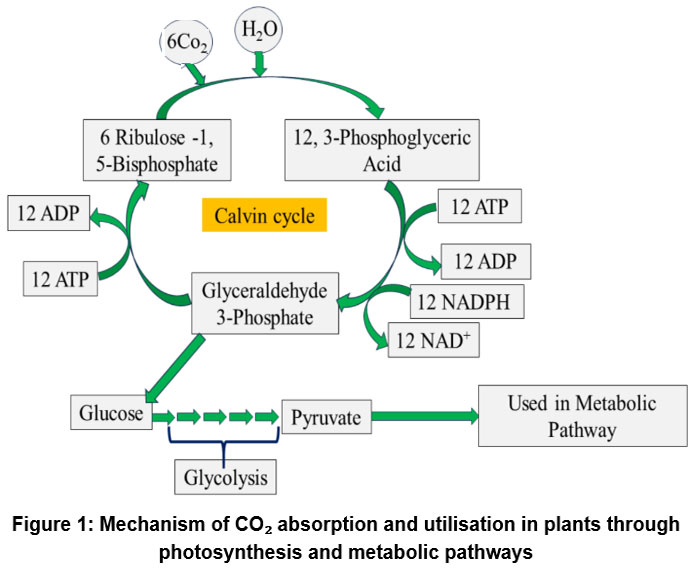 | Figure 1: Mechanism of CO2 absorption and utilisation in plants through photosynthesis and metabolic pathways
|
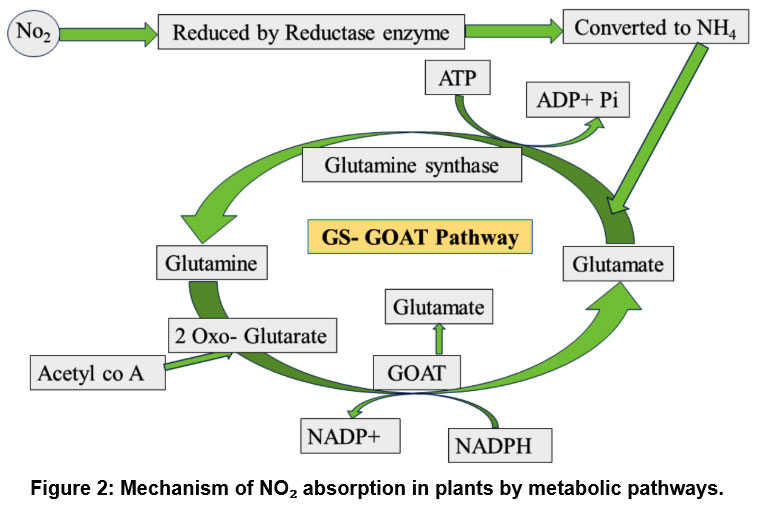 | Figure 2: Mechanism of NO? absorption in plants by metabolic pathways.
|
In addition to CO2 and NO2, plants have also demonstrated the ability to remediate other harmful airborne pollutants such as CO, VOCs, and PM. Each of these pollutants poses distinct risks to environmental and human health, and plants combat them through a variety of physiological, biochemical, and physical mechanisms. Certain plant species are capable of absorbing CO2 through their stomata and breaking it down via enzymatic oxidation. Enzymes such as catalase and peroxidase help in oxidising CO into CO2, which is then assimilated through the Calvin cycle for energy production. Indoor plants like Spathiphyllum wallisii Regel have been shown to significantly reduce CO levels in closed environments,66 while outdoor species like Hibiscus rosa-sinensis L. are also found effective in open urban settings.67,68
VOCs are a diverse group of chemicals released from paints, cleaning agents, industrial solvents, and household products. Exposure to VOCs can cause headaches, respiratory issues, and even long-term neurological damage. Plants absorb VOCs mainly through their stomata, followed by internal detoxification through metabolic processes. Inside plant tissues, VOCs are broken down enzymatically or stored in vacuoles, and in some cases, the rhizospheric microbes also assist in degradation. Schefflera arboricola Hayata, and Opuntia microdasys (Lehm.) Pfeiff is are popular indoor species known for its capacity to reduce VOC concentrations. 124,125 Similarly, outdoor plants like Phyllostachys edulis (Carrière) J.Houz. and Ilex rotunda Thunb. have demonstrated considerable efficiency in absorbing VOCs in urban green belts and roadside plantations.71-73
PM, particularly PM2.5 and PM10, is a significant air pollutant that can carry harmful substances like heavy metals and PAHs. Plants mitigate PM through physical entrapment and biochemical detoxification. Leaves with high surface area and rough textures trap particles, while biochemical responses, such as the activation of superoxide dismutase, peroxidase, and catalase, neutralise oxidative stress from deposited particles. Indoor plants like Chlorophytum comosum (Thunb.) Jacques (Spider plant) and Sansevieria trifasciata (Prain) Mabb. (Snake plant) trap fine particles and degrade organic components of PM, while outdoor species like Mangifera indica L., Trifolium pratense L. reduce PM levels in polluted urban areas.63,64,75,126
Ecological and practical relevance of phytoremediation
Phytoremediation stands out as an ecologically sustainable and practically viable approach to air pollution control, offering a self-regulating and energy-efficient alternative to conventional mechanical purification systems. Unlike air purifiers that demand electricity, regular maintenance, and periodic filter replacements, plants operate autonomously—absorbing, metabolising, and neutralising pollutants as part of their intrinsic physiological processes.74,124,125 The integration of phytoremediating species into urban landscapes, green buildings, and indoor environments not only enhances air quality but also adds aesthetic, psychological, and biodiversity benefits, making them indispensable components of nature-based urban design.71
Through carbon sequestration via the Calvin cycle and N assimilation via the GS-GOGAT pathway, plants mitigate major greenhouse gases like CO2 and NO2.120-123 Their adaptive capacity to also filter out harmful pollutants such as CO, VOCs, and PM underscores their multifunctional detoxifying potential.63-66 This remarkable versatility positions phytoremediation as a powerful tool for addressing contemporary environmental challenges, including urban smog, climate change, and ecological degradation. When thoughtfully incorporated into green infrastructure and environmental policy, phytoremediation offers a low-cost, long-term, and scalable solution to restoring air quality and promoting public health in both urban and rural contexts.
Alignment of phytoremediation with Sustainable Development Goals
Phytoremediation, a plant-based approach to air pollution mitigation, directly supports several UN SDGs by naturally absorbing airborne pollutants. It contributes significantly to UN SDG 3 (Good Health and Well-being) by reducing harmful substances like CO, NOx, VOCs, and PM, thereby mitigating health risks and promoting public well-being in polluted regions.22,74 For UN SDG 11 (Sustainable Cities and Communities), phytoremediation enhances urban liveability and ecological resilience by improving air quality in both indoor spaces (e.g., against VOCs) and outdoor environments through roadside plantations and green belts.71,124,125 Furthermore, it aligns with UN SDG 13 (Climate Action) by absorbing CO2 during photosynthesis and offering a low-energy, emission-free alternative to mechanical filtration, thus aiding in climate change mitigation.120,122 This makes phytoremediation a critical tool for building a greener, healthier planet.
Strengths-Weaknesses-Opportunities-Challenges analysis of phytoremediation
Strengths
Phytoremediation harnesses the natural metabolic processes of plants to effectively absorb, degrade, or sequester harmful pollutants. This green technology inherently avoids the production of secondary pollutants, a common issue with some conventional methods. Beyond direct pollutant removal, many phytoremediating plants contribute significantly to broader ecological benefits, including habitat creation and support for urban biodiversity, regulation of microclimates, and even enhancing mental health and well-being for urban residents.74 Specific species demonstrate strong pollutant specificity; for instance, Mangifera indica L. is highly effective in capturing particulate matter, while Spathiphyllum wallisii L. is recognised for its capacity in CO removal.69,70
Weaknesses
Despite its numerous merits, phytoremediation possesses inherent limitations. Many species are capable of targeting only a narrow range of pollutants, and the overall process is relatively slow, rendering it unsuitable for rapid remediation in heavily polluted or acute contamination zones. Furthermore, plant growth and, consequently, pollutant uptake are significantly influenced by climatic and seasonal factors, which can markedly reduce effectiveness during extreme weather conditions or specific seasons. For instance, deciduous trees are less effective during the winter months. Addressing this, research into engineered plants with enhanced year-round functionality offers a potential solution to mitigate seasonal efficiency fluctuations. The need for sufficient space, water, and light can also restrict the widespread deployment of phytoremediation in highly congested urban areas.124,125 Moreover, successful long-term phytoremediation requires meticulous species selection and consistent maintenance.
Opportunities
Significant opportunities exist to expand the application of phytoremediation through both biotechnological advancements and ecological innovation. The development of genetically engineered plants with multi-pollutant absorption capacities holds immense promise, as it could greatly increase the scope and efficiency of air purification. For example, a single engineered plant could potentially combine the robust particulate matter absorption traits of Mangifera indica L. with the substantial oxygen-releasing capabilities of Eucalyptus viminalis Labill.69,70 Additionally, integrating plants with pollutant-degrading microbial communities within the rhizosphere could accelerate pollutant breakdown and enhance overall plant resilience.127 Beyond scientific advancements, urban planning strategies can be optimised by precisely matching plant species to local pollution profiles. Crucially, there are substantial opportunities for partnerships with large-scale urban development projects, which can integrate phytoremediation as a fundamental component from the planning stages. Collaboration with eco-tourism initiatives and the corporate sector (through corporate social responsibility programs or direct investment) can also provide vital funding and resources for implementing extensive phytoremediation projects, transforming urban green spaces into living air purifiers.
Challenges
Phytoremediation faces several formidable challenges that impede its broader implementation. There is generally limited public awareness regarding its efficacy, coupled with a lack of standardised implementation protocols and insufficient dedicated funding for large-scale applications. In many regions, the research and development in this domain remain underdeveloped, and crucially, urban planners may lack the specific training required to effectively select, deploy, or manage phytoremediating species. While theoretically low-maintenance, large green areas still necessitate consistent irrigation, pruning, and vigilant monitoring to ensure optimal performance. Furthermore, existing regulatory barriers and fragmented policy frameworks often hinder the seamless integration of phytoremediation into mainstream environmental planning initiatives.72 The sheer scale of implementation, particularly in densely populated or heavily industrialised regions, presents a considerable challenge, requiring comprehensive planning and sustained commitment to overcome spatial and logistical constraints.
Future prospects of phytoremediation
The future of phytoremediation holds immense promise, particularly through advanced technological integration and collaborative implementation strategies. These advancements are crucial for effectively addressing urban air pollution, especially as cities globally look towards urban green recovery strategies in the wake of events like the COVID-19 pandemic, which highlighted the critical link between environmental health and public well-being. This renewed focus on green recovery provides a strong impetus for integrating phytoremediation and green audit principles into future urban development.
Advancements in genetically engineered plant development
Significant progress in genetic engineering will be pivotal for enhancing pollutant uptake efficiency in plants. If plants can be genetically modified to express genes responsible for absorbing multiple types of pollutants, they can be deployed more broadly. For example, plants that absorb both PM and VOCs would be highly valuable in urban industrial zones.69,70 These innovations promise to significantly improve phytoremediation's effectiveness without requiring increased land area or plant density, offering a high-impact solution within existing urban footprints. A potential roadmap for achieving these advancements involves several sequential phases. It would begin with foundational genomic research to identify and characterise key genetic pathways governing multi-pollutant absorption and stress tolerance in plants. This would be followed by the development and rigorous testing of genetically engineered prototypes in controlled laboratory and greenhouse environments, ensuring both efficacy and ecological safety. Subsequently, controlled field trials in isolated urban settings would be conducted to meticulously monitor performance, pollutant removal rates, and any potential environmental impacts. The final phase would involve large-scale deployment, contingent upon comprehensive regulatory approvals and widespread public acceptance, informed by transparent communication and engagement.
Site-Specific plant selection and integration with microbial communities for enhanced ecosystem function
Future phytoremediation efforts will increasingly prioritise customised, site-specific plant selection based on detailed local pollution profiling. For instance, roadsides with high dust and vehicular pollution may benefit from dense, PM-absorbing plants like Ficus religiosa L., while industrial zones emitting NO2 and VOCs could strategically utilise species like Arabidopsis thaliana (L.) Heynh.123-125 This precision-driven approach will ensure targeted pollutant removal and optimised land use. Furthermore, combining plants with beneficial soil microbial communities is poised to dramatically enhance pollutant degradation. Microbes in the rhizosphere can effectively metabolise heavy metals and various organic pollutants, concurrently supporting plant health and accelerating the overall remediation speed. Such plant-microbe synergies are rapidly gaining traction in research and offer a highly scalable method to boost the performance of existing phytoremediation systems.127 The roadmap for integrating plant-microbe synergies involves stages from identifying and optimising specific plant-microbe combinations for various pollutant types and diverse environmental conditions, to the development of standardised, commercially viable bio-inoculants and cultivation protocols suitable for large-scale urban applications. The final stage would involve the implementation of pilot projects in diverse urban settings, continuously refining techniques and demonstrating scalability for broader adoption.128
Remodelling strategies and collaborative governance for sustainable development
The effectiveness and impact of phytoremediation can be significantly enhanced through strategic remodelling of deployment methods. Expert-driven planning that incorporates advanced pollutant dispersion modelling, precise species selection, and innovative landscape engineering can transform phytoremediation from a passive approach into a highly active, targeted environmental tool. Sites such as industrial zones, post-mining abandoned areas, major highways, and underutilised urban rooftops can be transformed into high-impact remediation zones when structured strategies are applied.129
For phytoremediation to achieve a broad city-wide impact, collaboration among diverse stakeholders is crucial. Urban planners, scientists, and local governments must work synergistically.130 Urban planners can integrate phytoremediation into master plans, zoning regulations, and green infrastructure designs to ensure the strategic placement of air-purifying vegetation. Scientists provide invaluable expertise in plant selection, genetic research, biomonitoring, and performance validation, while local governments play a pivotal role in policy enforcement, funding allocation, and facilitating public participation.131
The COVID-19 pandemic has accelerated the need for urban green recovery, highlighting the importance of these collaborations. Green audits can be essential tools in systematically assessing the environmental performance of urban areas, identifying pollution hotspots, and determining the most effective locations for new phytoremediation-based interventions. By employing a data-driven approach, greening efforts will be precisely targeted, ensuring maximum air quality benefits and contributing to more sustainable, resilient urban environments.132
Governmental support and public engagement
For phytoremediation to be truly impactful and scaled across cities, robust governmental support and sustained civic participation are essential. Governments can play a crucial role by enforcing anti-deforestation laws, incentivising urban greening projects, mandating tree planting on barren or underutilised lands, and running comprehensive public awareness campaigns. Educational institutions can contribute significantly by integrating phytoremediation concepts into environmental science curricula, fostering long-term environmental stewardship among future generations. Furthermore, fostering robust public-private partnerships and leveraging Corporate Social Responsibility (CSR) initiatives can unlock vital funding and resources for large-scale green infrastructure projects.133,134 This holistic approach, integrating scientific innovation, strategic planning, and collaborative governance, promises to unlock the full potential of phytoremediation for healthier, more sustainable urban environments.135
Interdisciplinary approaches
Addressing urban air pollution effectively necessitates a truly interdisciplinary approach, integrating phytoremediation with diverse fields. From an environmental psychology perspective, the presence of green spaces, enhanced by phytoremediation, extends beyond mere pollution abatement to significantly improve mental well-being, reduce stress, and foster a stronger connection to nature among urban dwellers.136,137 This psychological benefit strengthens the case for widespread green infrastructure adoption. In urban design, plants can be seamlessly integrated into architectural elements, creating living facades, green roofs, and vertical gardens. These designs not only provide aesthetic value but also actively purify air, regulate building temperatures, and enhance biodiversity. This integration transforms passive structures into active environmental assets. From an environmental law standpoint, robust policy frameworks are essential to promote and mandate the inclusion of green technologies like phytoremediation in urban development. This includes developing regulations for green building standards and land-use planning that prioritise ecological solutions. The push for urban green recovery post-COVID-19 offers a unique opportunity to embed these interdisciplinary perspectives, leveraging green audits to identify optimal integration points for phytoremediation within holistic urban planning strategies, driving sustainable development.137
Policy and public engagement
The successful city-wide implementation of phytoremediation heavily depends on strong government policies and active public engagement. Governments have a critical role in fostering green infrastructure through specific policy recommendations. These could include offering incentives to developers to integrate extensive green spaces and phytoremediation systems into urban projects, such as tax breaks or expedited approval processes. Additionally, direct grants for establishing and maintaining urban green spaces, especially those using effective phytoremediation species, would help accelerate the adoption of these practices.
For instance, the (NCAP) could be expanded to include specific targets and funding mechanisms for phytoremediation.111,138 Alongside top-down policies, public engagement is essential. Community-driven initiatives, such as neighbourhood greening programs, school gardens, and citizen-led tree-planting campaigns, can make a significant impact on urban greening projects. Public awareness can be raised through targeted educational campaigns, workshops, and media outreach, highlighting the health benefits and ecological services that urban plants provide.139
Governments could also mandate tree planting and maintenance in urban areas, ensuring strict enforcement, especially in densely populated regions. The message could be framed around engaging citizens with mottos like, "Claim your own oxygen – plant at least one tree today," or "Plant a tree, secure your city’s future!" The awareness of environmental health, heightened by the COVID-19 pandemic, has paved the way for promoting urban green recovery. These efforts, underpinned by green audits, can demonstrate measurable improvements in air quality and overall environmental health.140-142
Conclusion
Phytoremediation offers a transformative solution to improve air quality, public health, and long-term environmental sustainability by leveraging the natural purifying ability of plants. This nature-based approach addresses immediate pollution challenges while enhancing ecosystem resilience and safeguarding future generations. Understanding plant-pollutant interactions is crucial for expanding phytoremediation’s global application, as seen in initiatives like India’s GIM, Nagar Van Yojana. To fully unlock its potential, a collaborative effort between urban planners, policymakers, and the public is necessary. Key strategies include integrating phytoremediation into urban planning, incentivising green infrastructure, and fostering public engagement. Protecting mature trees, which offer vital ecological services, is equally essential. In cities like Delhi and Kolkata, a “Green Lung Initiative” focused on creating green corridors, community parks, and incorporating green infrastructure in transportation hubs could significantly reduce pollution, with success tracked through air quality monitoring.
In essence, these initiatives promise to create resilient, vibrant, and healthier urban environments, ensuring sustainable air quality for future generations. Phytoremediation can transform cities into greener, healthier spaces, providing a long-lasting positive impact on urban ecosystems and public well-being.
Acknowledgment
The authors wish to acknowledge the Department of Botany at the University of Burdwan in Burdwan, West Bengal, India, for their essential assistance and contributions.
Funding Sources
The author(s) received no financial support for the research, authorship, and/or publication of this article.
Conflict of Interest
The authors do not have any conflict of interest.
Data availability statement
In order to prepare this paper, the writers employed secondary data. These data's source references have been properly cited. The information is accessible online through resources including NCBI, Research Gate, and Google Scholar. The corresponding author has access to these data and will make them available upon reasonable request.
Ethical Statement
This research did not involve human participants, animal subjects, or any material that requires ethical approval
Informed Consent Statement
This study did not involve human participants, and therefore, informed consent was not required
Permission to reproduce material from other sources
Not Applicable
Author Contribution
Soudip Das: Methodology, Resources, Writing (original draft), Writing (review and editing).
Ayan Saha: Methodology, Resources, Review, Editing, Data Curation, and Format analysis
Dibyendu Saha: Corresponding author, Conceptualisation, Methodology, Supervision, Validation, Review and editing.
Kushal Roy: Data Curation, Format analysis, Review, and Editing.
Md Nazir: Data Curation, Review.
References
- Eglinton TI, Eglinton G, Maxwell JR. Organic geochemistry. In: Encyclopedia of Analytical Science. 3rd ed. Elsevier; 2021:294-307.
- Eglinton TI, Galy VV, Hemingway JD, Feng X, Bao H, Blattmann TM, Zhao M. Climate control on terrestrial biospheric carbon turnover. Proc Natl Acad Sci U S A. 2021;118(8):e2011585118.
CrossRef - Kimm H, Guan K, Gentine P, et al. Redefining droughts for the US Corn Belt: The dominant role of atmospheric vapor pressure deficit over soil moisture in regulating stomatal behavior of maize and soybean. Agric For Meteorol. 2020;287:107930.
CrossRef - Manisalidis E, Stavropoulou I, Stavropoulos A. Environmental and health effects of air pollution. J Environ Public Health. 2020:1-14.
CrossRef - Manisalidis I, Stavropoulou E, Stavropoulos A, Bezirtzoglou E. Environmental and health impacts of air pollution: A review. Front Public Health. 2020;8:14.
CrossRef - Ukaogo PO, Ewuzie RA, Onwuka ND. Air pollution: Causes, effects and remedies. J Appl Sci Environ Manage. 2020;24(7):1279-1288.
- Ukaogo PO, Ewuzie U, Onwuka CV. Environmental pollution: Causes, effects, and the remedies. In: Microorganisms for Sustainable Environment and Health. Elsevier; 2020:419-429.
CrossRef - Chen L, Zhang X, Zhang M, Zhu Y, Zhuo R. Removal of heavy-metal pollutants by white rot fungi: Mechanisms, achievements, and perspectives. J Clean Prod. 2022;354:131681.
CrossRef - Vardoulakis S, Giagloglou E, Steinle S, et al. Indoor exposure to selected air pollutants in the home environment: A systematic review. Int J Environ Res Public Health. 2020;17(23):8972.
CrossRef - Wang Y, Zhang X, Li Y. Phytoremediation of air pollutants: Mechanisms and applications. Sci Total Environ. 2021;786:147577.
CrossRef - Kerminen VM, et al. Contribution of anthropogenic emissions to particulate matter. Environ Sci Technol. 2018;52(4):2011-2017.
- Parker S, et al. Sulfur dioxide and its impact on air quality and human health. Air Qual Atmos Health. 2017;10(8):921-929.
CrossRef - Ali MM, Hossain D, Khan MS, Begum M, Osman MH. Environmental pollution with heavy metals: A public health concern. In: Heavy Metals—Their Environmental Impacts and Mitigation. IntechOpen; 2021.
- Chen Y, Zhang Y, Liu Y, Guan Y, Eiler J, Stolper EM. Water, fluorine, and sulfur concentrations in the lunar mantle. Earth Planet Sci Lett. 2015;427:37-46.
CrossRef - David A, Niculescu C. Volatile organic compounds: Sources and impacts. Air Qual Atmos Health. 2021;14(4):467-482.
- David E, Niculescu VC. Volatile organic compounds (VOCs) as environmental pollutants: Occurrence and mitigation using nanomaterials. Int J Environ Res Public Health. 2021;18(24):13147.
CrossRef - Daellenbach KR, Uzu G, Jiang J, et al. Sources of particulate-matter air pollution and its oxidative potential in Europe. Nature. 2020;587(7834):414-419.
CrossRef - Raaschou-Nielsen O, Andersen ZJ, Beelen R, et al. Air pollution and lung cancer incidence in 17 European cohorts: Prospective analyses from the ESCAPE study. Lancet Oncol. 2013;14(9):813-822. doi:10.1016/S1470-2045(13)70279-1
CrossRef - World Health Organization. Ambient (outdoor) air pollution. Published 2018. Accessed at: https://www.who.int/news-room/fact-sheets/detail/ambient-(outdoor)-air-quality-and-health
- U.S. Environmental Protection Agency. Benefits and Costs of the Clean Air Act 1990–2020, Fifth Prospective Study. EPA; 2011. Accessed at: https://www.epa.gov/clean-air-act-overview/benefits-and-costs-clean-air-act-1990-2020-fifth-prospective-study
- ETV Bharat. Delhi continues to be among the world's most polluted cities. Published April 15, 2025.
- World Health Organization. Air pollution. Published 2021. Accessed at: https://www.who.int/news-room/fact-sheets/detail/ambient-(outdoor)-air-quality-and-health
- Bell ML, Davis DL. Reassessment of the lethal London fog of 1952: Novel indicators of acute and chronic consequences of exposure to air pollution. Environ Health Perspect. 2001;109(suppl 3):389-394.
CrossRef - Brook RD, Rajagopalan S, Pope CA, et al. Particulate matter air pollution and cardiovascular disease: An update from the American Heart Association. Circulation. 2010;121(21):2331-2378. doi:10.1161/CIR.0b013e3181dbece1
CrossRef - Miller KA, Siscovick DS, Sheppard L, et al. Long-term exposure to air pollution and incidence of cardiovascular events in women. N Engl J Med. 2007;356(5):447-458. doi:10.1056/NEJMoa054409
CrossRef - Pope CA, Burnett RT, Thun MJ, et al. Lung cancer, cardiopulmonary mortality, and long-term exposure to fine particulate air pollution. JAMA. 2002;287(9):1132-1141. doi:10.1001/jama.287.9.1132
CrossRef - Pope CA, Dockery DW. Health effects of fine particulate air pollution: Lines that connect. J Air Waste Manag Assoc. 2006;56(6):709-742. doi:10.1080/10473289.2006.10464485
CrossRef - Cai W, Jin A, Liu M. Structure design and mechanism research of combined cyclone plate separator based on particle separation. Phys Fluids. 2024;36(10):1-12.
CrossRef - Cai X, Li H, Wang Q, Zhang J. Advances in cyclone separator technology for industrial air pollution control. J Clean Prod. 2024;380:135151. doi:10.1016/j.jclepro.2023.135151
CrossRef - Adanur S, Jayswal A. Filtration mechanisms and manufacturing methods of face masks: An overview. J Ind Text. 2022;51(3 suppl):3683S-3717S.
CrossRef - Syu JY, Huang SY, Cheng YC, et al. The applications and distinctions of three different material collection plates in wet electrostatic precipitator. Aerosol Air Qual Res. 2022;22(10):220133.
CrossRef - Liu DT, Phillips KM, Speth MM, Besser G, Mueller CA, Sedaghat AR. Portable HEPA purifiers to eliminate airborne SARS-CoV-2: A systematic review. Otolaryngol Head Neck Surg. 2022;166(4):615-622.
CrossRef - Patel KD, Subedar D, Patel F. Design and development of automotive catalytic converter using non-noble catalyst for the reduction of exhaust emission: A review. Mater Today Proc. 2022;57:2465-2472.
CrossRef - Diao B, Ding L, Cheng J, Fang X. Impact of transboundary PM2.5 pollution on health risks and economic compensation in China. J Clean Prod. 2021;326:129312.
CrossRef - Diao L, Bi X, Zhang W, et al. Characteristics of heavy ozone pollution episodes and identification of primary driving factors using a generalized additive model in an industrial megacity of northern China. Atmosphere. 2021;12(11):1517.
CrossRef - Diao W, He J, Wang Q, Rao X, Zhang Y. K, Na and Cl co-doped TiO2 nanorod arrays on carbon cloth for efficient photocatalytic degradation of formaldehyde under UV/visible LED irradiation. Catal Sci Technol. 2021;11(1):230-238.
CrossRef - Aerosol and Air Quality Research (AAQR). COVID-19 lockdown—Air quality reflections in Indian cities. Aerosol Air Qual Res. 2020;20(12):2697-2706.
- Atmospheric Chemistry and Physics (ACP). An assessment of the impact of a nation-wide lockdown on air pollution: A remote sensing perspective over India. Atmos Chem Phys. 2020;20(24):16301-16315.
- Saha D, Keshri JP, Saha NC. Sustainable improvement of air quality during COVID-19 phase: A special reference to Asansol industrial township, West Bengal, India. Int J Biol Pharm Allied Sci. 2021;10(7):a-m.
CrossRef - Saha D, Saha A, Saha A, Saha NC. Air quality change and sustainable development in context to COVID-19 situation at Burdwan town, West Bengal. In: Impact of Globalization on Higher Education Issues Opportunities Challenges & Future. ISSMWA Publisher; 2020:108-115.
- Zheng M, Liu F, Wang M. Assessing the COVID-19 lockdown impact on global air quality: A transportation perspective. Atmosphere. 2025;16(1):1-15.
CrossRef - Asian Development Bank. ADB Annual Report 2020. Asian Development Bank; 2020. Accessed at: https://www.adb.org/sites/default/files/institutional-document/691766/adb-annual-report-2020.pdf
- Greenpeace India. Our Clean Air Future: Why a Green Recovery Is Crucial for India. 2020.
- ParlAmericas. Building Back Better: A Green and Just Recovery in the Americas. 2022.
- Gao S, Guo Y, Cao X, Qiu C, Qiu H, Zhao X. Enhanced phytoremediation for trace-metal-polluted farmland with Hibiscus cannabinus–Sedum plumbizincicola rotation: A case study in Hunan, China. Agronomy. 2023;13(5):1231.
CrossRef - Uhde E, Salthammer T, Wientzek S, Springorum A, Schulz J. Effectiveness of air-purifying devices and measures to reduce exposure to bioaerosols in school classrooms. Indoor Air. 2022;32(8):e13087.
CrossRef - Dai X, Fang J, Li L, Dong Y, Zhang J. Enhancement of COD removal from oilfield produced wastewater by combination of advanced oxidation, adsorption and ultrafiltration. Int J Environ Res Public Health. 2019;16(17):3223.
CrossRef - Szczotko M, Orych I, Maka L, Solecka J. A review of selected types of indoor air purifiers in terms of microbial air contamination reduction. Atmosphere. 2022;13(5):800.
CrossRef - Lima LHV, do Nascimento CWA, da Silva FBV, Araújo PRM. Baseline concentrations, source apportionment, and probabilistic risk assessment of heavy metals in urban street dust in Northeast Brazil. Sci Total Environ. 2023;858:159750.
CrossRef - Dziubak M. Air purifiers and their specificity towards different pollutants. Environ Technol Rev. 2021;10(1):25-36. doi:10.1080/21622515.2020.1785631
- Dziubak T. Experimental studies of dust suction irregularity from multi-cyclone dust collector of two-stage air filter. Energies. 2021;14(12):3577.
CrossRef - Mata R, González M, Sánchez P. Secondary pollutant formation in photocatalytic air purifiers: Risks and mitigation. Atmos Environ. 2022;262:118655. doi:10.1016/j.atmosenv.2021.118655
CrossRef - Mata TM, Martins AA, Calheiros CS, et al. Indoor air quality: A review of cleaning technologies. Environments. 2022;9(9):118.
CrossRef - Rivera-Garcia S. Cyclones. In: Air Pollution Control Engineering. 2nd ed. CRC Press; 2023:115-156.
- Khan AHA, Khan BH, Khan ZA. Electrostatic precipitators: Design, operation, and applications. In: Air Pollution Control Engineering. CRC Press; 2022:157-200.
- Dai H, Zhu J, Liao H, et al. Co-occurrence of ozone and PM2.5 pollution in the Yangtze River Delta over 2013–2019: Spatiotemporal distribution and meteorological conditions. Atmos Res. 2021;249:105363.
CrossRef - Guo H, Chen Q, Sun Z, Zhang W. Challenges and opportunities for air pollution control technologies. Environ Sci Technol Lett. 2021;8(1):1-8.
- Guo Z, Boeing WJ, Xu Y, Borgomeo E, Mason SA, Zhu YG. Global meta-analysis of microplastic contamination in reservoirs with a novel framework. Water Res. 2021;207:117828.
CrossRef - Shmaefsky BR. Phytoremediation: A Sustainable Solution for Environmental Pollution. Nova Science Publishers; 2020.
- Shmaefsky BR. Principles of phytoremediation. In: Principles of Phytoremediation. Springer International Publishing; 2020:1-26.
CrossRef - Pandey VC, Singh DP, Singh RP. Phytoremediation: An Eco-Friendly Approach for Environmental Cleanup. CRC Press; 2021.
- Saxena P, Singh NK, Singh AK, Pandey S, Thanki A, Yadav TC. Recent advances in phytoremediation using genome engineering CRISPR–Cas9 technology. In: Bioremediation of Pollutants. 2020:125-141.
CrossRef - Raza H, Bibi T, Bibi H, et al. Role of phytoremediation in removing air pollutants: A review. Cross Curr Int J Agric Vet Sci. 2021;3:54-59.
- Raza W, Farooq M. Particulate matter deposition and retention by Mangifera indica in urban environments. Environ Sci Pollut Res. 2021;28(7):8725-8732.
- Pichlhöfer A, Sesto E, Hollands J, Korjenic A. Health-related benefits of different indoor plant species in a school setting. Sustainability. 2021;13:9566.
CrossRef - Safeena S, Shaikh A, Pathan A. Efficiency of Spathiphyllum wallisii in removing indoor carbon monoxide. Environ Adv. 2023;12:100345.
- Yewale AV, Gaikwad AD. Assessment of Hibiscus rosa-sinensis for phytoremediation of urban pollutants. Asian J Environ Sci. 2022;17(2):145-150.
- Yewale P, Wagle N, Lenka S, et al. Studies on Biosmotrap: A multipurpose biological air purifier to minimize indoor and outdoor air pollution. J Clean Prod. 2022;357:132001.
CrossRef - Maheswari R, Karthikeyan S, Pandian M. Comparative study on air pollution mitigation potential of urban tree species. Environ Sci Pollut Res. 2022;29:34567-34578.
- Maheswari S, Rajarajan P, Anjana J, et al. Phytoremediation of outdoor air pollution—A list of plants and their contribution. 2022.
- Emamverdian A, Ding Y, Xie Y. Phytoremediation potential of bamboo plant in China. Ecol Environ Conserv. 2018;24(1):530-539.
- James A. Phytoremediation of urban air pollutants: Current status and challenges. In: Urban Ecology and Global Climate Change. 2022:140-161.
CrossRef - James L. Green infrastructure policy and phytoremediation: Building sustainable cities. J Environ Manage. 2022;310:114664.
- Gawrorska H, Bakera B. Phytoremediation of particulate matter using ornamental plants. Sci Total Environ. 2014;468-469:112-118.
- Bandehali S, Miri T, Onyeaka H, Kumar P. Current state of indoor air phytoremediation using potted plants and green walls. Atmosphere. 2021;12(4):473.
CrossRef - Zaman W, Ali S, Akhtar MS. Harnessing the power of plants: Innovative approaches to pollution prevention and mitigation. Sustainability. 2024;16(23):10587.
CrossRef - Franzetti A, Gandolfi I, Bestetti G, et al. Plant–microorganism interaction promotes removal of air pollutants in Milan (Italy) urban area. J Hazard Mater. 2020;384:121021.
CrossRef - Irshad MA, Latif M, Nasim I, et al. Efficient chromium removal from leather industrial wastewater: Green synthesis and characterization of zinc oxide nanoparticles using Ficus benghalensis extracts. Ecotoxicol Environ Saf. 2024;281:116616.
CrossRef - Genç E, Turfan N. Effects of Cd and Zn treatments on leaf chemical compounds of Berberis thunbergii, Buxus sempervirens var. rotundifolia, and Euonymus japonica var. aurea. J Inst Sci Technol. 2023;13(2):815-829.
CrossRef - Davin M, Starren A, Marit E, Lefébure K, Fauconnier ML, Colinet G. Investigating the effect of Medicago sativa L. and Trifolium pratense L. root exudates on PAHs bioremediation in an aged-contaminated soil. Water Air Soil Pollut. 2019;230:1-12.
CrossRef - Gawronski SW, Gawronska H, Lomnicki S, Saebo A, Vangronsveld J. Plants in air phytoremediation. In: Advances in Botanical Research. Vol 83. Academic Press; 2017:319-346.
CrossRef - Kostic S, Kebert M, Teslic N, et al. Polycyclic aromatic hydrocarbon phytoaccumulation in urban areas by Platanus × acerifolia, Celtis australis, and Tilia grandifolia leaves and branches. Environ Sci Pollut Res. 2024:1-14.
CrossRef - Esposito F, Memoli V, Di Natale G, Trifuoggi M, Maisto G. Quercus ilex L. leaves as filters of air Cd, Cr, Cu, Ni and Pb. Chemosphere. 2019;218:340-346.
CrossRef - Zhang X, Li M, Yang H, Li X, Cui Z. Physiological responses of Suaeda glauca and Arabidopsis thaliana in phytoremediation of heavy metals. J Environ Manage. 2018;223:132-139.
CrossRef - Takahashi K, Ohta A, Sase H, et al. Seasonal variations in black carbon deposition on leaves of nine Japanese urban greening tree species. Int J Phytoremediation. 2023;25(2):252-262.
CrossRef - Parseh I, Teiri H, Hajizadeh Y, Ebrahimpour K. Phytoremediation of benzene vapors from indoor air by Schefflera arboricola and Spathiphyllum wallisii plants. Atmos Pollut Res. 2018;9(6):1083-1087.
CrossRef - Zuo L, Wu D, Yu L, Yuan Y. Phytoremediation of formaldehyde by stems of Epipremnum aureum and Rohdea japonica. Environ Sci Pollut Res. 2022:1-10.
CrossRef - El-Tanbouly R, Hassan Z, El-Messeiry S. The role of indoor plants in air purification and human health in the context of COVID-19 pandemic: A proposal for a novel line of inquiry. Front Mol Biosci. 2021;8:709395.
CrossRef - Balan L. Study on potential of ornamental plant Syngonium podophyllum (Schott) as a phytoremediator: A review. China Int J Petro Chem Nat Gas. 2022;2(2):44-46.
CrossRef - Vujoševic A, Vukovic S, Pavic D, Moravcevic D. Phytoremediation in the interior environment. In: Konferencija. 2021:68-69.
- Mushahary R, Nath A, Chutia S, Deka P. A systematic review on phytoremediation of indoor air pollution. J Air Pollut Health. 2024.
CrossRef - Smets W, Wuyts K, Oerlemans E, et al. Impact of urban land use on the bacterial phyllosphere of ivy (Hedera sp.). Atmos Environ. 2016;147:376-383.
CrossRef - Duan Y, Zhang Y, Zhao B. Lead, zinc tolerance mechanism and phytoremediation potential of Alcea rosea (L.) Cavan. and Hydrangea macrophylla (Thunb.) Ser. and EDTA effect. Environ Sci Pollut Res. 2022;29(27):41329-41343.
CrossRef - Nokande SE, Razavi SM, Mohammadian MA. Heavy metal remediation by Cyperus alternifolius, Chrysopogon zizanioides (L.) Roberty, and Aloe vera (L.) Burm. f. Chiang Mai Univ J Nat Sci. 2022;21(4):e2022057.
CrossRef - Zhang Y, Zhou R, Chen J, Rangel-Buitrago N. Effectiveness of emission control policies over coastal ports of China. Ocean Coast Manag. 2022;219:106064.
CrossRef - Liu Y, Li S, Zhang X. Evaluating urban green infrastructure for air quality improvement: A green audit approach. Environ Pollut. 2023;335:112233.
- Choi DH, Lee SJ, Park JH, Kim JH. Air purification capacity of urban trees in Seoul, Korea. J Environ Manage. 2022;301:113940.
- Sharma S, Bakht A, Jahanzaib M, Lee H, Park D. Effectiveness of common indoor plants in improving studio apartment air quality. Atmosphere. 2022;13(11):1863.
CrossRef - Brunialti G, Frati L. Biomonitoring with lichens and mosses in forests. Forests. 2023;14(11):2265.
CrossRef - Paoli L, Bandoni E, Sanità di Toppi L. Lichens and mosses as biomonitors of indoor pollution. Biology. 2023;12(9):1248.
CrossRef - Narayanti PS, Astija A, Kundera IN. Plant bioindicators in assessing air quality: A short review. Int J Environ Pollut Res. 2024;12(2):1-11.
CrossRef - Pugh TAM, Mackenzie AR, Whyatt JD. Green infrastructure for air quality improvement in UK urban areas. Atmos Environ. 2023;310:119934.
- Marmiroli N, Marmiroli M, Maestri E. Phytoremediation and phytotechnologies: Present and future. In: Soil and Water Pollution Monitoring, Protection and Remediation. 2006:403-416.
CrossRef - Nowak DJ, Hirabayashi S, Bodine A, Hoehn RE. Modeled urban tree air pollution removal and monetary value for U.S. cities. Environ Pollut. 2022;305:119293.
- USDA Forest Service. Urban Forests and Environmental Quality: A Guide for Practitioners. USDA; 2021.
- Grant G, Smith R, Jones A. Green infrastructure and ecosystem services in Canadian cities. J Urban Ecol. 2021;7(1):1-15.
- Lopes A, da Silva JB, Soares MS. Phytoremediation of heavy metals in urban areas of Brazil. Environ Sci Pollut Res. 2021;28(25):32901-32915.
- Gómez JM, Rueda S, García J. Air quality improvement by urban green infrastructure in Bogotá, Colombia. Sustainability. 2022;14(10):5946.
- Muthugulu SR, Mathee A, Nthangeni MN. Phytoremediation of metal-contaminated sites in South Africa: A review. Environ Technol Innov. 2023;30:103078.
- Olatunbosun SA, Adewumi GA, Olagoke MA. Green infrastructure for air quality improvement in Lagos, Nigeria. J Urban Plann Dev. 2024;150(1):05023001.
- MoEFCC. National Clean Air Programme (NCAP) Status Report. Government of India; 2019.
- IQAir. World’s Most Polluted Cities in 2023: India Air Quality Report. 2024.
- Times of India. Why Delhi's air quality remains hazardous despite measures. 2025.
- Times of India. Factors contributing to India's severe air pollution. 2025.
- IPCC. Climate Change 2021: The Physical Science Basis. Cambridge Univ Press; 2021.
- Kumar P, Singh V, Pandey J. Air pollution mitigation by urban plants: A review. Urban For Urban Green. 2021;62:127144.
- Rai PK, Agrawal M, Singh J. Phytoremediation of air pollutants: A review. Environ Sci Pollut Res. 2021;28(1):47-64.
- Ghosh S, Banerjee M, Das S. Urban trees as a tool for air pollution mitigation: Kolkata case study. Urban For Urban Green. 2022;74:127670.
- Sharma S, Gupta R, Kumar S. Air pollution mitigation potential of green spaces in Mumbai, India. Urban For Urban Green. 2023;88:127989.
- Proietti S, Moscatello S, Battistelli A, et al. CO2 assimilation in Spinacia oleracea L. under controlled conditions. Environ Sci Pollut Res. 2023;30(1):113-122.
- Proietti S, Paradiso R, Moscatello S, et al. Light intensity effects on spinach carbohydrate partitioning. Plants. 2023;12(4):804.
CrossRef - Zhou Y, Kishchenko O, Stepanenko A, et al. Nitrogen uptake dynamics in duckweed. Plants. 2021;11(1):11.
CrossRef - Zhou Y, Zhang L, Xie H, Huang Y, Wang Q. NO2 detoxification in Arabidopsis thaliana. Plant Physiol Biochem. 2021;167:249-259.
- Lee D, Kim Y, Jeong W. Removal of VOCs by indoor ornamental plants and microbes. Indoor Built Environ. 2021;30(1):48-58.
CrossRef - Lee H, Jun Z, Zahra Z. Phytoremediation for indoor and outdoor air quality. Environments. 2021;8(11):118.
CrossRef - Gawrorska H, Bakera B. Phytoremediation of particulate matter by Chlorophytum comosum L. Air Qual Atmos Health. 2015;8:265-272.
CrossRef - Patra DK, Pradhan C, Patra HK. Toxic metal decontamination by phytoremediation: Challenges and perspectives. Environ Technol Innov. 2020;18:100672.
CrossRef - Goulding C. Atmosphere: Launching the annals curated collection. Ann Tour Res. 2023;101:103591.
CrossRef - Abbass OA, Sailor DJ, Gall ET. Effectiveness of indoor plants for passive ozone removal. Build Environ. 2017;119:62-70.
CrossRef - Campos VM, Merino I, Casado R, Gómez L. Phytoremediation of organic pollutants: A review. Span J Agric Res. 2008;6:38-47.
CrossRef - Daisey JM, Angell WJ, Apte MG. Indoor air quality and health in schools. Indoor Air. 2003;13(1):53-64.
CrossRef - Duan X, Gu H, Lam SS, et al. Recent progress on phytoremediation of urban air pollution. Chemosphere. 2024;349:140821.
CrossRef - Eram R, Singh AA. Phytoremediation of air pollution. Environews. 2023;28(3):4-7.
- Fang Y, Zhu Y. Cost and efficiency of air purification devices. Clean Technol Environ Policy. 2019;21(5):1163-1172.
- González Rivera AI, Mugica-Álvarez V, Sosa Echeverría R, et al. Air emissions from major Mexican port operations. J Mar Sci Eng. 2023;11(2):265.
CrossRef - Hammad D, Thu K, Miyazaki T. Particulate matter phytoremediation by Prunus × yedoensis. E3S Web Conf. 2023;465:02030.
CrossRef - Kerminen VM, et al. Contribution of anthropogenic emissions to particulate matter. Environ Sci Technol. 2018;52(4):2011-2017.
- Krishnaveni M, Sanjana R, Harinathan C, et al. Air pollution tolerance index of plants in Salem and Namakkal. Res J Pharm Technol. 2020;13(6):2752-2758.
CrossRef - Mastuti YA, Rachmadiarti F. Jatropha integerrima, Duranta erecta and Hibiscus rosa-sinensis as lead absorbents. Asian J Water Environ Pollut. 2021;18(4):95-100.
CrossRef - Watson AS, Bai RS. Phytoremediation for urban landscaping in Trivandrum, India. Environ Sci Pollut Res. 2021;28(8):9979-9990.
CrossRef - Lahiri M, Krishna K. Effect of air pollution on secondary metabolites in Delhi trees. Environ Qual Manag. 2024;33(3):399-409.
CrossRef - Van der Lelie D, Schwitzguébel JP, Glass DJ, Vangronsveld J, Baker A. Assessing progress in phytoremediation in the United States and Europe. 2001.
Abbreviation
Word | Abbreviation | Word | Abbreviation |
Cd | Cadmium | NAP | National Afforestation Programme |
Cr | Chromium | NCAP | National Clean Air Programme |
CF | Cystic fibrosis | NH4+ | Ammonium |
CO | Carbon monoxide | NOx | Nitrogen oxides |
CO2 | Carbon dioxide | O3 | Ozone |
COPD | Chronic obstructive pulmonary disease | Pb | Lead |
ESPs | Electrostatic precipitators | PAH | Polycyclic aromatic hydrocarbon |
GIM | Green India Mission | PM | Particulate matter |
GOGAT | Glutamate synthase | RuBisCO | Ribulose-1,5-bisphosphate carboxylase/oxygenase |
GS | Glutamine synthetase | SDG | Sustainable Development Goals |
HEPA | High-Efficiency Particulate Air | SO2 | Sulphur dioxide |
He | Helium | SWOC | Strengths, Weaknesses, Opportunities, Challenges |
INR | Indian Rupee | UN | United Nations |
N2 | Nitrogen | UV | Ultra violet |
Ne | Neon | VOCs | Volatile organic compounds |
Ni | Nickel | Zn | Zinc |